
What is the full form of USB?
Universal Serial Bus
Understanding the Full Form of USB
The question asks for the full form of the widely used acronym USB.
USB is a standard interface used for connecting peripheral devices such as keyboards, mice, printers, digital cameras, and external hard drives to a computer or other host devices. It provides both communication and power supply to these devices.
Let's look at the options provided:
- Option 1: Unshielded System Board
- Option 2: Universal System Board
- Option 3: Unidentified System Bus
- Option 4: Universal Serial Bus
The correct full form of USB is Universal Serial Bus.
Therefore, Option 4 correctly represents the full form of USB.
What is Universal Serial Bus?
As the name suggests, Universal Serial Bus is a serial communication standard. It was developed in the mid-1990s to standardize the connection of peripherals to personal computers, both to simplify the connections and to improve the usability of existing interfaces. USB replaced many older types of serial and parallel ports.
Key features of USB include:
- It is a universal standard, meaning it can be used across different devices and manufacturers.
- It uses a serial communication method, where data is sent bit by bit over a single wire.
- It allows devices to be connected and disconnected without needing to restart the computer (hot-swapping).
- It provides power to many connected devices.
Understanding the full form helps clarify its purpose as a standard method for connecting various devices in a serial manner.
Important Questions from Miscellaneous
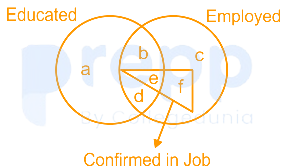
Read the given figure and find the region representing persons who are educated and employed but not confirmed in job.
The magazine in which Mahatma Gandhi mentioned what he wanted the Constitution to do is:
Which gas shields the surface of the earth from ultraviolet radiation from the sun?
Which event is marked as an Intangible Cultural Heritage of Humanity by UNESCO?
Who has been conferred with the rank of the Commander of the Order of the British Empire in 2018?


