Thomas Cook: Innovator in Travel Solutions
The question asks about the origin of specific travel solutions, namely the circular note and travel vouchers. These financial and practical tools were designed to make travel safer and more convenient, especially for international journeys.
Understanding Circular Notes and Travel Vouchers
Circular notes, introduced by Thomas Cook, were an early form of traveler's cheque. They allowed travelers to carry money securely, exchanging them for local currency at various agents worldwide. This system aimed to protect travelers from the risks associated with carrying large amounts of cash.
Travel vouchers were essentially prepaid coupons or tickets that could be exchanged for specific services, such as accommodation, meals, or transportation. Thomas Cook pioneered this concept as part of his package tours, simplifying the logistics for travelers by handling arrangements and payments in advance.
The Role of Thomas Cook
Thomas Cook, a British travel organizer, is widely credited with inventing and popularizing these innovations. Starting with organizing excursions in the mid-19th century, he continuously sought ways to improve the travel experience.
- He introduced the circular note system in the 1870s.
- He developed prepaid travel vouchers as part of his inclusive tours.
These inventions were groundbreaking, significantly contributing to the growth of modern tourism by addressing key challenges faced by travelers regarding money management and service accessibility.
Evaluating Other Options
- Cox and Kings: While a historic travel company, they are not credited with the invention of the circular note or travel vouchers.
- Henry Wells: Associated with the American Express Company, which later developed traveler's cheques, but not the originator of the circular note concept in the way Thomas Cook was.
- Thomson Holidays: A modern tour operator, established much later than the period when these travel solutions were invented.
Therefore, the pivotal figure behind the invention of the circular note and travel vouchers as early travel solutions was Thomas Cook.
Important Questions from Mixed Data Interpretation
Select the correct mirror image of the given combination when the mirror is placed at MN as shown below.
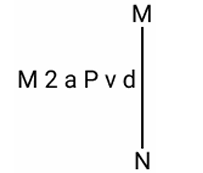
Choose the alternative which closely resembles the mirror image of the given combination.
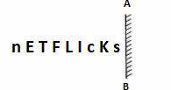
Select the correct mirror image of the given combination when the mirror is placed at MN as shown below.
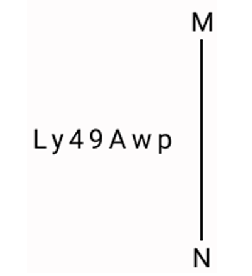
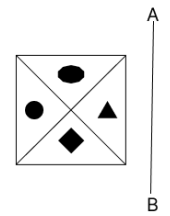
Select the correct mirror image of the given figure when the mirror is placed at AB as shown below.
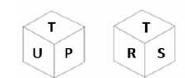
Six letters N, P, R, S, T and U are written on different faces of a dice. Two positions of this dice are shown in the figure. Which is the letter on the face opposite to the face containing U?