
To make the resolution process faster and maximize the realisable value of assets under Insolvency and Bankruptcy Code (IBC), the Parliamentary Standing Committee has recommended strengthening India's insolvency resolution ecosystem by A. A professional code of conduct for the committee of creditors B. Constitution of specialized National Company Law Tribunals (NCLT) benches to hear IBC matters C. Strengthening the role of resolution professionals D. Digitising IBC platforms E. Strengthening and promotion of Asset Reconstruction Companies Choose the correct answer from the options given below:
A, B, C and D only
Understanding IBC Strengthening Recommendations
The Insolvency and Bankruptcy Code (IBC), 2016, is a key legislation in India aimed at resolving insolvency of corporate persons, partnership firms, and individuals in a time-bound manner for maximization of value of assets of such persons, to promote entrepreneurship, availability of credit, and balance the interests of all stakeholders.
To improve the effectiveness and efficiency of the IBC process, especially concerning faster resolution and maximizing the realizable value of assets, a Parliamentary Standing Committee reviewed the ecosystem and made several recommendations. Let's analyze the potential recommendations provided in the question:
Analysis of Potential Recommendations
- A. A professional code of conduct for the committee of creditors: The Committee of Creditors (CoC) plays a crucial role in the resolution process, including approving resolution plans. Ensuring they adhere to a professional code of conduct can bring transparency, fairness, and efficiency to their decisions, ultimately aiding faster and value-maximizing resolutions.
- B. Constitution of specialized National Company Law Tribunals (NCLT) benches to hear IBC matters: The National Company Law Tribunal (NCLT) is the adjudicating authority for corporate insolvency matters under IBC. Specialized benches could lead to greater expertise, faster disposal of cases, and consistency in rulings, all of which contribute to a quicker resolution process.
- C. Strengthening the role of resolution professionals: Resolution Professionals (RPs) manage the affairs of the debtor during the insolvency resolution process and play a vital role in facilitating the process. Strengthening their role, qualifications, accountability, and independence can significantly streamline the process and ensure effective management and asset valuation.
- D. Digitising IBC platforms: Leveraging technology through digitization of filings, processes, and information dissemination related to IBC can drastically improve efficiency, reduce delays, enhance transparency, and make information more accessible to stakeholders, thereby speeding up the resolution.
- E. Strengthening and promotion of Asset Reconstruction Companies: Asset Reconstruction Companies (ARCs) are financial institutions that acquire non-performing assets from banks and financial institutions. While ARCs play a role in the broader stressed asset ecosystem, the Parliamentary Committee's recommendations specifically focused on improving the core IBC process mechanisms, which primarily involve CoC, NCLT, RPs, and procedural aspects like digitization, as reflected in the other options.
Identifying the Recommended Measures
Based on the context of strengthening the IBC ecosystem for faster resolution and maximizing asset value, recommendations related to the core actors and processes within the IBC framework are most direct. Recommendations A, B, C, and D directly address critical components of the IBC process:
- The behavior and decision-making of the CoC (A).
- The efficiency and expertise of the adjudicating authority, NCLT (B).
- The effectiveness and integrity of the process manager, the Resolution Professional (C).
- The overall speed and transparency through technological improvement (D).
These measures are directly aimed at addressing bottlenecks and improving the operational aspects of insolvency resolution under the IBC. Option E, while related to distressed assets, is less directly about the *process* within the IBC framework itself compared to the other options.
Conclusion
Therefore, the recommendations made by the Parliamentary Standing Committee to strengthen India's insolvency resolution ecosystem by making the resolution process faster and maximizing the realisable value of assets under IBC are likely to include A, B, C, and D.
| Recommendation | Alignment with Faster Resolution / Value Maximization |
|---|---|
| A. Professional code for CoC | Improves decision quality, fairness, and potentially speed. |
| B. Specialized NCLT benches | Increases expertise, speed, and consistency in legal processes. |
| C. Strengthening RPs | Enhances process management, efficiency, and asset handling. |
| D. Digitising IBC platforms | Reduces procedural delays, increases transparency and accessibility. |
| E. Strengthening ARCs | Related to distressed assets, but less directly a core IBC process improvement measure compared to others. |
The correct combination of recommendations that align with the goal of making the resolution process faster and maximizing the realisable value of assets under IBC, as typically highlighted in such reports, includes options A, B, C, and D.
Revision Table: Key IBC Components & Improvements
| IBC Component | Role | Potential Improvement (per recommendations) |
|---|---|---|
| Committee of Creditors (CoC) | Approves resolution plans | Professional Code of Conduct |
| National Company Law Tribunal (NCLT) | Adjudicating Authority | Specialized Benches for IBC |
| Resolution Professional (RP) | Manages debtor, facilitates process | Strengthened Role & Accountability |
| IBC Platform/Process | Overall workflow | Digitisation |
Additional Information: The IBC Ecosystem
The IBC ecosystem involves several key players and processes working together:
- Insolvency and Bankruptcy Board of India (IBBI): The regulator for insolvency professionals, resolution agencies, and information utilities. It oversees the implementation of the Code.
- Insolvency Professionals (IPs): Licensed professionals who act as Resolution Professionals, Liquidators, Bankruptcy Trustees, etc., managing the insolvency process.
- Insolvency Professional Agencies (IPAs): Bodies that enroll, regulate, and develop the profession of insolvency professionals.
- Information Utilities (IUs): Collect, collate, and disseminate financial information related to debtors in a verified manner.
- Adjudicating Authorities: The NCLT for companies and LLPs, and the Debt Recovery Tribunal (DRT) for individuals and partnership firms.
- Committee of Creditors (CoC): Formed in corporate insolvency resolution processes, consisting of financial creditors, who take key decisions regarding the resolution plan.
Recommendations like those by the Parliamentary Standing Committee aim to fine-tune the interactions and performance of these components to achieve the stated goals of the IBC.
Important Questions from Miscellaneous
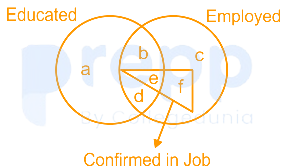
Read the given figure and find the region representing persons who are educated and employed but not confirmed in job.
The magazine in which Mahatma Gandhi mentioned what he wanted the Constitution to do is:
Which gas shields the surface of the earth from ultraviolet radiation from the sun?
Which event is marked as an Intangible Cultural Heritage of Humanity by UNESCO?
Who has been conferred with the rank of the Commander of the Order of the British Empire in 2018?


