
The primary goal of load control is to:
Ensure that CPU time is evenly distributed among processes
Understanding the Primary Goal of Load Control
In operating systems and system management, load control is a crucial mechanism. It deals with managing the overall workload placed on a system to ensure stable and efficient operation. The primary goal of load control is to prevent the system from becoming overloaded, which can lead to severe performance degradation or even crashes.
Let's look at the options provided regarding the primary goal of load control:
- Prevent processes from running concurrently: This is incorrect. Modern operating systems are designed to run multiple processes concurrently to maximize resource utilization and system throughput. Preventing concurrency is not a goal of load control; rather, it's about managing concurrent execution under load.
- Avoid context switching between processes: Context switching is an essential part of how operating systems multitask. It allows the CPU to switch quickly between different processes, giving the illusion of concurrent execution. While excessive context switching can add overhead, the goal of load control is not to avoid it entirely, but to manage the workload efficiently, which involves necessary context switching.
- Ensure that CPU time is evenly distributed among processes: This is a key aspect of effective load control and resource management. Distributing CPU time fairly among competing processes prevents process starvation (where a process doesn't get enough CPU time to make progress) and ensures that no single process completely monopolizes the CPU. This helps maintain responsiveness and fairness in the system under varying loads. Fair distribution is often achieved through CPU scheduling algorithms, which are part of the overall load control strategy in an operating system.
- Maximize the usage of virtual memory: Virtual memory is a technique used by operating systems to allow processes to use more memory than is physically available. While managing virtual memory is part of overall system resource management, maximizing its *usage* is not the primary goal of load control. The goal is efficient resource use and performance under load, not simply filling up virtual memory. Excessive use of virtual memory, leading to frequent swapping, is often a sign of *high* load and can degrade performance, which is what load control aims to mitigate.
Load Control and Resource Management
The core idea behind load control is to maintain system performance and stability. When a system is under heavy load, resources like CPU time, memory, and I/O bandwidth become scarce. Effective load control mechanisms, often implemented through CPU scheduling and resource management techniques, aim to allocate these resources fairly and efficiently.
Ensuring that CPU time is reasonably distributed is a fundamental way to manage system load. This approach prevents situations where a few demanding processes consume all available CPU time, leaving other processes waiting indefinitely. This fairness is crucial for interactive systems and for ensuring that all running tasks eventually make progress.
Therefore, distributing CPU time evenly among processes is a direct outcome and a primary objective of mechanisms used for effective load control in an operating system.
Important Questions from Miscellaneous
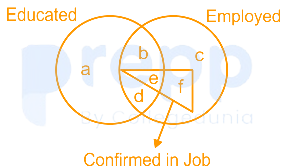
Read the given figure and find the region representing persons who are educated and employed but not confirmed in job.
The magazine in which Mahatma Gandhi mentioned what he wanted the Constitution to do is:
Which gas shields the surface of the earth from ultraviolet radiation from the sun?
Which event is marked as an Intangible Cultural Heritage of Humanity by UNESCO?
Who has been conferred with the rank of the Commander of the Order of the British Empire in 2018?


