
The negative network externality in which a consumer wishes to own an exclusive or unique good such as specially designed sports car is:
Snob effect
Understanding Network Externalities and Consumer Behavior
Network externalities describe how the value or utility a consumer derives from a good or service depends on the number of other consumers who use the same good or service. These externalities can be positive or negative.
Positive network externalities occur when the value of a product or service increases as more people use it. A classic example is a social media platform; it becomes more valuable to you as more of your friends join.
Negative network externalities occur when the value of a product or service decreases as more people use it. This often happens when a product is desired for its exclusivity or uniqueness.
Exploring the Snob Effect
The question describes a situation where a consumer wants an exclusive or unique good, like a specially designed sports car. This desire for exclusivity indicates that the product's value decreases to the consumer if many other people own it. This is a clear example of a negative network externality.
Specifically, this behavior is known as the snob effect. The snob effect is a demand-side negative network externality where the quantity of a good demanded by an individual falls in response to the quantity demanded by others. People demanding a snob good are motivated by the desire for exclusive ownership of a unique commodity.
Think about luxury goods or limited-edition items. Their appeal often lies precisely in their rarity and the status associated with owning something few others possess. As more people acquire such an item, its exclusivity diminishes, and its value to the "snob" consumer decreases.
Analyzing the Given Options
Let's look at the provided options to determine which one correctly identifies this negative network externality:
- Bandwagon effect: This is a positive network externality. It occurs when the quantity of a good demanded by an individual rises in response to the quantity demanded by others. People buy something because it is popular or "trendy." This is the opposite of the behavior described in the question.
- Tequila effect: This term is typically used in economics and finance to describe the ripple effect of a financial crisis in one country (specifically Mexico in 1994-95, hence "Tequila") on other emerging markets. It is not related to consumer demand based on network externalities for a specific good.
- Snob effect: As discussed, this is a negative network externality where demand is driven by the desire for exclusivity and uniqueness. The value of the good decreases as more people own it. This perfectly matches the scenario described in the question about wishing to own an exclusive or unique good.
- Pigou effect: This is a macroeconomic concept related to consumption changes due to changes in real wealth, specifically when price deflation increases the real value of money holdings, leading to increased consumer spending. It is not related to network externalities or the desire for exclusivity.
Based on the analysis, the behavior of wishing to own an exclusive or unique good because its value diminishes if others own it is the definition of the snob effect.
Conclusion on the Negative Network Externality
The negative network externality where a consumer desires an exclusive or unique good, and its value decreases as more people own it, is precisely the definition of the snob effect. This contrasts with positive network externalities like the bandwagon effect, where value increases with adoption.
| Effect | Type of Network Externality | Description | Impact on Demand |
|---|---|---|---|
| Bandwagon Effect | Positive | Demand increases as more people use the product (popularity driven). | Quantity demanded increases with market penetration. |
| Snob Effect | Negative | Demand decreases as more people use the product (exclusivity driven). | Quantity demanded decreases as market penetration increases. |
Revision Table: Key Economic Concepts
| Term | Category | Brief Explanation |
|---|---|---|
| Bandwagon effect | Positive Network Externality | Desire to own something because others do. |
| Tequila effect | Financial Contagion | Spread of financial crisis from one market to others. |
| Snob effect | Negative Network Externality | Desire for exclusivity; value decreases as others own it. |
| Pigou effect | Macroeconomic (Wealth Effect) | Increased real wealth due to deflation boosts consumption. |
Additional Information on Consumer Demand Effects
Understanding network externalities and other effects influencing consumer demand is crucial in economics and marketing. The snob effect and bandwagon effect illustrate how social factors and the actions of other consumers can significantly impact individual purchasing decisions, independent of the intrinsic value of the good itself. These effects can be particularly strong in markets for fashion, luxury goods, technology, and social platforms.
In contrast, effects like the Tequila effect and Pigou effect operate at different levels (macroeconomics, international finance) and describe broader economic phenomena rather than direct consumer-to-consumer influence on the desirability of a specific product.
Important Questions from Miscellaneous
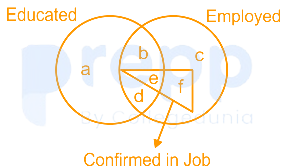
Read the given figure and find the region representing persons who are educated and employed but not confirmed in job.
The magazine in which Mahatma Gandhi mentioned what he wanted the Constitution to do is:
Which gas shields the surface of the earth from ultraviolet radiation from the sun?
Which event is marked as an Intangible Cultural Heritage of Humanity by UNESCO?
Who has been conferred with the rank of the Commander of the Order of the British Empire in 2018?


