
The actual labour productivity of farms was compared with what could have been achieved under optimizing decision-making by the farmers acting as rational economic persons. Which of the following geographer conducted this study?
Wolpert
Understanding Farm Labour Productivity and Decision-Making
The question asks about a specific study in geography that compared how productive farmers actually were with how productive they could be if they made perfectly rational, optimizing decisions. This type of study looks at the gap between ideal economic behavior and real-world human behavior in spatial contexts, specifically farming.
Identifying the Geographer: Wolpert's Contribution
The geographer known for this particular type of study, comparing actual labour productivity on farms with potential productivity under rational, optimizing decisions, is Torsten Wolpert. His work is significant in the field of behavioral geography, moving beyond purely economic models to understand why people make the spatial decisions they do, even if those decisions don't always lead to the maximum possible outcome.
Wolpert conducted a study focusing on Swedish farms. In this research, he analyzed the actual labour productivity achieved by farmers. He then compared this actual productivity to a calculated potential productivity level, which represented what could be achieved if farmers acted as perfectly rational economic agents, making decisions solely to optimize their output or efficiency.
This comparison revealed a gap between the actual and potential labour productivity. Wolpert attributed this gap to various factors influencing farmer behavior, which might not always align with strict economic optimization, such as personal preferences, risk aversion, limited information, or traditional practices. His concept of the "satisficer," a decision-maker who aims for a satisfactory outcome rather than the absolute optimal one, is relevant here, contrasting with the idea of a purely "rational economic person" or "optimizer."
Analyzing the Options
- Wright: While a significant figure in geography, Wright is not primarily known for this specific study on farm labour productivity comparison.
- White: Gilbert F. White is renowned for his work on natural hazards and human adjustment, not this particular study on farm productivity optimization.
- Kirk: William Kirk contributed to behavioral geography with his concept of the "behavioral environment," but the specific study mentioned in the question comparing actual vs. potential productivity is attributed to Wolpert.
- Wolpert: Torsten Wolpert conducted the detailed study comparing actual labour productivity of farms with the potential productivity under optimizing decision-making by rational economic persons, making this the correct choice.
Therefore, the geographer who conducted the study comparing actual farm labour productivity with potential productivity under optimizing decision-making is Wolpert.
| Concept | Description |
|---|---|
| Actual Labour Productivity | The real output achieved by farmers with the labour they invested. |
| Potential Labour Productivity | The theoretically achievable output assuming farmers make perfectly rational, optimizing decisions. |
| Rational Economic Person | A theoretical individual who always makes decisions to maximize utility or profit based on perfect information. |
| Optimizing Decision-Making | Making choices that lead to the best possible outcome based on defined criteria (e.g., maximum profit or efficiency). |
Revision Table: Geographic Concepts
| Geographer | Area of Study / Concept | Relevance to Question |
|---|---|---|
| Wright | Historical Geography, Human Geography | Not directly associated with this specific study. |
| White | Natural Hazards, Human-Environment Interaction | Not directly associated with this specific study. |
| Kirk | Behavioral Geography, Behavioral Environment | Related field, but not the specific productivity study. |
| Wolpert | Behavioral Geography, Decision-Making, Spatial Behavior, Satisficing vs. Optimizing | Directly associated with the study described. |
Additional Information: Behavioral Geography and Decision-Making
Behavioral geography is a branch of human geography that studies human behavior in space. It looks at how people perceive, experience, and make decisions about locations and spatial relationships. Instead of assuming people always behave perfectly rationally according to economic models (like the rational economic person), behavioral geography explores the psychological and cognitive processes that influence spatial decisions.
Wolpert's study is a classic example within this field. It highlighted that actual human behavior often deviates from the theoretical ideal of optimizing behavior. Factors like bounded rationality (making decisions based on limited information and cognitive ability) and satisficing (choosing the first option that is 'good enough' rather than searching for the absolute best) are concepts behavioral geographers use to explain real-world decision-making patterns. This perspective provides a richer understanding of human actions and their spatial consequences, such as agricultural productivity patterns.
Important Questions from Miscellaneous
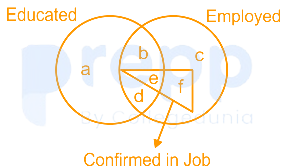
Read the given figure and find the region representing persons who are educated and employed but not confirmed in job.
The magazine in which Mahatma Gandhi mentioned what he wanted the Constitution to do is:
Which gas shields the surface of the earth from ultraviolet radiation from the sun?
Which event is marked as an Intangible Cultural Heritage of Humanity by UNESCO?
Who has been conferred with the rank of the Commander of the Order of the British Empire in 2018?


