WTU-XUV
QNO-ROP
Analyzing the Alphabet Pattern
The question presents two pairs of letter sequences: WTU-XUV and QNO-ROP. We need to find the underlying pattern that connects the letters within each pair and then select the option that follows the same pattern.
Step 1: Examine the first pair (WTU-XUV)
Let's look at the relationship between WTU and XUV:
- The first letter W shifts to X.
- The second letter T shifts to U.
- The third letter U shifts to V.
Comparing the positions in the alphabet:
- W is the 23rd letter, and X is the 24th letter. The change is +1 ( $24 - 23 = 1$ ).
- T is the 20th letter, and U is the 21st letter. The change is +1 ( $21 - 20 = 1$ ).
- U is the 21st letter, and V is the 22nd letter. The change is +1 ( $22 - 21 = 1$ ).
The pattern observed is that each letter in the first sequence is shifted one position forward in the alphabet to get the corresponding letter in the second sequence.
Step 2: Verify the pattern with the second pair (QNO-ROP)
Let's check if the same +1 shift pattern applies:
- The first letter Q shifts to R.
- The second letter N shifts to O.
- The third letter O shifts to P.
Comparing the positions in the alphabet:
- Q (17th) to R (18th): Change is +1 ( $18 - 17 = 1$ ).
- N (14th) to O (15th): Change is +1 ( $15 - 14 = 1$ ).
- O (15th) to P (16th): Change is +1 ( $16 - 15 = 1$ ).
The pattern of shifting each letter one position forward in the alphabet holds true for both given pairs.
Step 3: Apply the pattern to the options
We need to find a pair where the second sequence is formed by shifting each letter of the first sequence one position forward.
- Option 1: TPP-TQR
- Applying the +1 pattern to TPP:
- T (20) + 1 = U (21)
- P (16) + 1 = Q (17)
- P (16) + 1 = Q (17)
- So, TPP should become UQQ. The option given is TQR, which doesn't match.
- Option 2: TQR-URS
- Applying the +1 pattern to TQR:
- T (20) + 1 = U (21)
- Q (17) + 1 = R (18)
- R (18) + 1 = S (19)
- So, TQR becomes URS. This matches the pair given in the option.
- Option 3: TQR-TRR
- We already found that TQR becomes URS using the pattern. The option gives TRR, which doesn't match.
- Option 4: TPP-URS
- We found that TPP becomes UQQ. The option gives URS, which doesn't match.
Conclusion
Only the pair TQR-URS follows the established pattern where each letter in the first sequence is shifted one position forward in the alphabet to form the second sequence.
Important Questions from Series (Notes)
- Complete the series :
7, 14, 11, 22, 17, 34, ? - In the following letter series, some of the letters are missing which are given in that order as one of the alternatives below it. Choose the correct alternative.
_bc_ca_aba_c_ca Select a figure from the Answer Figures which will continue the same series as established by the five Question Figures.
Question Figures:-
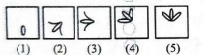
- The next term in the given series from the following options is :
2 V 3, 3 S 5, 5 O 7, 7 I 11, ? Which one of the following images numbered as (1), (2), (3), (4) will be the next image for the given series?