
Select the most appropriate synonym of the given word. Concise
Short
Understanding the Word "Concise"
The question asks us to find the most appropriate synonym for the word "Concise". A synonym is a word or phrase that means exactly or nearly the same as another word or phrase in the same language.
Let's look at the meaning of the word "Concise".
- Concise: Giving a lot of information clearly and in a few words; brief but comprehensive. It implies being brief while still covering the necessary points.
Analyzing the Options for "Concise"
We need to examine each option to see which one is closest in meaning to "Concise".
- Abrupt: This means sudden and unexpected. It can also mean brief to the point of being rude. While it implies shortness, it usually carries the connotation of suddenness or rudeness, which is different from the efficient brevity of "Concise".
- Short: This simply means of small length; not long. It is a general term for lack of length or duration. A concise piece of writing is definitely short, but "short" itself doesn't necessarily imply the clarity and comprehensiveness that "concise" does. However, among the given options, it is the closest general synonym for something that is brief.
- Lengthy: This means of great length; long. This is the opposite of "Concise".
- Fine: This means of high quality; very good; excellent. This word is completely unrelated to the meaning of "Concise".
Selecting the Most Appropriate Synonym
Comparing the options, "Short" is the most appropriate synonym for "Concise" among the choices provided. While "Concise" suggests brevity with information, "Short" is the general term for being not long, which is the core idea behind "Concise". The other options, "Abrupt", "Lengthy", and "Fine", are either opposites or unrelated in meaning.
Conclusion on "Concise" Synonym
Based on the analysis of the word "Concise" and the given options, the most appropriate synonym is "Short".
Revision Table: Understanding Synonyms
| Word | Meaning | Relationship to "Concise" |
|---|---|---|
| Concise | Brief but comprehensive | Main word |
| Abrupt | Sudden or rude and brief | Related to brevity, but different connotation |
| Short | Not long | Most appropriate general synonym among options |
| Lengthy | Long | Antonym |
| Fine | Excellent quality | Unrelated |
Additional Information: Synonyms and Context
Choosing the best synonym often depends on the specific context. While "Short" is a general synonym for "Concise", words like "brief", "terse", "pithy", or "succinct" might be better synonyms in different situations, as they also carry the implication of conveying information efficiently. "Brief" is very close to "Short". "Terse" can sometimes imply a lack of friendliness. "Pithy" suggests being forcefully expressive. "Succinct" is perhaps the closest synonym, meaning expressed clearly and in few words.
However, given the options, "Short" is the most fitting choice for "Concise".
Important Questions from Miscellaneous
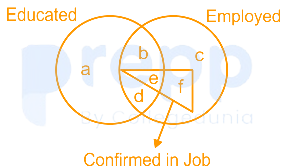
Read the given figure and find the region representing persons who are educated and employed but not confirmed in job.
The magazine in which Mahatma Gandhi mentioned what he wanted the Constitution to do is:
Which gas shields the surface of the earth from ultraviolet radiation from the sun?
Which event is marked as an Intangible Cultural Heritage of Humanity by UNESCO?
Who has been conferred with the rank of the Commander of the Order of the British Empire in 2018?


