
Select the INCORRECTLY spelt word.
Arachic
Analyzing Spelling Errors in English Words
The question asks us to identify the word that is spelled incorrectly among the given options. Let's examine each word provided:
- Bombastic: This word means high-sounding but with little meaning; pompous. The spelling 'Bombastic' is correct.
- Arachic: This word is intended to mean very old or old-fashioned. The correct spelling for this word is 'Archaic'. Therefore, 'Arachic' is spelled incorrectly.
- Benign: This word can mean gentle, kind, or not harmful (especially regarding a disease). The spelling 'Benign' is correct.
- Artless: This word means without guile or deception; naive. The spelling 'Artless' is correct.
Identifying the Incorrectly Spelled Word
Based on our analysis, the word 'Arachic' is misspelled. The correct spelling is 'Archaic'. This word is commonly used to describe something belonging to an earlier period, especially as a characteristic of present or past language or style.
Correct Spellings of the Words
Let's list the correct spellings and brief meanings:
- Bombastic: Correct spelling; Pompous, pretentious language.
- Archaic: Correct spelling (derived from 'Arachic'); Very old or old-fashioned.
- Benign: Correct spelling; Gentle, not harmful.
- Artless: Correct spelling; Naive, simple, without deceit.
Therefore, the word that is incorrectly spelled is 'Arachic'.
| Given Word | Correct Spelling | Status |
|---|---|---|
| Bombastic | Bombastic | Correct |
| Arachic | Archaic | Incorrect |
| Benign | Benign | Correct |
| Artless | Artless | Correct |
Revision Table: Common Spelling Points
| Word Family | Correct Spelling | Meaning Hint |
|---|---|---|
| Archaic | Archaic | Old-fashioned |
| Benign | Benign | Gentle, Not harmful |
| Bombastic | Bombastic | Pompous talk |
| Artless | Artless | Simple, Naive |
Additional Information on Spelling and Vocabulary
Mastering English spelling requires practice and attention to detail. Many words have similar sounds but different spellings and meanings (homophones), or similar spellings but subtle differences that change the meaning or indicate an incorrect form.
Checking for common letter combinations, root words, prefixes, and suffixes can help improve spelling accuracy. For example, recognizing that 'archaic' comes from a root meaning 'ancient' or 'beginning' (like archaeology) can help remember the 'cha' spelling.
Regularly reading diverse texts and using a dictionary to look up words can significantly enhance vocabulary and spelling skills. Pay close attention to words you frequently misspell and practice writing them correctly.
Important Questions from Miscellaneous
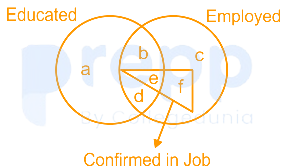
Read the given figure and find the region representing persons who are educated and employed but not confirmed in job.
The magazine in which Mahatma Gandhi mentioned what he wanted the Constitution to do is:
Which gas shields the surface of the earth from ultraviolet radiation from the sun?
Which event is marked as an Intangible Cultural Heritage of Humanity by UNESCO?
Who has been conferred with the rank of the Commander of the Order of the British Empire in 2018?


