
Preeti is a person who is usually of unsound mind, but occasionally of sound mind. Can she make a contract?
She can make a contract when she is sound mind
Contract by a Person of Unsound Mind
Understanding the legal capacity to enter into a contract is crucial. A person is generally considered capable of making a contract if they are of the age of majority and of sound mind. However, the question talks about Preeti, who is usually of unsound mind but occasionally of sound mind.
Indian contract law (Section 12 of The Indian Contract Act, 1872) defines what constitutes a sound mind for the purpose of making a contract. It states that a person is of sound mind for the purpose of making a contract if, at the time when he makes it, he is capable of understanding it and of forming a rational judgment as to its effect upon his interests.
The section also specifically addresses persons who are occasionally of unsound mind:
- A person who is usually of unsound mind, but occasionally of sound mind, may make a contract when he is of sound mind.
- A person who is usually of sound mind, but occasionally of unsound mind, may not make a contract when he is of unsound mind.
Applying this principle to Preeti's situation:
- Preeti is usually of unsound mind.
- However, she is occasionally of sound mind.
Based on the legal definition, she has the capacity to contract, but only during the periods when she is of sound mind and capable of understanding the contract and its implications.
Therefore, Preeti can make a valid contract during those intervals when her mind is sound.
Important Questions from Miscellaneous
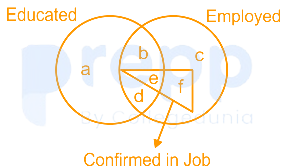
Read the given figure and find the region representing persons who are educated and employed but not confirmed in job.
The magazine in which Mahatma Gandhi mentioned what he wanted the Constitution to do is:
Which gas shields the surface of the earth from ultraviolet radiation from the sun?
Which event is marked as an Intangible Cultural Heritage of Humanity by UNESCO?
Who has been conferred with the rank of the Commander of the Order of the British Empire in 2018?


