
Name the Nayak who inaugurated the kingdom of Ramnad.
Muthu Krishnappa
Ramnad Kingdom: Inauguration by Muthu Krishnappa Nayak
The question asks about the Nayak ruler who played a crucial role in establishing the kingdom of Ramnad. Understanding the historical context of the Nayak period in South India is key to answering this question.
Nayak Rule and the Ramnad Connection
During the Nayak rule in Madurai, various smaller principalities, known as palayams, existed under their control. The region of Ramnad (Ramanathapuram) was one such important territory. The local rulers of Ramnad were known as the Sethupathis, who were Maravar chieftains. They held significant power and were often entrusted with protecting the pilgrim route to Rameswaram.
Muthu Krishnappa Nayak and the Sethupathis
Muthu Krishnappa Nayak was a prominent Nayak ruler of Madurai. It was during his reign that the Ramnad region gained a more distinct identity and its chieftains were formally recognized in a way that set the foundation for what would later become the independent kingdom of Ramnad, also known as the Sethupathi kingdom.
- Role of Muthu Krishnappa Nayak: He formally appointed a Sethupathi ruler, typically a Maravar chieftain, to govern the Ramnad region. This appointment was a recognition of their local power and influence.
- Significance: While Ramnad was initially a feudatory state under the Madurai Nayaks, the formalization of the Sethupathi title and their increased autonomy under Muthu Krishnappa Nayak marked a significant step towards the eventual establishment of an independent Ramnad kingdom. The Sethupathis effectively became the hereditary rulers, laying the groundwork for their future autonomy.
- The Sethupathis of Ramnad: These rulers were traditionally protectors of the Adam's Bridge (Sethu) and the pilgrim path to Rameswaram, giving them the title 'Sethupathi' (Lord of Sethu).
Analysis of Options
- Muthu Krishnappa: As discussed, Muthu Krishnappa Nayak was instrumental in recognizing and empowering the Sethupathis, effectively inaugurating the framework for the Ramnad kingdom. His actions solidified the position of the Sethupathis.
- Muthu Vaduganathar: Muthu Vaduganathar was a later ruler of Sivaganga (a kingdom that branched off from Ramnad), known for his resistance against the British. He is not associated with the inauguration of the Ramnad kingdom itself.
- Chokkanatha Nayakkar: Chokkanatha Nayakkar was a later and powerful Nayak ruler of Madurai, known for various administrative and military campaigns. However, the formal establishment of the Sethupathis' hereditary rule in Ramnad predates his reign.
- Vishwanatha: Vishwanatha Nayak was the founder of the Madurai Nayak dynasty itself. While he established the broader Nayak rule under which Ramnad existed, he was not the specific Nayak who inaugurated the kingdom of Ramnad as a distinct entity with its hereditary Sethupathi rulers.
Therefore, Muthu Krishnappa Nayak is the correct Nayak ruler associated with formally recognizing and establishing the administrative framework for the kingdom of Ramnad, which eventually led to its full independence.
Important Questions from Miscellaneous
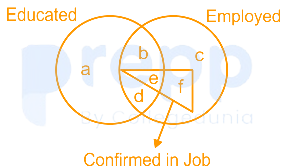
Read the given figure and find the region representing persons who are educated and employed but not confirmed in job.
The magazine in which Mahatma Gandhi mentioned what he wanted the Constitution to do is:
Which gas shields the surface of the earth from ultraviolet radiation from the sun?
Which event is marked as an Intangible Cultural Heritage of Humanity by UNESCO?
Who has been conferred with the rank of the Commander of the Order of the British Empire in 2018?


