
Mead delineates three stages in which the concept of self arises and developes; the stage of imitative acts, the play stage and the _________
Understanding Mead's Stages of Self Development
George Herbert Mead, a key figure in social psychology and sociology, proposed a theory explaining how the concept of the self develops through social interaction. According to Mead, the self is not present at birth but emerges and develops through three key stages.
These three stages are:
- The stage of imitative acts (often called the preparatory stage)
- The play stage
- The game stage
The question asks for the third stage after the imitative acts and play stages. Based on Mead's theory, the missing stage is the game stage.
Explanation of Mead's Stages
Let's look at each stage in more detail to understand how the self develops:
- Stage of Imitative Acts (Preparatory Stage): This is the earliest stage, typical of infants and very young children. At this stage, children simply imitate the actions and sounds of others without necessarily understanding the meaning behind them. They are preparing for role-taking but don't yet understand social roles or how others see them.
- Play Stage: In this stage, which typically begins around age two or three, children start to take on the roles of specific individuals around them. They might play "mommy," "daddy," "doctor," or "teacher." When playing, a child imagines how a particular significant other would act and tries to imitate that behavior. This stage helps them see themselves from the perspective of one other person at a time. The self is developed through taking the role of discrete significant others.
- Game Stage: This stage usually starts when children are older, perhaps around age six or seven, coinciding with participation in organized games like baseball or hide-and-seek. In a game, a child must understand not just the role of one other person, but the roles and expectations of everyone involved in the game simultaneously. They must understand how their own role relates to the roles of others. This requires understanding the collective expectations of a group, which Mead called the "generalized other." Successfully navigating the game stage allows the individual to see themselves from the perspective of the community or group, which is crucial for developing a fully formed sense of self.
The development progresses from simple imitation, to taking the role of one specific person, to understanding the expectations of an entire group (the generalized other).
Therefore, the third stage in Mead's theory of self development, following the stage of imitative acts and the play stage, is the game stage.
Revision Table: Mead's Stages of Self
| Stage | Typical Age | Key Activity | Self Development |
|---|---|---|---|
| Imitative Acts (Preparatory) | 0-2 years | Imitation of others' actions/sounds | No sense of self; preparing for role-taking |
| Play Stage | 2-6 years | Taking on roles of significant others (one at a time) | Self develops through specific role-taking |
| Game Stage | 6+ years | Understanding roles and expectations of multiple others simultaneously (Generalized Other) | Self develops through understanding collective expectations |
Additional Information on Mead's Theory of Self
Mead also distinguished between two aspects of the self: the "I" and the "Me."
- The "I" is the spontaneous, unorganized, unpredictable, and creative part of the self. It is the acting subject, the response of the individual to the attitude of others. It is the initiator of action.
- The "Me" is the organized set of attitudes of others that the individual assumes. It represents the internalized expectations and attitudes of society (the generalized other). It is the socialized self, the part that considers societal norms and expectations before acting.
The self, according to Mead, is a constant dialogue between the "I" and the "Me." The "Me" provides the framework of social expectations, and the "I" responds to this framework creatively, leading to action. The "Me" develops through the stages discussed above, especially solidifying in the game stage with the formation of the generalized other.
Important Questions from Miscellaneous
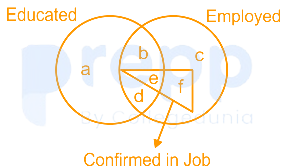
Read the given figure and find the region representing persons who are educated and employed but not confirmed in job.
The magazine in which Mahatma Gandhi mentioned what he wanted the Constitution to do is:
Which gas shields the surface of the earth from ultraviolet radiation from the sun?
Which event is marked as an Intangible Cultural Heritage of Humanity by UNESCO?
Who has been conferred with the rank of the Commander of the Order of the British Empire in 2018?


