
Match List I with List II LIST I (Organisational Appraisal Techniques) LIST II (Names of Proposers) A. Balanced Scorecard I. Barney B. Economic Value-added Analysis II Howard J. Dresner C. VRIO framework III. Stern Stewart & Company D. Business intelligence IV. Robert S. Kaplan and David p. Norton Choose the correct answer from the options given below:
Understanding Organizational Appraisal Techniques and Their Proposers
This question asks us to match different organizational appraisal techniques and related concepts with the individuals or firms who are primarily associated with their development or popularization. Understanding the origins of these frameworks is crucial for grasping their context and application in strategic management and business analysis.
Matching the Concepts and Proposers
Let's analyze each item in List I and find its corresponding proposer in List II based on established knowledge in the field of management:
- Balanced Scorecard: This is a strategic performance management framework. It is widely attributed to Robert S. Kaplan and David P. Norton.
- Economic Value-added Analysis (EVA): This is a financial performance metric. It was popularized and trademarked by the consulting firm Stern Stewart & Company.
- VRIO Framework: This is a tool used in strategic analysis to analyze a firm's internal resources and capabilities. It was developed by Jay B. Barney.
- Business Intelligence: While the concept has evolved, Howard J. Dresner, a Gartner analyst, is often credited with coining the term "Business Intelligence" in 1989 to describe "concepts and methods to improve business decision making by using fact-based support systems".
Based on this understanding, we can create the correct matches:
| List I (Organisational Appraisal Techniques) | List II (Names of Proposers) |
|---|---|
| A. Balanced Scorecard | IV. Robert S. Kaplan and David P. Norton |
| B. Economic Value-added Analysis | III. Stern Stewart & Company |
| C. VRIO framework | I. Barney |
| D. Business intelligence | II. Howard J. Dresner |
Thus, the correct mapping is A - IV, B - III, C - I, D - II.
Analysis of the Matchings
Let's look at each pairing in detail:
- A. Balanced Scorecard and IV. Robert S. Kaplan and David P. Norton: Kaplan and Norton introduced the Balanced Scorecard in their 1992 Harvard Business Review article. It expands traditional financial measures to include customer perspectives, internal business processes, and learning and growth perspectives, providing a more holistic view of organizational performance.
- B. Economic Value-added Analysis and III. Stern Stewart & Company: EVA is a specific measure of financial performance that calculates the profit remaining after deducting the cost of capital. Stern Stewart & Company developed and promoted EVA as a key metric for evaluating management performance and making investment decisions.
- C. VRIO framework and I. Barney: The VRIO framework, standing for Value, Rarity, Imitability, and Organization, is a model developed by Jay B. Barney to evaluate a firm's resources and capabilities to determine if they can be a source of sustained competitive advantage.
- D. Business intelligence and II. Howard J. Dresner: Howard Dresner is recognized for popularizing the term "Business Intelligence" in the late 1980s to describe the use of data analysis tools and techniques for improving business operations and decision-making. While the underlying concepts existed before, his definition helped shape the modern understanding of BI.
This detailed analysis confirms the correct pairing for each technique and its associated proposer.
Revision Table: Key Techniques & Proposers
| Technique/Concept | Primary Proposer(s) | Brief Description |
|---|---|---|
| Balanced Scorecard | Kaplan & Norton | Strategic performance management framework (Financial, Customer, Internal Process, Learning & Growth). |
| Economic Value-added (EVA) | Stern Stewart & Company | Financial performance metric (Profit after cost of capital). |
| VRIO framework | Jay B. Barney | Resource analysis tool (Value, Rarity, Imitability, Organization). |
| Business Intelligence (BI) | Howard J. Dresner | Data analysis for decision making (term popularized by him). |
Additional Information: Strategic Management Concepts
Understanding organizational appraisal techniques is part of the broader field of strategic management. These tools help organizations assess their current state, measure performance, analyze capabilities, and make informed decisions for future strategy. Each technique offers a different lens through which to view the organization:
- The Balanced Scorecard provides a multi-dimensional view of performance, moving beyond just financial metrics.
- EVA focuses specifically on shareholder value creation from a financial perspective.
- The VRIO framework is internal-focused, helping identify sustainable competitive advantages based on resources.
- Business Intelligence provides the data and analytical tools needed to support decision-making across all functions.
Together, these and other frameworks form a toolkit for managers to effectively analyze, plan, and execute strategy.
Important Questions from Miscellaneous
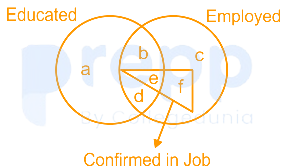
Read the given figure and find the region representing persons who are educated and employed but not confirmed in job.
The magazine in which Mahatma Gandhi mentioned what he wanted the Constitution to do is:
Which gas shields the surface of the earth from ultraviolet radiation from the sun?
Which event is marked as an Intangible Cultural Heritage of Humanity by UNESCO?
Who has been conferred with the rank of the Commander of the Order of the British Empire in 2018?


