
Match List – I of firewalls with their uses in List – II. Select the correct answer from the given options. List - I List - II a. Stateful Inspection Firewall i. T elnet b. Packet filter firewall ii. Operating System c. Proxy server firewall iii. M ail servers d. Application Level Firewall iv. Inbound network traffic
a - iv, b - ii, c - iii, d - i
Understanding Firewalls and Their Uses
Firewalls are essential network security devices that monitor and control incoming and outgoing network traffic based on predetermined security rules. They act as a barrier between a trusted internal network and untrusted external networks, such as the internet. Different types of firewalls operate at different levels of the network stack and offer varying levels of inspection and control. Let's look at some common firewall types and their typical uses.
Firewall Types and Functions Analysis
Here we analyze the firewall types listed in List I and their general functions:
- Stateful Inspection Firewall: This type of firewall keeps track of the state of active network connections. It examines the packet header as well as the context of the connection, allowing it to distinguish legitimate packets for established connections from malicious ones.
- Packet Filter Firewall: Operating at the network or transport layer, this firewall examines individual network packets based on information in their headers, such as source and destination IP addresses, port numbers, and protocol types (TCP, UDP, ICMP). It makes decisions on a packet-by-packet basis without considering the overall connection state.
- Proxy Server Firewall: This type of firewall acts as an intermediary for network requests. Clients connect to the proxy, which then forwards the request to the destination server. The server's response goes back to the proxy, which then forwards it to the client. This hides the internal network structure and allows for deep inspection of traffic for specific applications.
- Application Level Firewall: Also known as a proxy firewall or gateway, this firewall operates at the application layer (Layer 7 of the OSI model). It understands specific application protocols like HTTP, FTP, SMTP, or Telnet, and can inspect the content of the traffic, not just the headers, for malicious activity.
Matching Firewalls with Specific Uses
Now let's match the firewall types from List I with their uses from List II, based on the provided correct mapping.
- a. Stateful Inspection Firewall matches with iv. Inbound network traffic: Stateful inspection firewalls are highly effective for monitoring and controlling the flow of network traffic, especially inbound connections from external networks. By tracking the state of connections, they can ensure that only legitimate responses to internal requests are allowed back in and prevent unsolicited inbound connections.
- b. Packet filter firewall matches with ii. Operating System: Packet filter firewalls operate at lower network layers (network/transport) and are typically implemented within or interact closely with the operating system's network stack. They filter incoming packets *before* they are processed by the OS or higher-level applications, protecting the OS and its services from unwanted or malicious network packets.
- c. Proxy server firewall matches with iii. Mail servers: Proxy server firewalls are often used as specialized proxies for specific services. A common use case is acting as an email proxy (like an SMTP gateway), sitting between the external network and internal mail servers. This allows the proxy to scan emails for spam or malware before they reach the internal mail server and users.
- d. Application Level Firewall matches with i. Telnet: Application-level firewalls understand and inspect the content of application protocols. Telnet is an application layer protocol used for command-line communication. An application-level firewall can inspect the Telnet session data for unauthorized commands or patterns, providing granular control and security beyond simple port filtering.
Summary of Firewall Matching
The matching based on the analysis is summarized in the table below:
| List I (Firewall Type) | List II (Use) |
|---|---|
| a. Stateful Inspection Firewall | iv. Inbound network traffic |
| b. Packet filter firewall | ii. Operating System |
| c. Proxy server firewall | iii. Mail servers |
| d. Application Level Firewall | i. Telnet |
Revision Table: Firewall Uses
| Firewall Type | Key Characteristics | Matched Use Case | Why the Match? |
|---|---|---|---|
| Stateful Inspection | Tracks connection state; Inspects header & context | Inbound network traffic | Effective for monitoring and securing connection flows, particularly inbound. |
| Packet Filter | Examines packet headers (IP, Port, Protocol); Stateless | Operating System | Filters packets at lower layers, protecting the OS and its services from unwanted traffic. |
| Proxy Server | Acts as an intermediary; Can perform deep content inspection for specific services | Mail servers | Commonly used as an application-specific proxy for services like email (SMTP). |
| Application Level | Understands application protocols (HTTP, FTP, Telnet); Inspects content | Telnet | Can inspect and control traffic for specific application protocols like Telnet based on content. |
Additional Information: Firewall Deployment and Considerations
Understanding firewall types helps in deploying appropriate network security. Here are some additional points:
- Layer of Operation: Different firewalls operate at different layers of the OSI model. Packet filters work at Network/Transport layers, Stateful Inspection also spans Transport/Session, while Proxy and Application Level firewalls work at the Application layer.
- Performance vs. Security: Lower-layer firewalls (like packet filters) are generally faster but provide less detailed inspection. Higher-layer firewalls (like application-level) offer more granular security but can introduce latency due to deeper inspection.
- Combined Approaches: Modern security solutions often combine multiple firewall techniques (e.g., stateful inspection with integrated application-level gateways) to provide comprehensive protection.
- Policy Management: The effectiveness of any firewall heavily depends on properly configured security policies and rules that define what traffic is permitted or denied.
Important Questions from Miscellaneous
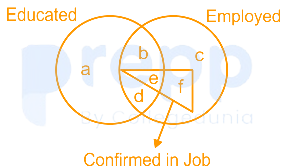
Read the given figure and find the region representing persons who are educated and employed but not confirmed in job.
The magazine in which Mahatma Gandhi mentioned what he wanted the Constitution to do is:
Which gas shields the surface of the earth from ultraviolet radiation from the sun?
Which event is marked as an Intangible Cultural Heritage of Humanity by UNESCO?
Who has been conferred with the rank of the Commander of the Order of the British Empire in 2018?


