
Likert had proposed only six dimensions of organisational climate. Who proposed seven steps of organisational climate?
Litwin and Stringer
Understanding Organizational Climate Models
Organizational climate refers to the shared perceptions among members of an organization regarding the policies, practices, and procedures that they experience and the behaviors that are expected, supported, and rewarded. It's essentially the "feel" of an organization.
Various researchers have proposed models to describe and measure the different dimensions or aspects that constitute organizational climate. One well-known contributor was Rensis Likert, who identified six key dimensions.
Likert's Six Dimensions of Organizational Climate
Likert's model, often associated with his System 4 management theory, proposed six important dimensions to assess the climate within an organization:
- Climate (How employees feel about the general atmosphere)
- Management System (The management style and philosophy)
- Communication (The flow and openness of communication)
- Motivation (How employees are motivated)
- Decision Making (How decisions are made)
- Goal Setting (How goals are set and achieved)
While Likert's work was foundational, other researchers expanded upon the concept and proposed different models with varying numbers of dimensions or steps.
Litwin and Stringer's Seven Steps of Organizational Climate
George Litwin and Robert Stringer were also pioneers in the study of organizational climate. They are credited with proposing a model that outlines seven key dimensions (often referred to as steps or factors) that influence the perceived climate within a work environment. These dimensions focus heavily on the psychological impact of the organizational environment on its members.
The seven dimensions proposed by Litwin and Stringer are:
- Structure: The feeling employees have about constraints, rules, procedures, and how many levels of hierarchy there are.
- Responsibility: The feeling of being able to make decisions and take action without needing approval for everything.
- Reward: The feeling of being rewarded for a job well done and the fairness of the reward system (pay, promotion, praise).
- Risk: The feeling of challenge and acceptable risk-taking in the job and in the organization.
- Warmth: The feeling of general good fellowship and helpfulness prevailing in the work group.
- Support: The feeling of supportiveness from managers and other people in the organization; emphasis on mutual help.
- Standards: The feeling about the importance of implicit and explicit goals and performance standards; emphasis on doing a good job.
These seven dimensions provide a framework for analyzing and understanding the psychological climate experienced by employees, linking it to motivation and behavior.
Analyzing the Options
Let's consider the other options provided in the question:
- Schein: Edgar Schein is a prominent figure in organizational behavior, particularly known for his work on organizational culture, career anchors, and process consultation. While organizational culture is related to climate, Schein is not primarily associated with proposing a specific seven-step model for organizational climate dimensions.
- Kluckhohn and Strodtbeck: Florence Kluckhohn and Fred Strodtbeck are known for their work on value orientations, particularly in cultural anthropology, comparing different cultural groups based on how they address universal human problems. Their focus is on broader cultural values, not specific dimensions of organizational climate.
- Hofstede: Geert Hofstede is famous for his research on national cultural dimensions (such as Power Distance, Individualism vs. Collectivism, etc.) that influence organizational behavior across different countries. Like Kluckhohn and Strodtbeck, his focus is on national culture, not a model of organizational climate steps.
Based on the research on organizational climate models, Litwin and Stringer are the scholars who proposed the seven dimensions (or steps) of organizational climate. Therefore, they are the correct answer to the question asking who proposed seven steps of organisational climate.
| Researcher(s) | Key Concept | Number of Dimensions/Steps |
|---|---|---|
| Rensis Likert | Organizational Climate / Management Systems | Six dimensions of organizational climate |
| Litwin and Stringer | Organizational Climate | Seven dimensions/steps of organizational climate |
| Edgar Schein | Organizational Culture | Model of organizational culture levels (artifacts, espoused beliefs/values, basic underlying assumptions) |
| Kluckhohn and Strodtbeck | Cultural Value Orientations | Six basic value orientations |
| Geert Hofstede | National Culture | Cultural dimensions (e.g., Power Distance, Individualism) |
Revision Table: Key Climate & Culture Researchers
| Concept | Researcher(s) | Key Contribution |
|---|---|---|
| Organizational Climate (6 Dim.) | Rensis Likert | System 4 Management, Climate Dimensions |
| Organizational Climate (7 Steps) | Litwin and Stringer | Seven Dimensions Model (Structure, Responsibility, etc.) |
| Organizational Culture | Edgar Schein | Levels of Culture (Artifacts, Values, Assumptions) |
| National Culture | Geert Hofstede | Cultural Dimensions (Power Distance, etc.) |
| Cultural Value Orientations | Kluckhohn and Strodtbeck | Value Orientations framework |
Additional Information: Climate vs. Culture
While often used interchangeably, organizational climate and organizational culture are distinct concepts:
- Organizational Climate: This is often described as the "feel" of the workplace. It represents employees' shared perceptions of their immediate work environment, based on observable events and practices. Climate is typically more temporary and subject to change, reflecting current shared perceptions.
- Organizational Culture: This is deeper and more stable. It represents the shared basic assumptions, values, and beliefs that govern how people behave in organizations. Culture is developed over time and passed down through generations of employees. It's often described as "the way we do things around here."
Think of climate as the weather (day-to-day perceptions) and culture as the climate (long-term patterns). Researchers like Litwin & Stringer and Likert focused more on climate, while Schein is a major figure in organizational culture studies.
Important Questions from Miscellaneous
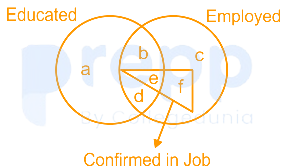
Read the given figure and find the region representing persons who are educated and employed but not confirmed in job.
The magazine in which Mahatma Gandhi mentioned what he wanted the Constitution to do is:
Which gas shields the surface of the earth from ultraviolet radiation from the sun?
Which event is marked as an Intangible Cultural Heritage of Humanity by UNESCO?
Who has been conferred with the rank of the Commander of the Order of the British Empire in 2018?


