
Goods that are brought not for meeting the immediate need of the consumer but for producing other goods are called _______.
Capital Goods
Understanding Goods in Economics: Capital Goods Explained
The question asks about goods that are acquired not for direct satisfaction of consumer needs, but for the purpose of producing other goods. In economics, goods are often categorized based on their use or purpose.
Let's look at the options provided and understand what each term means in the context of economic goods:
- Consumer Goods: These are goods and services that are purchased by the final consumer for consumption. They directly satisfy human wants. Examples include food, clothing, cars (for personal use), and entertainment.
- Capital Goods: These are goods used by businesses or individuals to produce other goods or services. They are not consumed directly but are instrumental in the production process. Examples include machinery, tools, factory buildings, and equipment.
- Consumption Goods: This term is generally used interchangeably with Consumer Goods. They are goods meant for final consumption by individuals or households.
- Final Goods: These are goods that have reached the final stage of production and are ready for use by the final user, either for consumption or for investment. Capital goods are a type of final good because they are not used up in the production process but are used over time to produce other goods. However, the defining characteristic highlighted in the question is their use in *producing other goods*, which specifically points to their role as capital.
Based on these definitions, the goods that are brought not for meeting the immediate need of the consumer but for producing other goods perfectly describe Capital Goods. They are an essential part of the production process, enabling the creation of other goods and services.
Why Other Options Are Not Correct
- Consumer Goods / Consumption Goods: These are purchased for direct consumption, not for producing other goods.
- Final Goods: While Capital Goods are a type of final good (as opposed to intermediate goods which are used up in production), the term "Final Goods" is broader. It includes both consumer goods (like a loaf of bread bought to eat) and capital goods (like a machine bought by a factory). The question specifically highlights the role of these goods in producing others, which is the defining feature of capital goods, not all final goods.
Therefore, the goods that are brought not for meeting the immediate need of the consumer but for producing other goods are called Capital Goods.
Revision Table: Types of Economic Goods
| Type of Good | Primary Purpose | Example |
|---|---|---|
| Consumer Goods / Consumption Goods | Directly satisfy consumer needs | Food, Clothes, Personal Car |
| Capital Goods | Used in the production of other goods/services | Machinery, Tools, Factory Building |
| Intermediate Goods | Used up in the production of other goods | Raw materials, components (e.g., flour for bread production) |
| Final Goods | Ready for final use (consumption or investment) | Loaf of bread (consumption), Machine (investment/capital) |
Additional Information on Capital Goods and Production
Capital goods play a crucial role in economic growth. An economy's capacity to produce goods and services is heavily dependent on its stock of capital goods. Investment in new capital goods increases productivity and allows for the production of a greater quantity and variety of goods in the future.
The distinction between consumer goods and capital goods can sometimes depend on who is buying the good and for what purpose. For instance:
- A car bought by a family for transportation is a consumer good.
- A car (like a taxi or a delivery van) bought by a business to provide services is a capital good.
Understanding these classifications is fundamental to studying macroeconomics, national income accounting, and theories of production and growth.
Important Questions from Miscellaneous
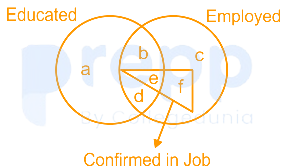
Read the given figure and find the region representing persons who are educated and employed but not confirmed in job.
The magazine in which Mahatma Gandhi mentioned what he wanted the Constitution to do is:
Which gas shields the surface of the earth from ultraviolet radiation from the sun?
Which event is marked as an Intangible Cultural Heritage of Humanity by UNESCO?
Who has been conferred with the rank of the Commander of the Order of the British Empire in 2018?


