
Genuvarum Explained
The question asks to identify the condition known as 'Genuvarum'. This term refers to a specific anatomical alignment of the legs.
Understanding Genuvarum
Genuvarum is a medical term describing a condition where the knees bend outward, causing the legs to angle inward and touch or nearly touch, even when the feet are apart. This creates a distinct outward bowing of the legs from the hips to the ankles.
Analyzing the Options
Let's look at the provided options:
- Knock Knees (Genuvalgum): This is the opposite of Genuvarum, where the knees angle inward and touch, while the ankles remain apart.
- Flat Foot: This condition involves the arch of the foot collapsing, making the entire sole of the foot come into contact with the ground. It relates to the foot, not the knee or leg bowing.
- Bow Legs: This condition is characterized by legs that curve outward at the knees. This matches the description of Genuvarum.
- Tibial torsion: This refers to the twisting of the shin bone (tibia) either inward or outward, affecting the direction the foot points. It's a rotational issue, not a bowing of the legs at the knee.
Conclusion on Genuvarum
Based on the definition, Genuvarum is the medical term specifically used to describe Bow Legs.
Correct Answer Identification
Therefore, the correct identification for Genuvarum among the choices is Bow Legs.
Important Questions from Miscellaneous
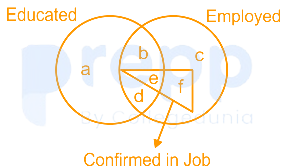
Read the given figure and find the region representing persons who are educated and employed but not confirmed in job.
The magazine in which Mahatma Gandhi mentioned what he wanted the Constitution to do is:
Which gas shields the surface of the earth from ultraviolet radiation from the sun?
Which event is marked as an Intangible Cultural Heritage of Humanity by UNESCO?
Who has been conferred with the rank of the Commander of the Order of the British Empire in 2018?


