
Find out the wrong pair.
Kattabomman - Nerkattum Sevel
Historical Figures and Their Regions
This question asks us to identify the pair that incorrectly links a significant historical figure from India's resistance movements against British rule with their associated region or place. To solve this, we need to recall the historical context for each individual mentioned.
Analyzing Historical Figures and Their Contributions
Let's examine each pair provided in the options:
- Mangal Pandey - Barrackpur: This is a correct and well-known historical association. Mangal Pandey was a sepoy (soldier) in the British East India Company's 34th Bengal Native Infantry regiment. He is famous for his actions at Barrackpur on March 29, 1857, which are considered a key event leading to the larger Sepoy Mutiny and the Indian Rebellion of 1857. He attacked his British officers over the greased cartridges issue, sparking an early phase of the revolt.
- Rani Lakshmi Bai - Jhansi: This is also a correct historical pair. Rani Lakshmi Bai was the Queen of the princely state of Jhansi. She became one of the most prominent leaders of the Indian Rebellion of 1857, fiercely resisting the British attempts to annex her kingdom under the Doctrine of Lapse. Her bravery and leadership in defending Jhansi are legendary.
- Velunachiyar - Sivagangai: This is a correct historical pairing. Velunachiyar was the Queen of Sivagangai (a kingdom in present-day Tamil Nadu) in the late 18th century. She is considered one of the earliest Indian queens to fight against the British East India Company, even before the Vellore Mutiny or the Great Revolt of 1857. She successfully recaptured her kingdom from the British with the help of allies.
- Kattabomman - Nerkattum Seval: This is the incorrect pair. Kattabomman, whose full name was Veerapandiya Kattabomman, was a Palayakkarar (Polygar) from Panchalankurichi, a small kingdom in what is now Tamil Nadu. He famously resisted the British East India Company's demands for tribute in the late 18th century. On the other hand, Nerkattum Seval (or Nerkattumseval) is historically associated with another significant Palayakkarar, Puli Thevar, who was one of the earliest resistance fighters against the British in the region during the mid-18th century. Therefore, associating Kattabomman with Nerkattum Seval is historically inaccurate.
Summary of Historical Associations
To further clarify, let's look at the correct pairings:
| Historical Figure | Associated Region/Place | Correctness of Pair |
|---|---|---|
| Mangal Pandey | Barrackpur | Correct |
| Rani Lakshmi Bai | Jhansi | Correct |
| Velunachiyar | Sivagangai | Correct |
| Kattabomman | Panchalankurichi (not Nerkattum Seval) | Incorrect |
Conclusion on the Wrong Pair
Based on the analysis, the pair Kattabomman - Nerkattum Seval is the incorrect one, as Kattabomman was associated with Panchalankurichi, while Nerkattum Seval was the stronghold of Puli Thevar.
Important Questions from Miscellaneous
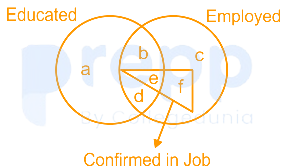
Read the given figure and find the region representing persons who are educated and employed but not confirmed in job.
The magazine in which Mahatma Gandhi mentioned what he wanted the Constitution to do is:
Which gas shields the surface of the earth from ultraviolet radiation from the sun?
Which event is marked as an Intangible Cultural Heritage of Humanity by UNESCO?
Who has been conferred with the rank of the Commander of the Order of the British Empire in 2018?


