
Muscle Force Direction Explained
Understanding how muscles generate force and torque during movement is key to analyzing biomechanics. Different types of muscle contractions result in varying relationships between the force produced by the muscle and the direction of the movement or limb rotation.
Contraction Types and Force Alignment
Let's examine the different types of muscle contractions mentioned:
- Concentric Contraction: This occurs when a muscle generates force to overcome resistance, and the muscle shortens. During a concentric contraction, the force and torque produced by the muscle are acting in the same direction as the resulting movement. Think of the upward phase of a bicep curl – the biceps muscle shortens, pulling the forearm up.
- Eccentric Contraction: This happens when a muscle generates force but lengthens under tension. The force and torque produced by the muscle act in the *opposite direction* to the movement. It's often referred to as 'negative work' or acting as a brake. For example, during the downward phase of a bicep curl, the biceps muscle lengthens while still trying to control the descent.
- Isometric Contraction: In this type of contraction, the muscle generates force and torque, but its length does not change, and there is no apparent movement. The force produced equals the external resistance. Imagine pushing against an immovable wall – your muscles are active, but the wall (and your limb) doesn't move.
- Isotonic Contraction: This term generally describes contractions where the muscle tension changes but the length changes, resulting in movement. It often encompasses both concentric and eccentric phases. However, the specific condition where force and torque are in the *same direction* as movement is most precisely described by concentric contraction.
Conclusion on Force Direction
The question asks specifically when the force and torque generated by the muscles are in the same direction as the movement. This condition is characteristic of a concentric contraction, where the muscle actively shortens to create movement.
Key Takeaway:
During concentric contraction, the muscle activation leads to shortening, and the generated force directly facilitates the movement occurring.
Important Questions from Miscellaneous
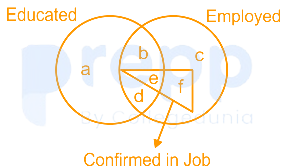
Read the given figure and find the region representing persons who are educated and employed but not confirmed in job.
The magazine in which Mahatma Gandhi mentioned what he wanted the Constitution to do is:
Which gas shields the surface of the earth from ultraviolet radiation from the sun?
Which event is marked as an Intangible Cultural Heritage of Humanity by UNESCO?
Who has been conferred with the rank of the Commander of the Order of the British Empire in 2018?


