
Arrange in sequence the steps in the procedure of e-filing of an Income Tax Return A. Login B. Register C. Verification D. e-filing E. Downloading utility and preparing the return Choose the correct answer from the options given below
B, A, E, D, C
e-filing of an Income Tax Return (ITR) is the process of submitting your income tax details electronically to the Income Tax Department. It's a convenient way to fulfill your tax obligations. Understanding the correct sequence of steps is crucial for a smooth e-filing experience.
Understanding the Steps for E-filing Income Tax Returns
Let's look at the individual steps provided in the question related to the e-filing procedure:
- A. Login: This step involves accessing the e-filing portal using your credentials (User ID and Password).
- B. Register: This is the initial step for new users who need to create an account on the Income Tax e-filing portal before they can access its services.
- C. Verification: After successfully submitting the return, it needs to be verified. This confirms that the submitted return is authentic.
- D. e-filing: This is the actual submission of the prepared income tax return data through the online portal.
- E. Downloading utility and preparing the return: This step involves obtaining the necessary software utility (like offline utility) or using the online mode provided by the department to input and prepare your income details, deductions, taxes paid, etc., before submission.
Arranging the E-filing Steps in Correct Sequence
To successfully e-file an Income Tax Return, the steps must be followed in a logical order. Let's arrange the given steps (A to E) according to the typical flow of the e-filing process.
The process generally begins with gaining access to the e-filing system, preparing the required information, submitting it, and finally verifying the submission.
Considering the definitions of the steps above, the correct sequence is:
- First, a user needs to be registered on the portal (Step B). If already registered, this step is skipped for subsequent filings, but for a complete procedure, registration is the starting point for a new user.
- Once registered, the user needs to log in to their account (Step A).
- After logging in, the user prepares their income tax return data. This might involve downloading a utility or using the online preparation tools (Step E).
- With the return prepared, the user proceeds to submit it electronically through the portal (Step D).
- Finally, after successful submission, the return must be verified (Step C) to complete the e-filing process.
Thus, the correct sequential order of the steps is B, A, E, D, C.
| Order | Step | Description |
|---|---|---|
| 1 | B. Register | New user registration on the e-filing portal. |
| 2 | A. Login | Accessing the account using user ID and password. |
| 3 | E. Downloading utility and preparing the return | Getting the utility/using online mode to enter tax details. |
| 4 | D. e-filing | Submitting the prepared tax return electronically. |
| 5 | C. Verification | Authenticating the submitted tax return (e.g., via EVC or sending ITR-V). |
This sequence ensures that a user first gains access to the system (Register, Login), then prepares the necessary information (Downloading utility and preparing the return), submits it (e-filing), and finally validates the submission (Verification).
Revision Table: Key E-filing Sequence Points
| Step Code | Action | Position in Sequence |
|---|---|---|
| B | Register | 1st |
| A | Login | 2nd |
| E | Downloading utility and preparing the return | 3rd |
| D | e-filing | 4th |
| C | Verification | 5th |
Additional Information on Income Tax E-filing
Understanding the steps of e-filing is essential, but there are related concepts that are also important:
- Types of ITR Forms: The Income Tax Department specifies different ITR forms (ITR-1, ITR-2, etc.) depending on the taxpayer's source of income and category. It's important to choose the correct form.
- E-verification Methods: Verification (Step C) can be done through various methods like Net Banking, Aadhaar OTP, Bank Account EVC, Demat Account EVC, or by sending a signed physical copy of ITR-V to CPC, Bengaluru within the stipulated time (usually 30 days).
- Due Dates: Taxpayers must file their ITRs by the specified due dates to avoid penalties or loss of certain benefits.
- Pre-filling of Data: The e-filing portal often pre-fills certain data based on information received from various sources (like salary details from employer, interest details from banks, etc.). Taxpayers must verify this pre-filled data and make necessary corrections.
Following the correct sequence and understanding these related aspects helps in accurate and timely income tax compliance.
Important Questions from Miscellaneous
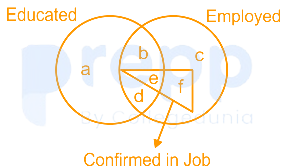
Read the given figure and find the region representing persons who are educated and employed but not confirmed in job.
The magazine in which Mahatma Gandhi mentioned what he wanted the Constitution to do is:
Which gas shields the surface of the earth from ultraviolet radiation from the sun?
Which event is marked as an Intangible Cultural Heritage of Humanity by UNESCO?
Who has been conferred with the rank of the Commander of the Order of the British Empire in 2018?


