
An organisation wants to develop a computeriesd accounting software as the business or organisation is complex which software should purchase for?
customised software
Understanding Software Needs for a Complex Business
When an organisation has a complex business, choosing the right accounting software is very important. A complex business usually has specific processes, reporting needs, or integration requirements that might not be standard for all businesses.
Why Standard Packaged Software Might Not Be Suitable
Packaged software (sometimes also called "pre-packaged" or "off-the-shelf") is designed for a wide range of users with typical business needs. While it's often cost-effective and quick to implement, it might lack the flexibility required for a complex business. If a business has very specific workflows or needs reports in a particular format not supported by the standard software, forcing the business to adapt to the software can be inefficient and may not fully meet their accounting system needs.
The Need for Customised or Tailor-Made Solutions
For a complex business with unique requirements, a more adaptable solution is needed. This is where customised software and tailor made software come into play.
- Customised software: This refers to software that is specifically modified or configured to meet the particular needs of an organisation. It takes existing software and adds features, changes workflows, or integrates with other systems to handle the complexity of the business.
- Tailor made software: This is software built from scratch specifically for an organisation's unique requirements. It's like getting a custom-built suit rather than buying one off the rack. This offers the highest degree of customization but can be more expensive and time-consuming to develop compared to modifying existing software.
Both customised software and tailor made software are designed to align perfectly with specific business needs and handle the particular complexity of the organisation. They address the unique requirements that packaged solutions cannot.
Evaluating the Options for a Complex Accounting System
Let's look at the given options in the context of a complex business requiring robust accounting software:
- Pue Packed software (Packaged Software): Generally not suitable for a complex business due to lack of flexibility and inability to handle unique requirements.
- customised software: Highly suitable. It can be adapted to fit the complex processes and unique requirements of the organisation, providing a powerful accounting system tailored to their specific business needs.
- tailor made software: Also highly suitable, perhaps even more so in terms of exact fit, but potentially higher cost and longer development time.
- Any of the Above: Incorrect, as packaged software is unlikely to meet the needs of a complex business.
Between customised software and tailor made software, both are viable. However, the option provided explicitly includes "customised software". Customization allows the software to specifically address the complexity and the unique requirements of the organisation, providing a more efficient and effective accounting system.
Therefore, for an organisation with a complex business, purchasing customised software or tailor-made software is the appropriate choice to ensure the software meets their specific operational and accounting system needs.
Important Questions from Miscellaneous
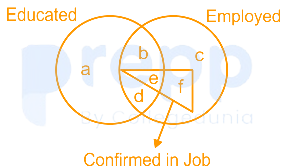
Read the given figure and find the region representing persons who are educated and employed but not confirmed in job.
The magazine in which Mahatma Gandhi mentioned what he wanted the Constitution to do is:
Which gas shields the surface of the earth from ultraviolet radiation from the sun?
Which event is marked as an Intangible Cultural Heritage of Humanity by UNESCO?
Who has been conferred with the rank of the Commander of the Order of the British Empire in 2018?


