JEE Main 2019 Question Paper with Solutions (08-Apr-2019) (Shift 1); Download PDF
JEE Main 2019 Question Paper with Solutions for Apr 8, 2019 Shift 1 is available here for PDF download and can also be attempted in a test format for practice. JEE Main Paper 1 (B.E./B.Tech) is conducted in CBT mode and includes Physics, Chemistry, and Mathematics.
JEE Main 2019 Question Paper (08-Apr-2019) (Shift 1)
Q1.
A boy’s catapult is made of rubber cord which is \(42 \mathrm{cm}\) long, with \(6 \mathrm{mm}\) diameter of cross-section and of negligible mass. The boy keeps a stone weighing \(0.02 \mathrm{kg}\) on it and stretches the cord by \(20 \mathrm{cm}\) by applying a constant force. When released, the stone flies off with a velocity of \(20 \mathrm{m} \mathrm{s}^{-1}\). Neglect the change in the area of cross-section of the cord while stretched. The Young’s modulus of rubber is closest to:
Q2.
Q3.
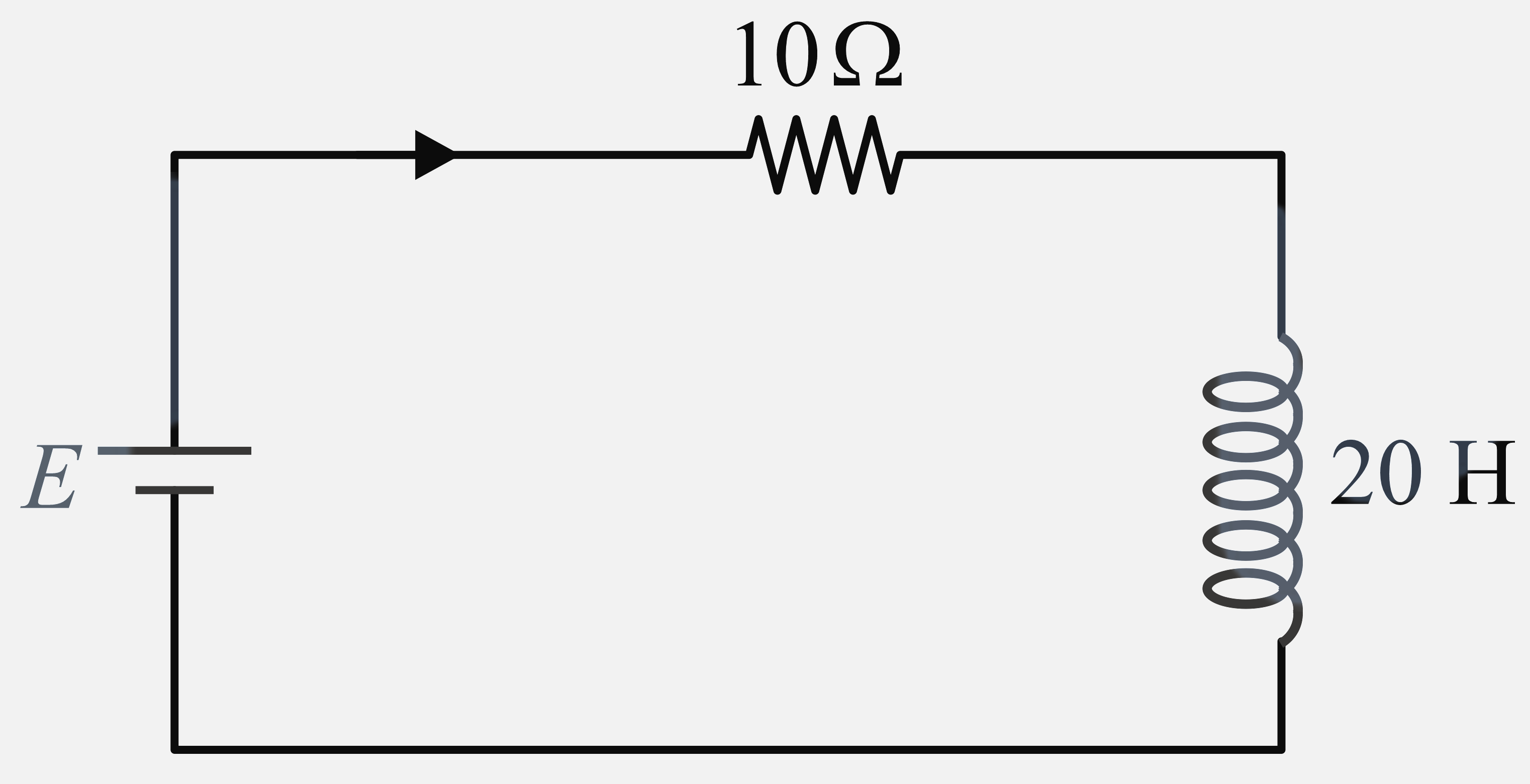
A $20\, \text{H}$ inductor coil is connected to a $10\, \mathrm{\Omega}$ resistance in series as shown in the figure. The time at which the rate of dissipation of energy (Joule's heat) across the resistance is equal to the rate at which magnetic energy is stored in the inductor is:
Q5.
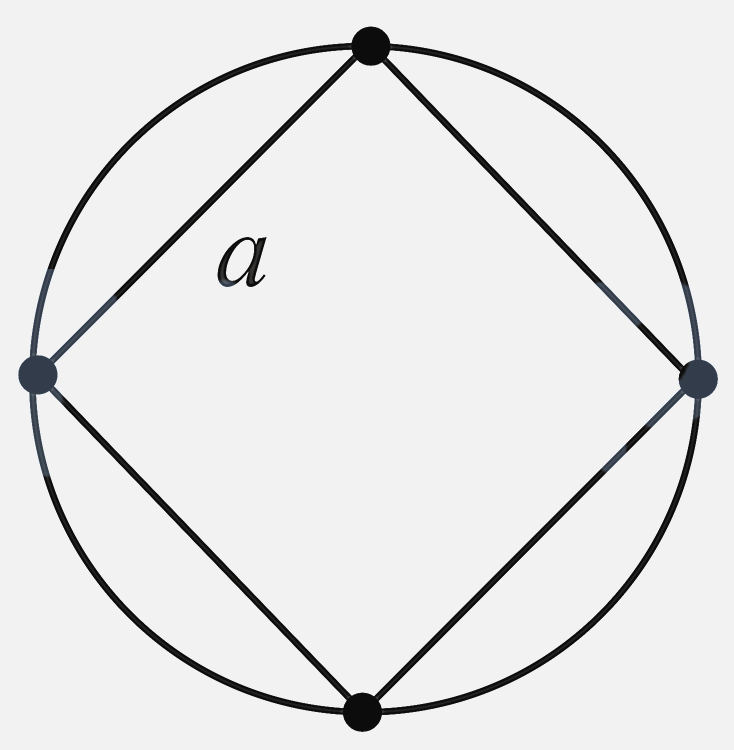
Four identical particles of mass \( M \) are located at the corners of a square of side \( a \). What should be their speed if each of them revolves under the influence of the others' gravitational field in a circular orbit circumscribing the square?