
KTET 2026 Category 3 Question Paper and Answer Key PDF (Nov 15, 2026)
KTET 2026 Category 3 Question Paper and Answer Key with Detailed Solution is available here to download in PDF format and Attempt as test. Kerala Pareeksha Bhavan is conducting KTET September 2026 session Category 3 examination on November 15, 2026, from 10:00 AM to 12:30 PM, in offline OMR mode. Category 3 is for candidates seeking to teach High School classes (Classes 9 and 10).
Click to Download: KTET 2026 Question Paper PDF with Solution
KTET 2026 Category 3 Question Paper and Answer Key PDF
| Question Paper PDF | Answer Key PDF | Detailed Solution |
|---|---|---|
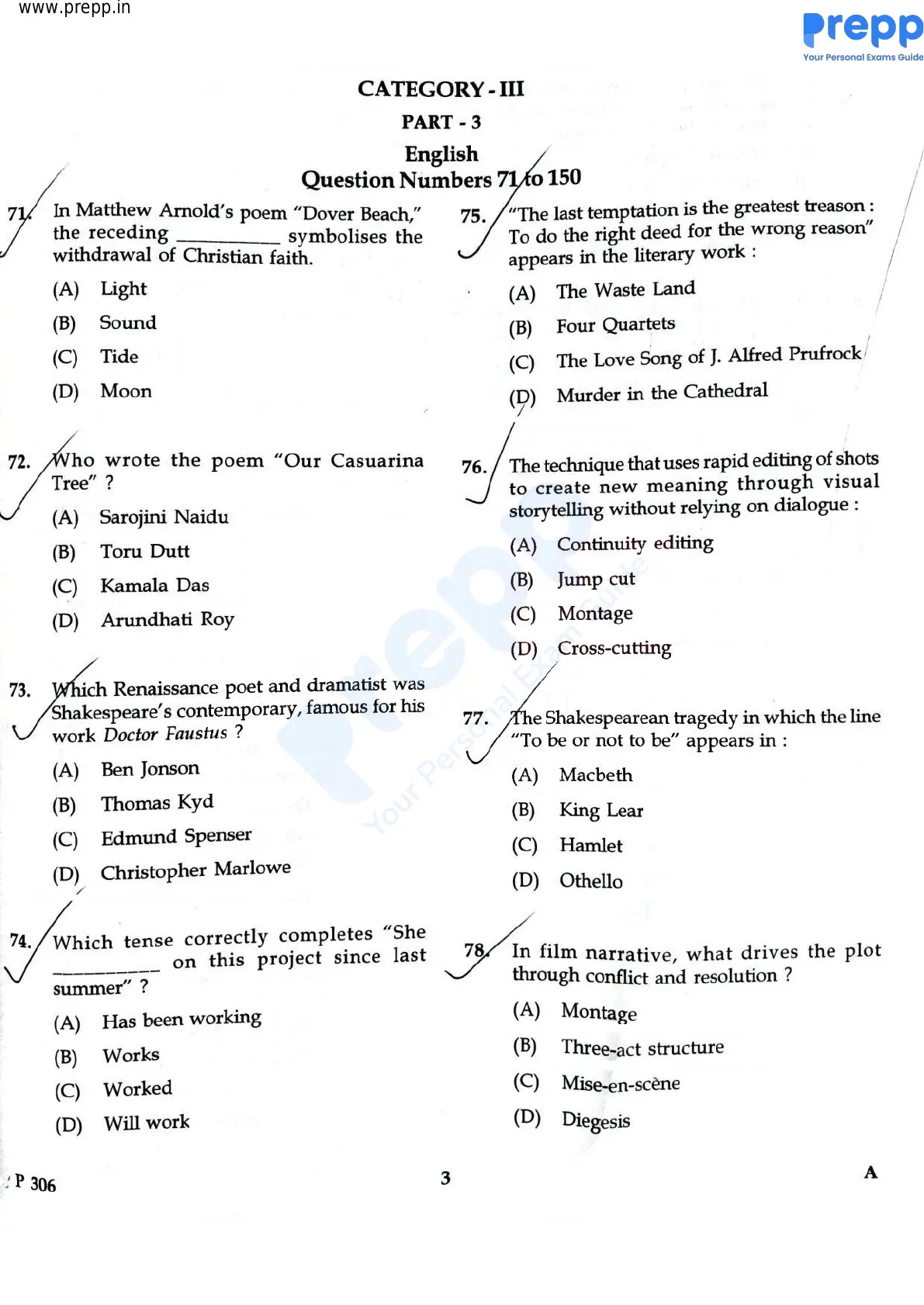
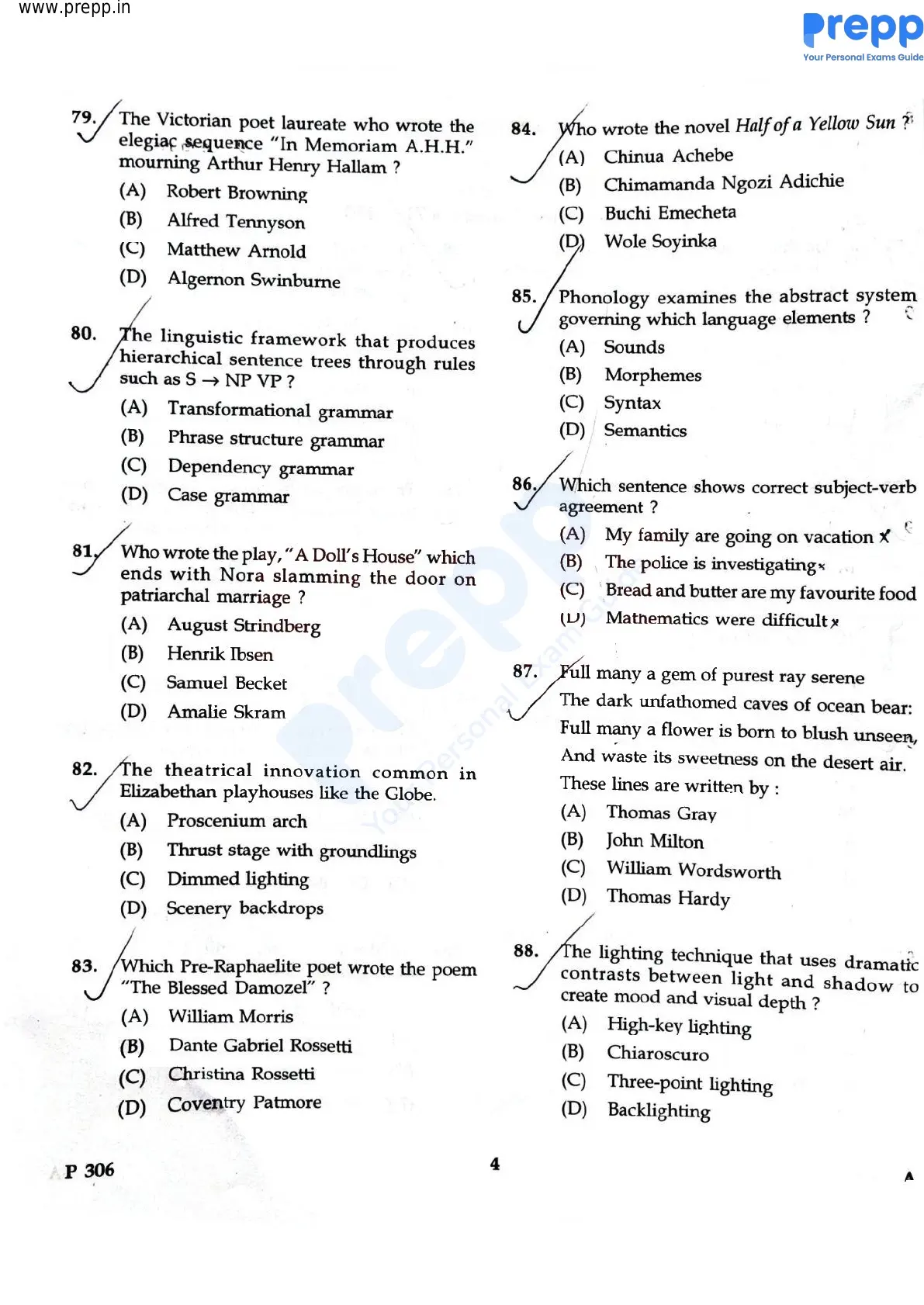
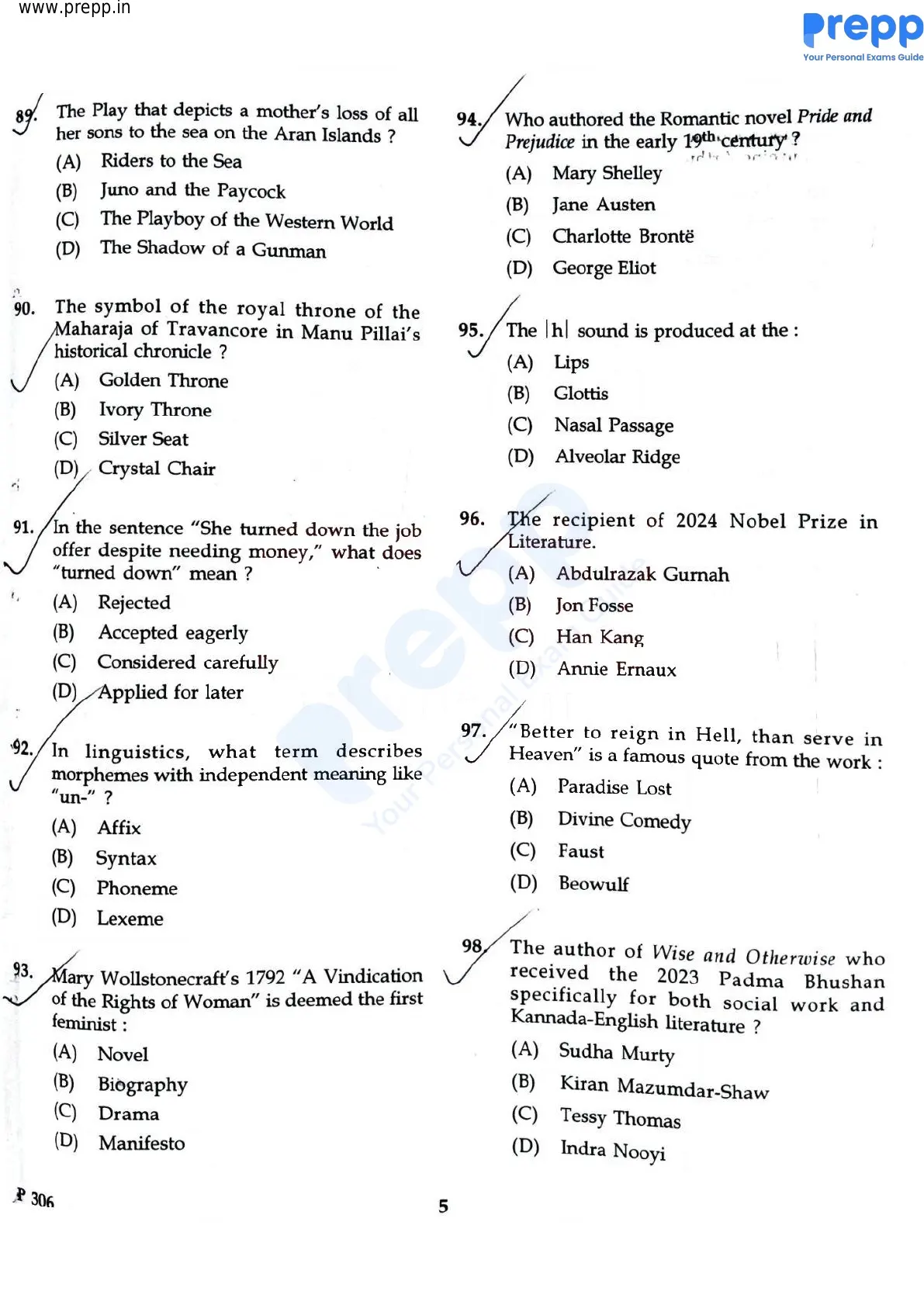
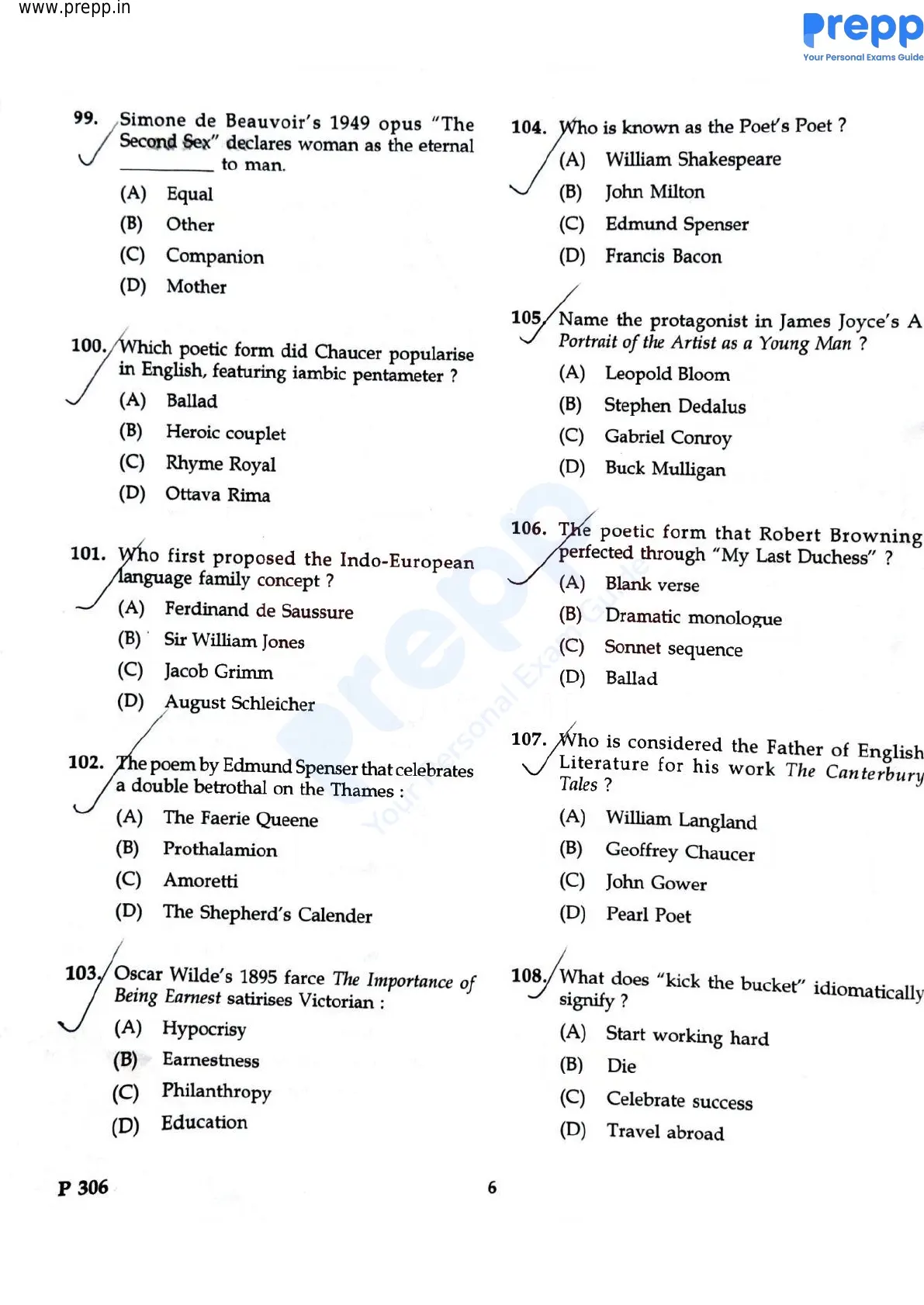
KTET 2026 Category 3 English Question Paper and Answer Key PDF (Nov 15, 2026) |
Download PDF | Attempt Now |
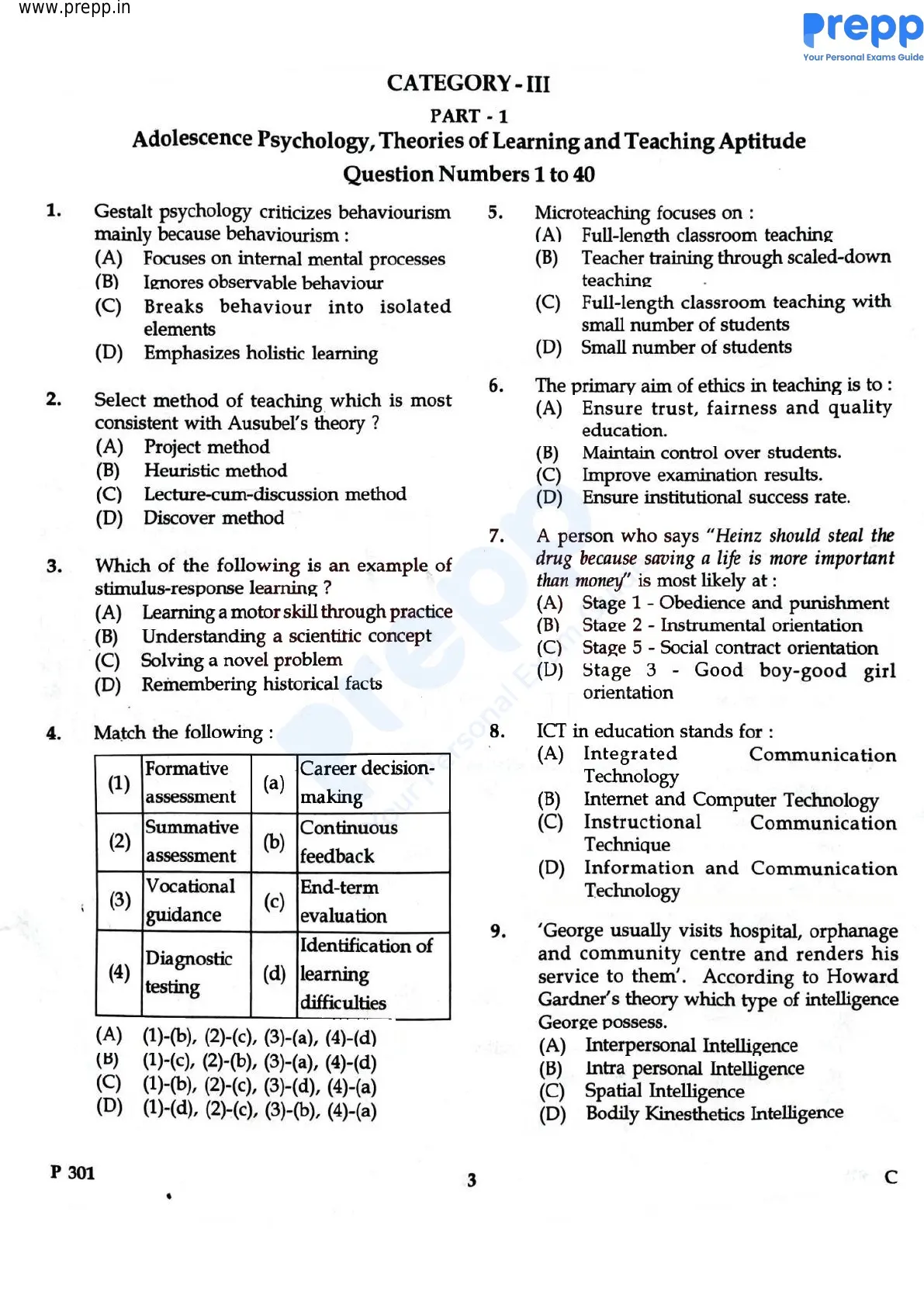
1. Gestalt psychology criticizes behaviourism mainly because behaviourism :
1. Focuses on internal mental processes
2. Ignores observable behaviour
3. Breaks behaviour into isolated elements
4. Emphasizes holistic learning
Check Correct Answer & Solution
2. Select method of teaching which is most consistent with Ausubel's theory ?
1. Project method
2. Heuristic method
3. Lecture-cum-discussion method
4. Discover method
Check Correct Answer & Solution
3. Which of the following is an example of stimulus-response learning ?
1. Learning a motor skill through practice
2. Understanding a scientific concept
3. Solving a novel problem
4. Remembering historical facts
Check Correct Answer & Solution
4. Match the following :
| (1) | Formative assessment | (a) | Career decision-making |
| (2) | Summative assessment | (b) | Continuous feedback |
| (3) | Vocational guidance | (c) | End-term evaluation |
| (4) | Diagnostic testing | (d) | Identification of learning difficulties |
1. (1)-(b), (2)-(c), (3)-(a), (4)-(d)
2. (1)-(c), (2)-(b), (3)-(a), (4)-(d)
3. (1)-(b), (2)-(c), (3)-(d), (4)-(a)
4. (1)-(d), (2)-(c), (3)-(b), (4)-(a)
Check Correct Answer & Solution
5. Microteaching focuses on :
1. Full-length classroom teaching
2. Teacher training through scaled-down teaching
3. Full-length classroom teaching with small number of students
4. Small number of students
Check Correct Answer & Solution
6. The primary aim of ethics in teaching is to :
1. Ensure trust, fairness and quality education.
2. Maintain control over students.
3. Improve examination results.
4. Ensure institutional success rate.
Check Correct Answer & Solution
7. A person who says “Heinz should steal the drug because saving a life is more important than money” is most likely at :
1. Stage 1 - Obedience and punishment
2. Stage 2 - Instrumental orientation
3. Stage 5 - Social contract orientation
4. Stage 3 - Good boy-good girl orientation
Check Correct Answer & Solution
8. ICT in education stands for :
1. Integrated Communication Technology
2. Internet and Computer Technology
3. Instructional Communication Technique
4. Information and Communication Technology
Check Correct Answer & Solution
9. ‘George usually visits hospital, orphanage and community centre and renders his service to them’. According to Howard Gardner’s theory which type of intelligence George possess.
1. Interpersonal Intelligence
2. Intra personal Intelligence
3. Spatial Intelligence
4. Bodily Kinesthetics Intelligence
Check Correct Answer & Solution
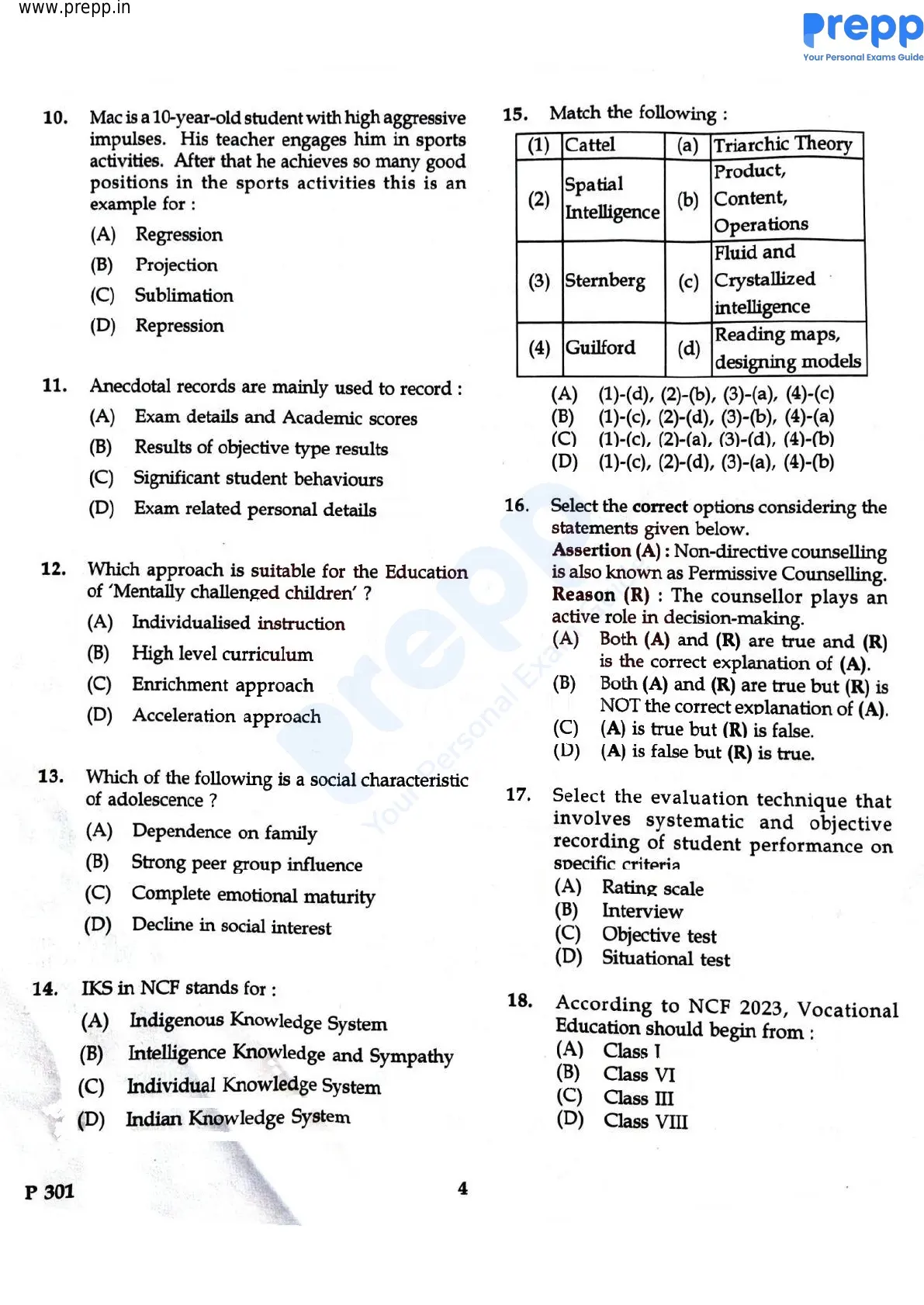
10. Mac is a 10-year-old student with high aggressive impulses. His teacher engages him in sports activities. After that he achieves so many good positions in the sports activities this is an example for :
1. Regression
2. Projection
3. Sublimation
4. Repression
Check Correct Answer & Solution
11. Anecdotal records are mainly used to record :
1. Exam details and Academic scores
2. Results of objective type results
3. Significant student behaviours
4. Exam related personal details
Check Correct Answer & Solution
12. Which approach is suitable for the Education of ‘Mentally challenged children’ ?
1. Individualised instruction
2. High level curriculum
3. Enrichment approach
4. Acceleration approach
Check Correct Answer & Solution
13. Which of the following is a social characteristic of adolescence ?
1. Dependence on family
2. Strong peer group influence
3. Complete emotional maturity
4. Decline in social interest
Check Correct Answer & Solution
14. IKS in NCF stands for :
1. Indigenous Knowledge System
2. Intelligence Knowledge and Sympathy
3. Individual Knowledge System
4. Indian Knowledge System
Check Correct Answer & Solution
15. Match the following :
| (1) | Cattel | (a) | Triarchic Theory |
| (2) | Spatial Intelligence | (b) | Product, Content, Operations |
| (3) | Sternberg | (c) | Fluid and Crystallized intelligence |
| (4) | Guilford | (d) | Reading maps, designing models |
1. (1)-(d), (2)-(b), (3)-(a), (4)-(c)
2. (1)-(c), (2)-(d), (3)-(b), (4)-(a)
3. (1)-(c), (2)-(a), (3)-(d), (4)-(b)
4. (1)-(c), (2)-(d), (3)-(a), (4)-(b)
Check Correct Answer & Solution
16. Select the correct options considering the statements given below.
Assertion (A) : Non-directive counselling is also known as Permissive Counselling.
Reason (R) : The counsellor plays an active role in decision-making.
1. Both (A) and (R) are true and (R) is the correct explanation of (A).
2. Both (A) and (R) are true but (R) is NOT the correct explanation of (A).
3. (A) is true but (R) is false.
4. (A) is false but (R) is true.
Check Correct Answer & Solution
17. Select the evaluation technique that involves systematic and objective recording of student performance on specific criteria.
1. Rating scale
2. Interview
3. Objective test
4. Situational test
Check Correct Answer & Solution
18. According to NCF 2023, Vocational Education should begin from :
1. Class I
2. Class VI
3. Class III
4. Class VIII
Check Correct Answer & Solution
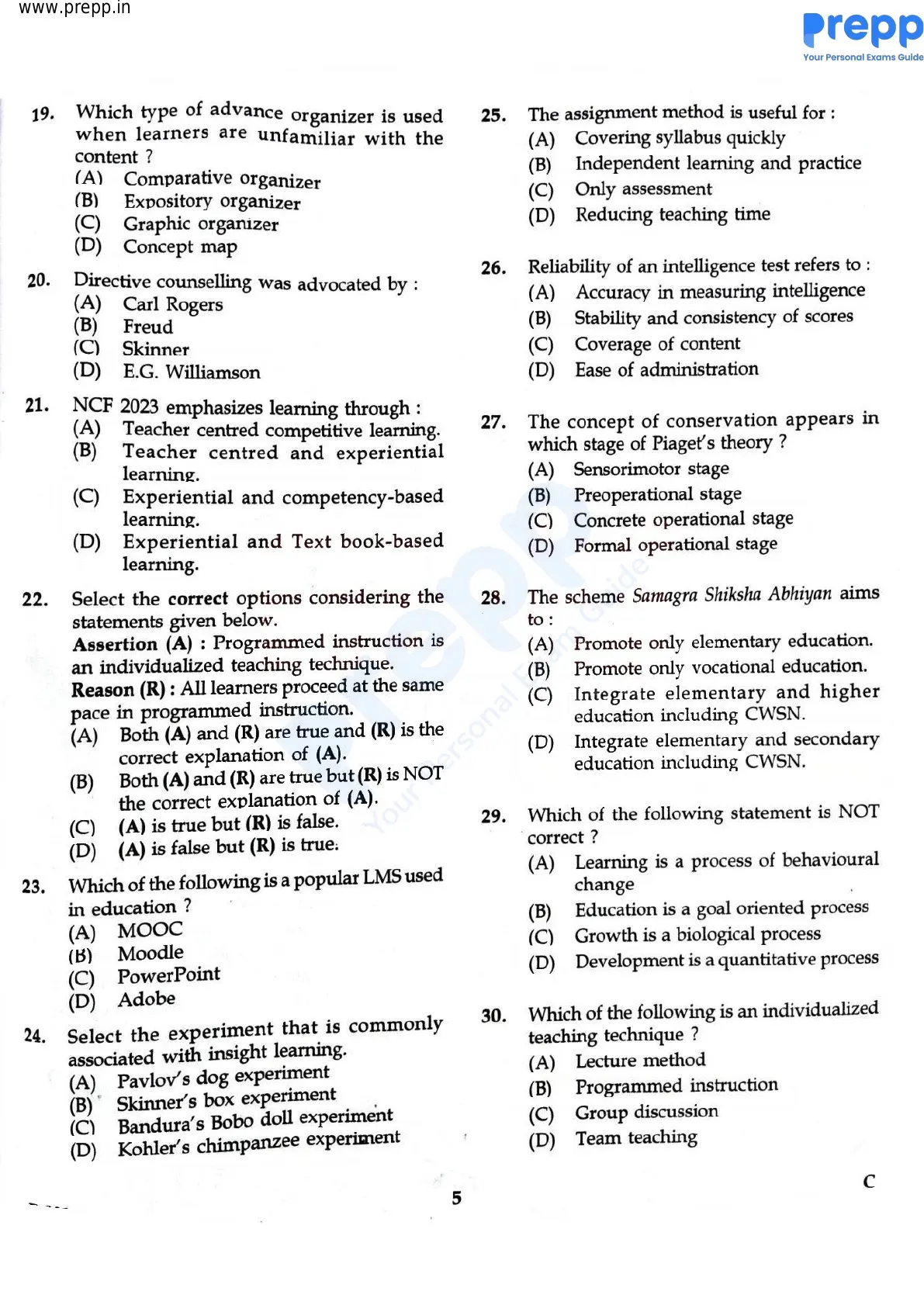
19. Which type of advance organizer is used when learners are unfamiliar with the content ?
1. Comparative organizer
2. Expository organizer
3. Graphic organizer
4. Concept map
Check Correct Answer & Solution
20. Directive counselling was advocated by :
1. Carl Rogers
2. Freud
3. Skinner
4. E.G. Williamson
Check Correct Answer & Solution
21. NCF 2023 emphasizes learning through :
1. Teacher centred competitive learning.
2. Teacher centred and experiential learning.
3. Experiential and competency-based learning.
4. Experiential and Text book-based learning.
Check Correct Answer & Solution
22. Select the correct options considering the statements given below.
Assertion (A) : Programmed instruction is an individualized teaching technique.
Reason (R) : All learners proceed at the same pace in programmed instruction.
1. Both (A) and (R) are true and (R) is the correct explanation of (A).
2. Both (A) and (R) are true but (R) is NOT the correct explanation of (A).
3. (A) is true but (R) is false.
4. (A) is false but (R) is true.
Check Correct Answer & Solution
23. Which of the following is a popular LMS used in education ?
1. MOOC
2. Moodle
3. PowerPoint
4. Adobe
Check Correct Answer & Solution
24. Select the experiment that is commonly associated with insight learning.
1. Pavlov's dog experiment
2. Skinner's box experiment
3. Bandura's Bobo doll experiment
4. Kohler's chimpanzee experiment
Check Correct Answer & Solution
25. The assignment method is useful for :
1. Covering syllabus quickly
2. Independent learning and practice
3. Only assessment
4. Reducing teaching time
Check Correct Answer & Solution
26. Reliability of an intelligence test refers to :
1. Accuracy in measuring intelligence
2. Stability and consistency of scores
3. Coverage of content
4. Ease of administration
Check Correct Answer & Solution
27. The concept of conservation appears in which stage of Piaget's theory ?
1. Sensorimotor stage
2. Preoperational stage
3. Concrete operational stage
4. Formal operational stage
Check Correct Answer & Solution
28. The scheme Samagra Shiksha Abhiyan aims to :
1. Promote only elementary education.
2. Promote only vocational education.
3. Integrate elementary and higher education including CWSN.
4. Integrate elementary and secondary education including CWSN.
Check Correct Answer & Solution
29. Which of the following statement is NOT correct ?
1. Learning is a process of behavioural change
2. Education is a goal oriented process
3. Growth is a biological process
4. Development is a quantitative process
Check Correct Answer & Solution
30. Which of the following is an individualized teaching technique ?
1. Lecture method
2. Programmed instruction
3. Group discussion
4. Team teaching
Check Correct Answer & Solution
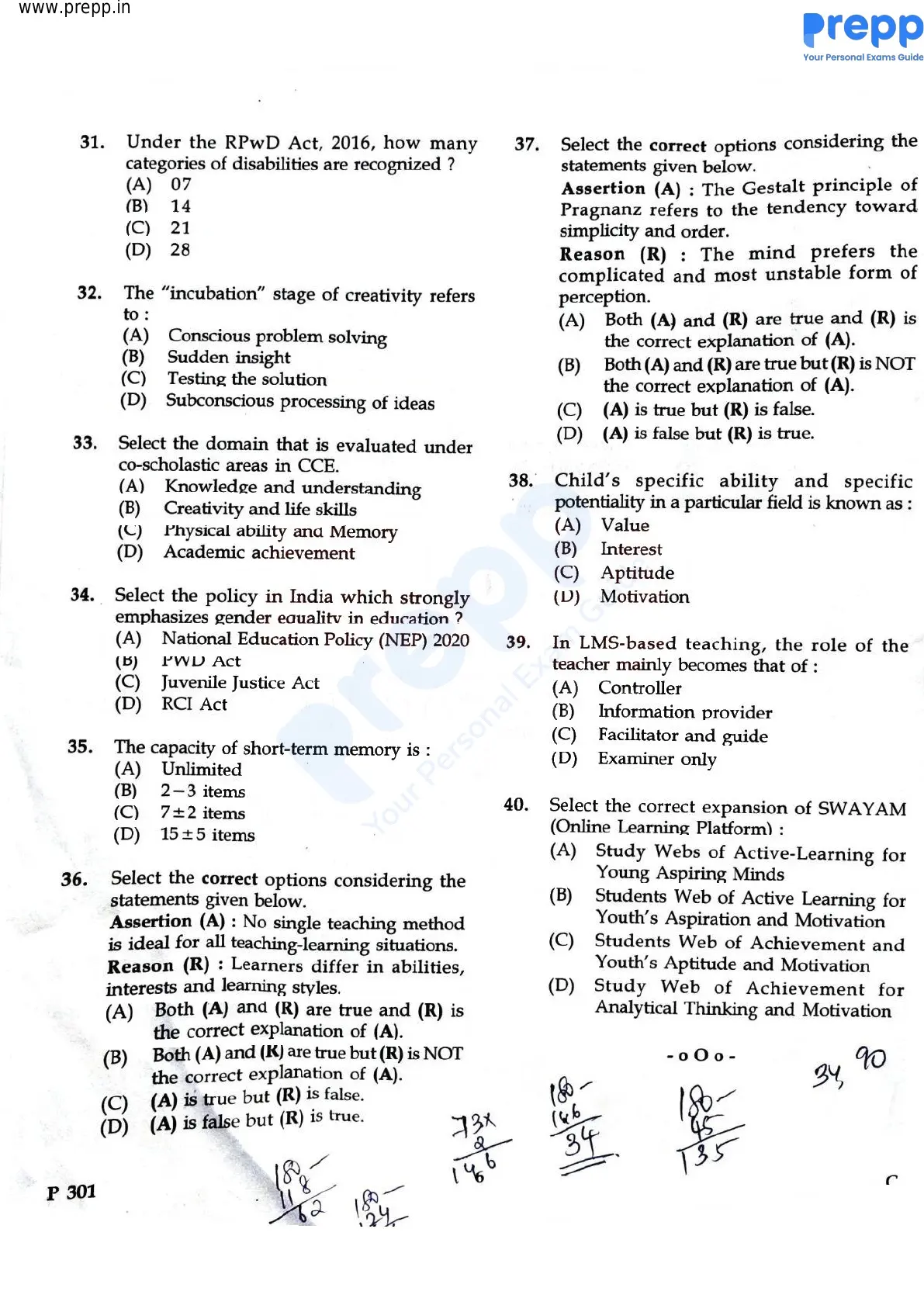
31. Under the RPwD Act, 2016, how many categories of disabilities are recognized ?
1. 07
2. 14
3. 21
4. 28
Check Correct Answer & Solution
32. The “incubation” stage of creativity refers to :
1. Conscious problem solving
2. Sudden insight
3. Testing the solution
4. Subconscious processing of ideas
Check Correct Answer & Solution
33. Select the domain that is evaluated under co-scholastic areas in CCE.
1. Knowledge and understanding
2. Creativity and life skills
3. Physical ability and Memory
4. Academic achievement
Check Correct Answer & Solution
34. Select the policy in India which strongly emphasizes gender equality in education ?
1. National Education Policy (NEP) 2020
2. PWD Act
3. Juvenile Justice Act
4. RCI Act
Check Correct Answer & Solution
35. The capacity of short-term memory is :
1. Unlimited
2. 2-3 items
3. 7±2 items
4. 15±5 items
Check Correct Answer & Solution
36. Select the correct options considering the statements given below.
Assertion (A) : No single teaching method is ideal for all teaching-learning situations.
Reason (R) : Learners differ in abilities, interests and learning styles.
1. Both (A) and (R) are true and (R) is the correct explanation of (A).
2. Both (A) and (R) are true but (R) is NOT the correct explanation of (A).
3. (A) is true but (R) is false.
4. (A) is false but (R) is true.
Check Correct Answer & Solution
37. Select the correct options considering the statements given below.
Assertion (A) : The Gestalt principle of Pragnanz refers to the tendency toward simplicity and order.
Reason (R) : The mind prefers the complicated and most unstable form of perception.
1. Both (A) and (R) are true and (R) is the correct explanation of (A).
2. Both (A) and (R) are true but (R) is NOT the correct explanation of (A).
3. (A) is true but (R) is false.
4. (A) is false but (R) is true.
Check Correct Answer & Solution
38. Child's specific ability and specific potentiality in a particular field is known as :
1. Value
2. Interest
3. Aptitude
4. Motivation
Check Correct Answer & Solution
39. In LMS-based teaching, the role of the teacher mainly becomes that of :
1. Controller
2. Information provider
3. Facilitator and guide
4. Examiner only
Check Correct Answer & Solution
40. Select the correct expansion of SWAYAM (Online Learning Platform) :
1. Study Webs of Active-Learning for Young Aspiring Minds
2. Students Web of Active Learning for Youth's Aspiration and Motivation
3. Students Web of Achievement and Youth's Aptitude and Motivation
4. Study Web of Achievement for Analytical Thinking and Motivation
Check Correct Answer & Solution
 Never Miss a Sarkari Job Alert! Get instant notifications and exam news right inside your chat.
 Click here to join Prepp on WhatsApp
 Boost Your Preparation with Free Resources! Get daily quizzes, current affairs PDFs, and study notes directly on Telegram. Click here to join Prepp on Telegram
KTET Exam Analysis 2026
KTET 2026 November session analysis will cover difficulty level, good attempts and section wise review for all four categories held on 14 and 15 November 2026.
| KTET Exam Analysis 2026 | Analysis Link |
|---|---|
| KTET 2026 Category 1 Exam Analysis (Nov 14, 2026) | Check Here |
| KTET 2026 Category 2 Exam Analysis (Nov 14, 2026) | Check Here |
| KTET 2026 Category 3 Exam Analysis (Nov 15, 2026) | Check Here |
| KTET 2026 Category 4 Exam Analysis (Nov 15, 2026) | Check Here |
KTET 2026 Category 3 Exam Pattern
KTET 2026 Category 3 is an objective-type examination conducted in offline OMR mode. The question paper contains 150 multiple-choice questions for 150 marks, and candidates get 2 hours 30 minutes to complete it. Each question carries one mark, and there is no negative marking for wrong answers.
The Category 3 paper is divided into three sections. Along with psychology and language, candidates answer questions on the High School subject they have chosen, covering both subject content and its teaching methodology.
| Subject | Number of Questions | Maximum Marks |
|---|---|---|
| Adolescent Psychology, Theories of Learning and Teaching Aptitude | 40 | 40 |
| Language (Malayalam/English/Tamil/Kannada) | 30 | 30 |
| Subject-Specific Paper (Content and Pedagogy) | 80 | 80 |
| Total | 150 | 150 |
Download KTET Previous Year Question Paper
KTET 2026 Category 3 Important Topics
KTET Category 3 questions test candidates' understanding of adolescent learners, language proficiency, and in-depth knowledge of the subject they wish to teach at the High School level. Questions in the subject section cover both content and teaching methodology. Candidates can review the following important topics.
| Subject | Important Topics |
|---|---|
| Adolescent Psychology, Theories of Learning and Teaching Aptitude | Characteristics of Adolescence, Learning Theories (Piaget, Vygotsky, Skinner, Bruner), Intelligence and Creativity, Motivation, Mental Health and Adjustment, Teaching Approaches, Educational Evaluation |
| Language (Malayalam/English/Tamil/Kannada) | Reading Comprehension, Grammar and Usage, Vocabulary, Literature, Language Teaching Approaches |
| Mathematics | Algebra, Geometry, Trigonometry, Statistics and Probability, Mensuration, Mathematics Pedagogy |
| Physical Science | Motion and Force, Electricity and Magnetism, Light, Heat, Chemical Reactions, Periodic Table, Science Pedagogy |
| Natural Science | Cell Biology, Human Body Systems, Genetics and Evolution, Ecology, Plant Physiology, Science Pedagogy |
| Social Science | Indian and World History, Indian Constitution, Geography of India and Kerala, Economics, Social Science Pedagogy |
KTET 2026 Category 3 Question Paper and Answer Key PDF helps candidates verify their responses, estimate their scores, and understand the level of questions asked in the November 15 morning exam. As there is no negative marking, candidates can calculate their expected marks by counting their correct answers. For final score calculation, candidates should rely on the official provisional and final answer keys released by Kerala Pareeksha Bhavan on ktet.kerala.gov.in.
| Relevant Links | ||
|---|---|---|
| KTET Mock Tests | KTET Cutoff | KTET Exam Pattern |
| KTET Answer Key | KTET Admit Card | KTET Eligibility |
| KTET Syllabus | KTET Result | KTET Application Process |
KTET 2026 Category 3 Question Paper FAQs
Ques: What is the minimum qualification required for KTET Category 3?
Ans: Candidates must hold a graduation degree with at least 45% marks along with a B.Ed. in the relevant subject.
Ques: How many questions are asked from the subject-specific section in KTET Category 3?
Ans: The subject-specific section carries 80 questions out of the total 150, making it the largest section of the paper.
Ques: What are the qualifying marks for KTET Category 3?
Ans: General category candidates need 60% (90 marks), while SC/ST/OBC/OEC and PwD candidates need 55% (82 marks) to qualify.
Ques: Which KTET category exam is held after Category 3 on November 15?
Ans: Category 4 is held on November 15, 2026, from 2:00 PM to 4:30 PM, for language teachers up to Upper Primary level and specialist teachers.
Ques: What details are needed to download the KTET Category 3 admit card?
Ans: Candidates need their Application Number, Application ID, and selected category to download the admit card from ktet.kerala.gov.in.
Download the PREPP App and attempt FREE KTET Mock Tests and get complete study material!


Comments