
AIBE 2026 Question Paper and Answer Key PDF (7 June 2026); Check Detailed Solution
AIBE 2026 exam is conducted on June 7, 2026, from 1:00 PM to 4:00 PM IST. The exam is held for a duration of 3 hours.
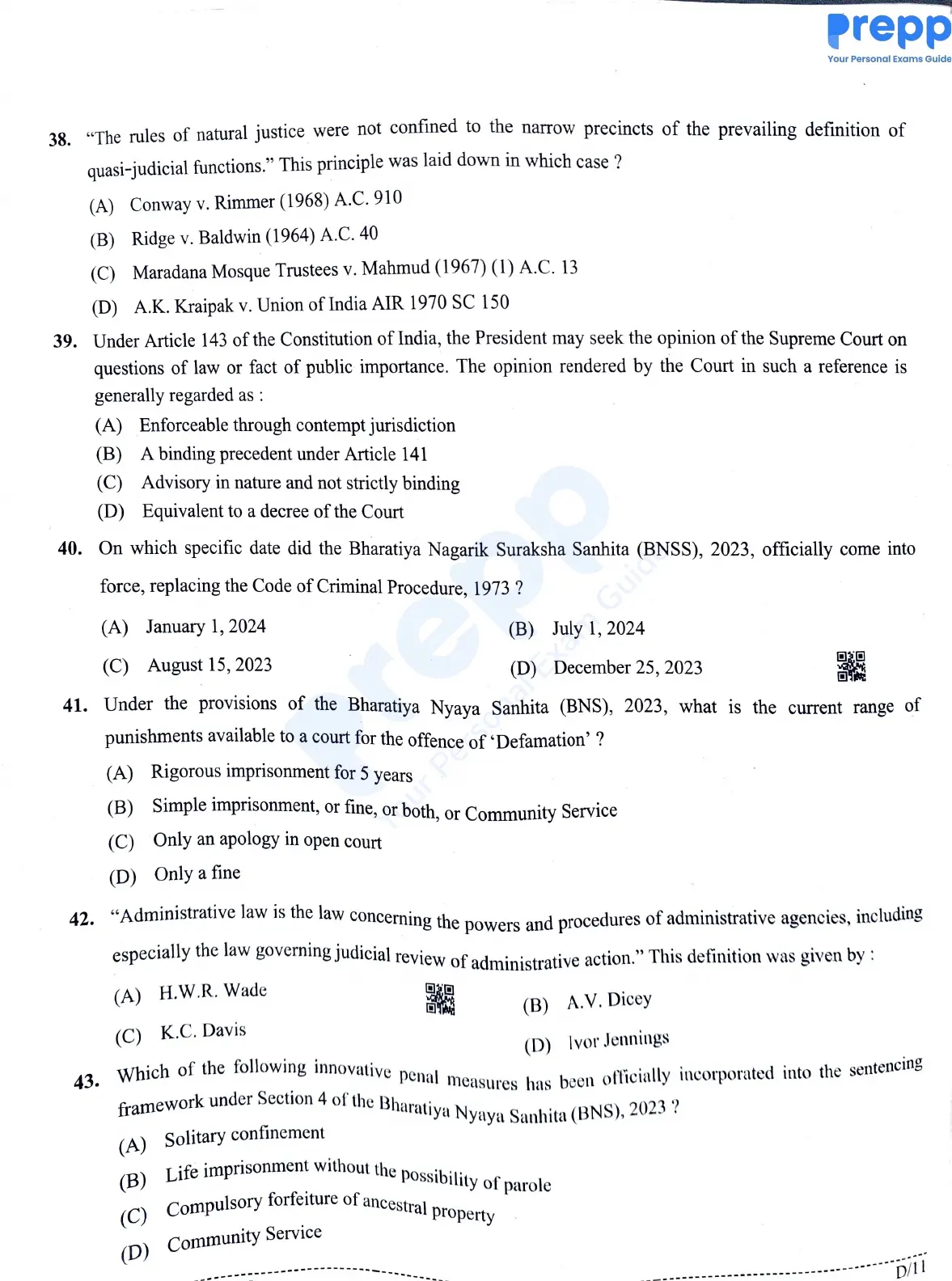
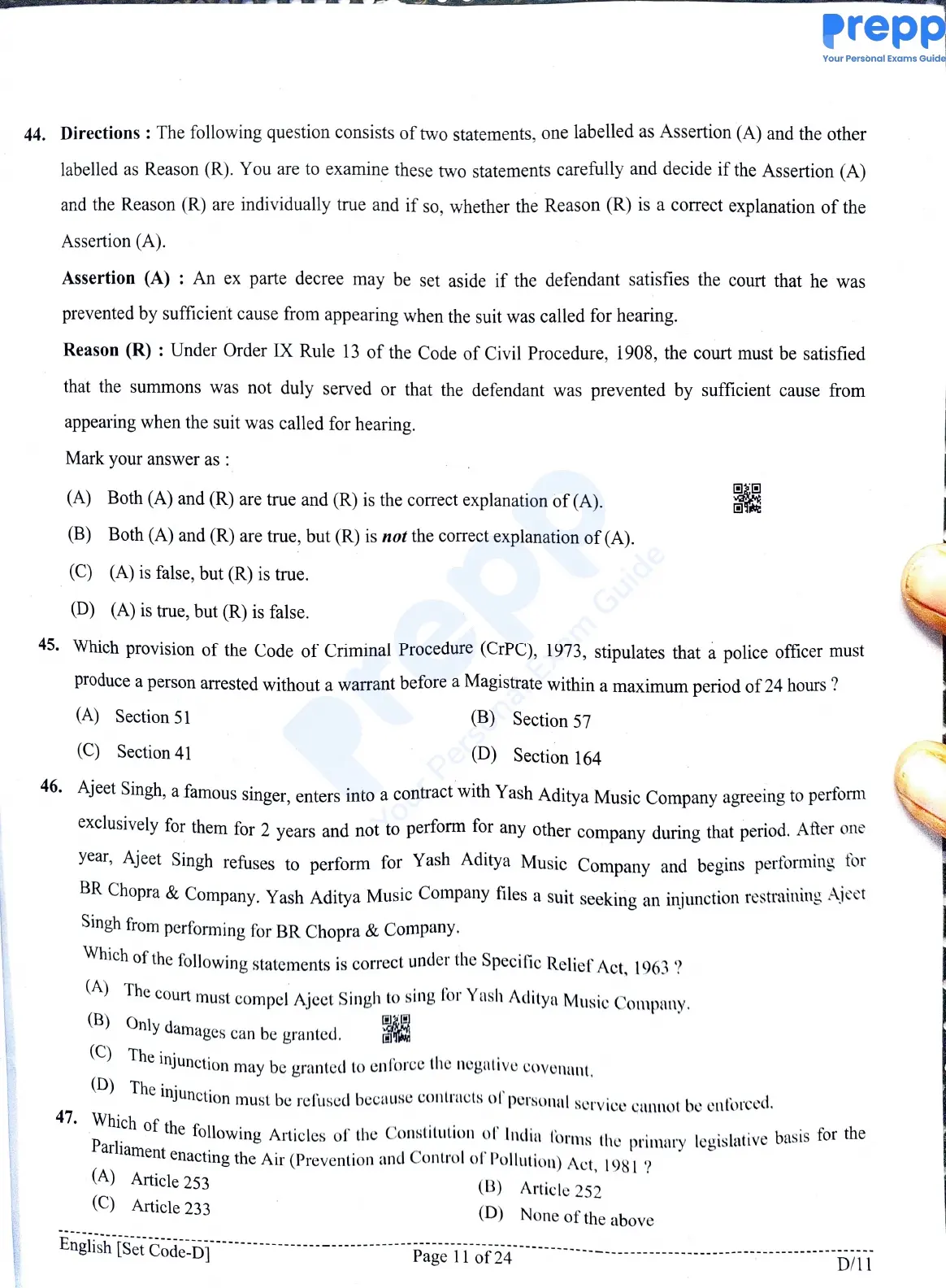
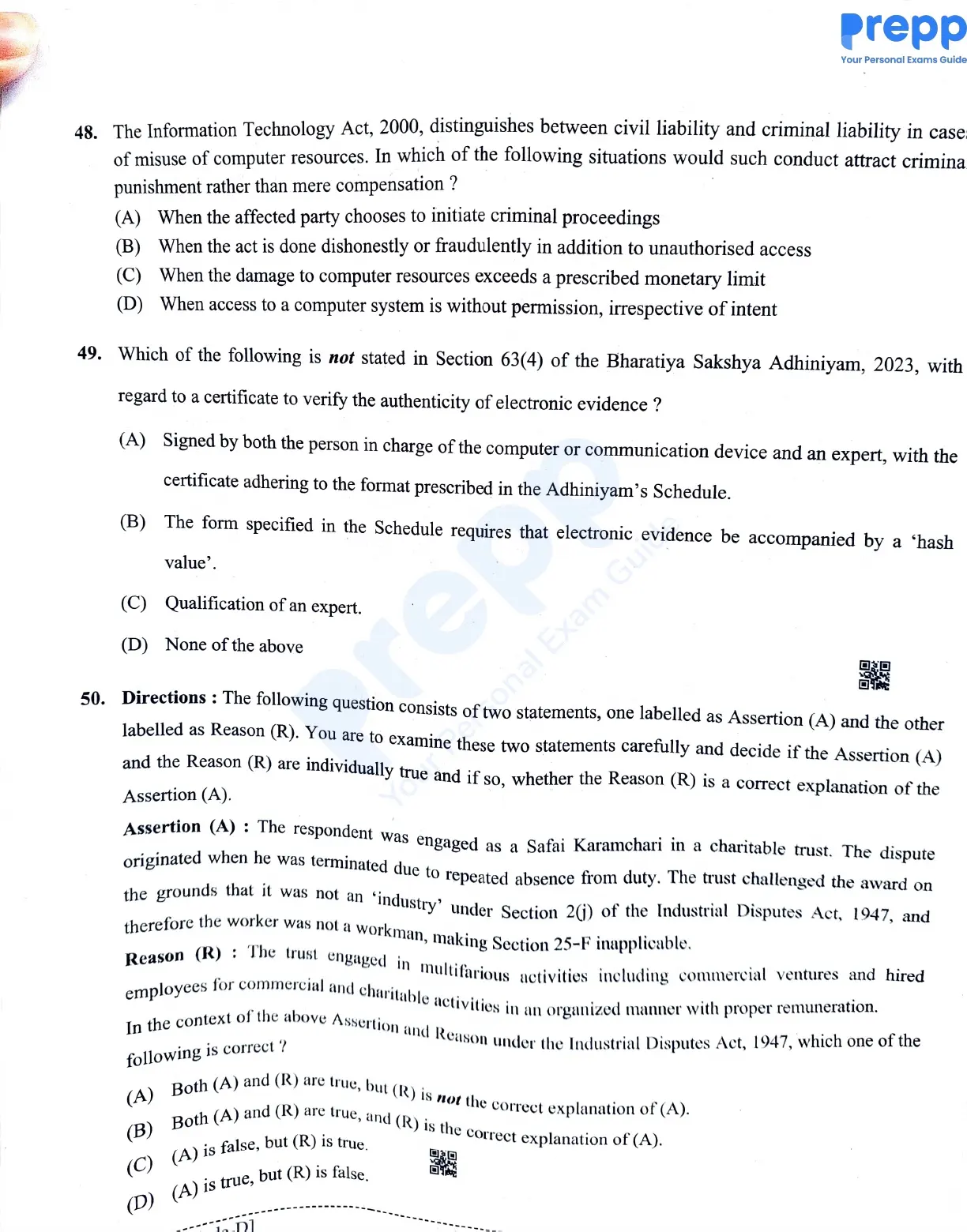
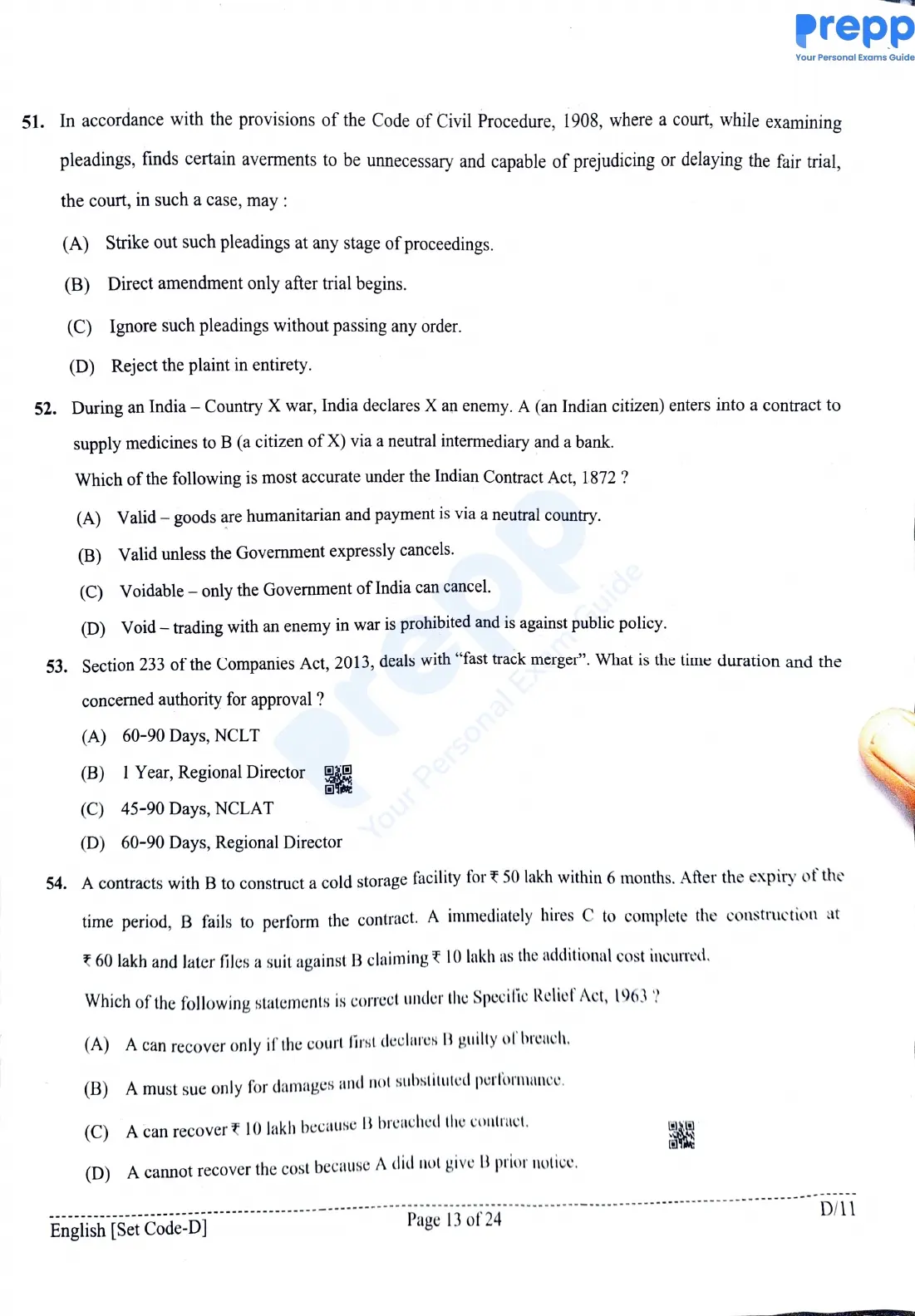
AIBE 21 2026 Question Paper and Answer Key PDF
| Question Paper PDF | Answer Key PDF | Detailed Solution |
|---|---|---|
AIBE 21 2026 Question Paper and Answer Key PDF (Jun 07, 2026) (SET A) |
Download PDF | Attempt Now |
| AIBE 21 2026 Question Paper and Answer Key PDF (Jun 07, 2026) (SET B) |
Download PDF | Attempt Now |
| AIBE 21 2026 Question Paper and Answer Key PDF (Jun 07, 2026) (SET C) |
Download PDF | Attempt Now |
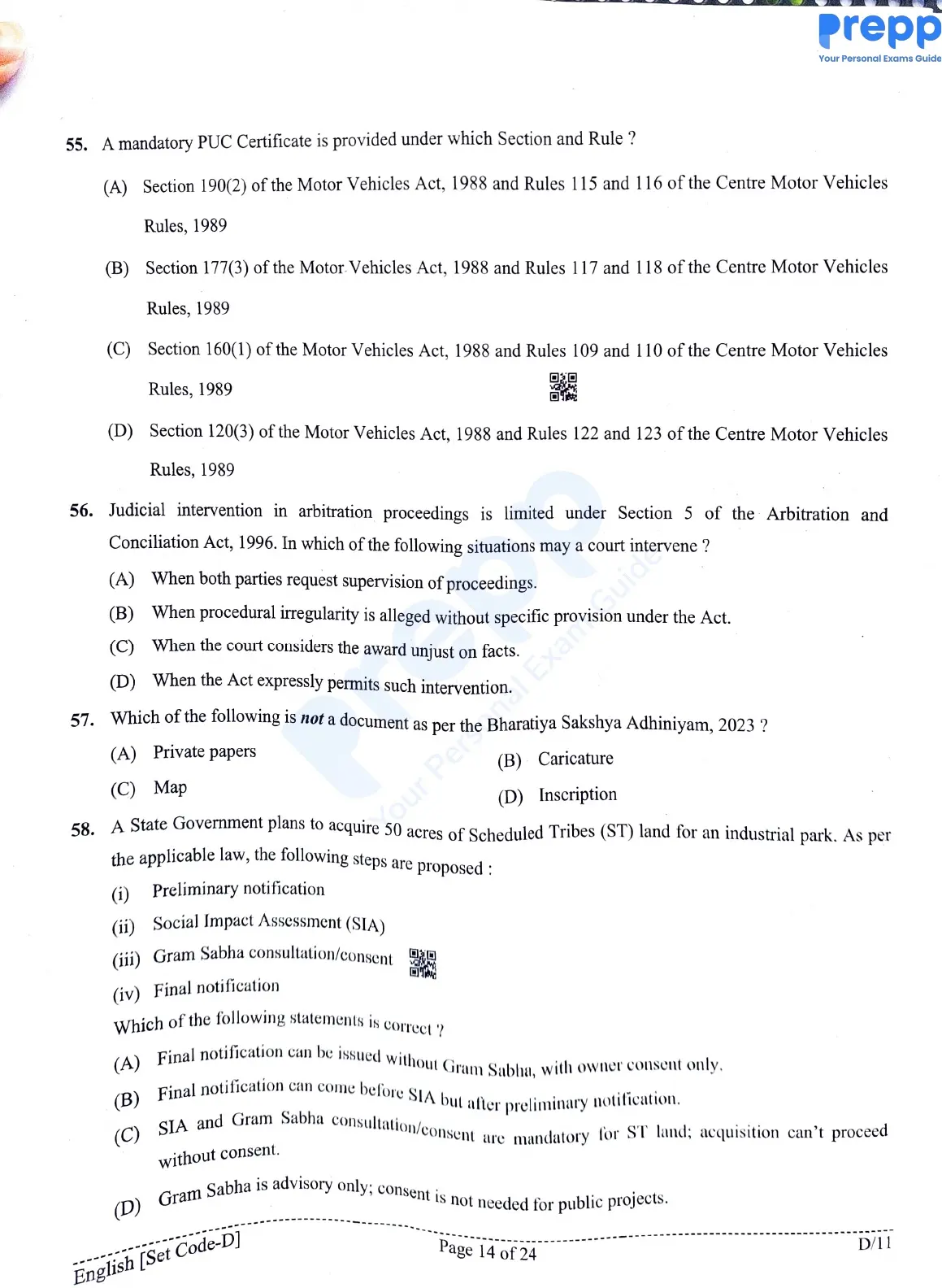
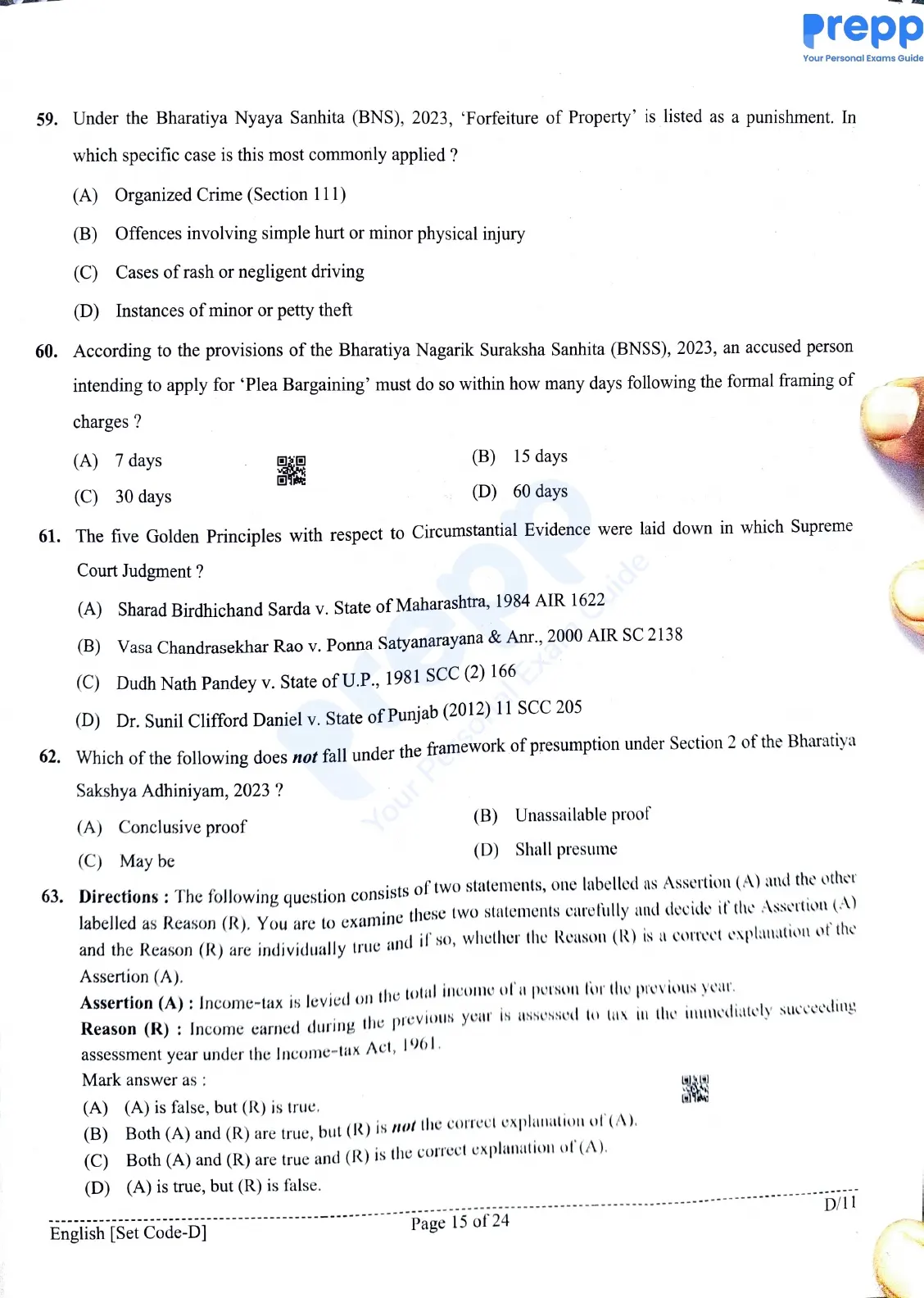
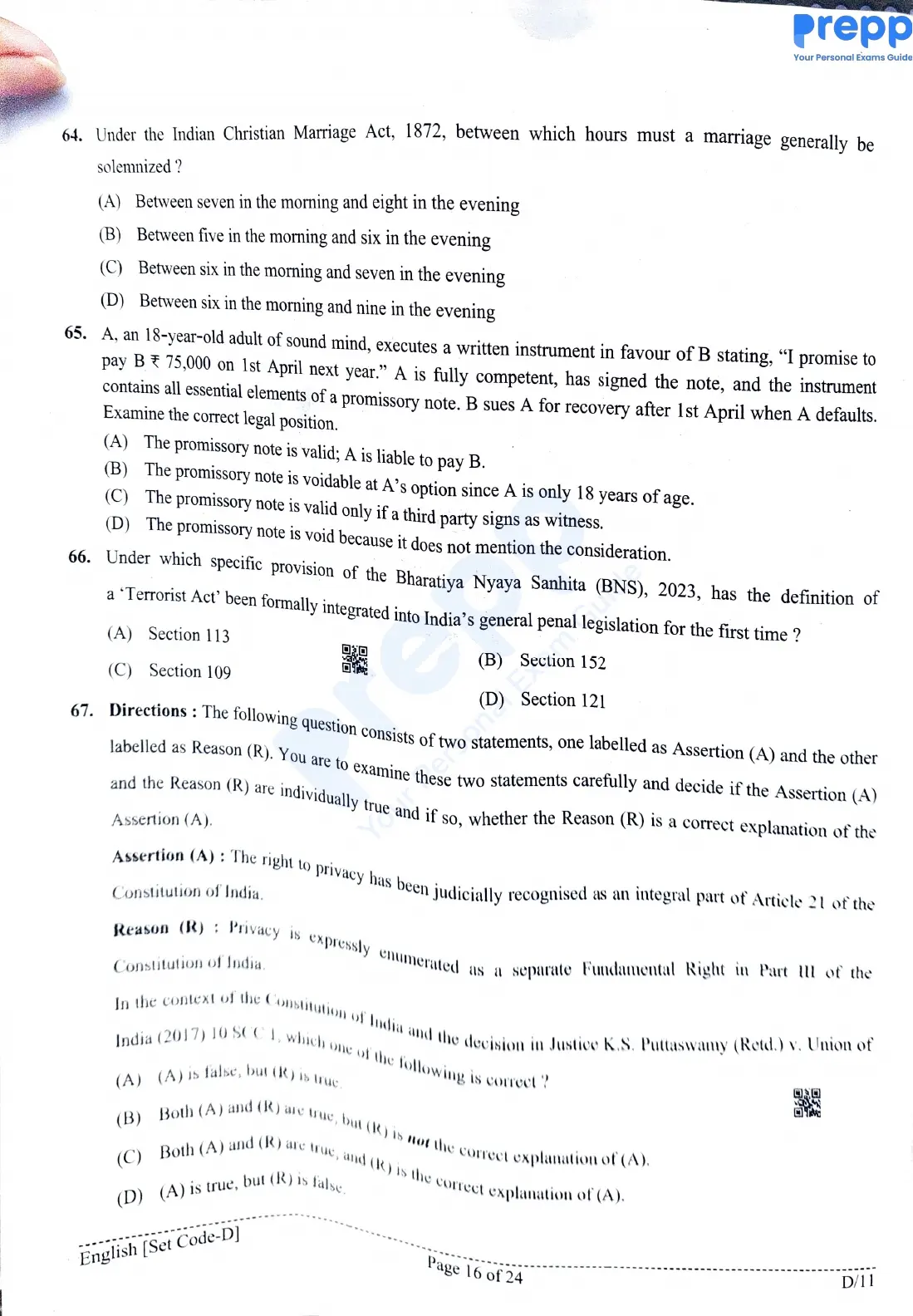
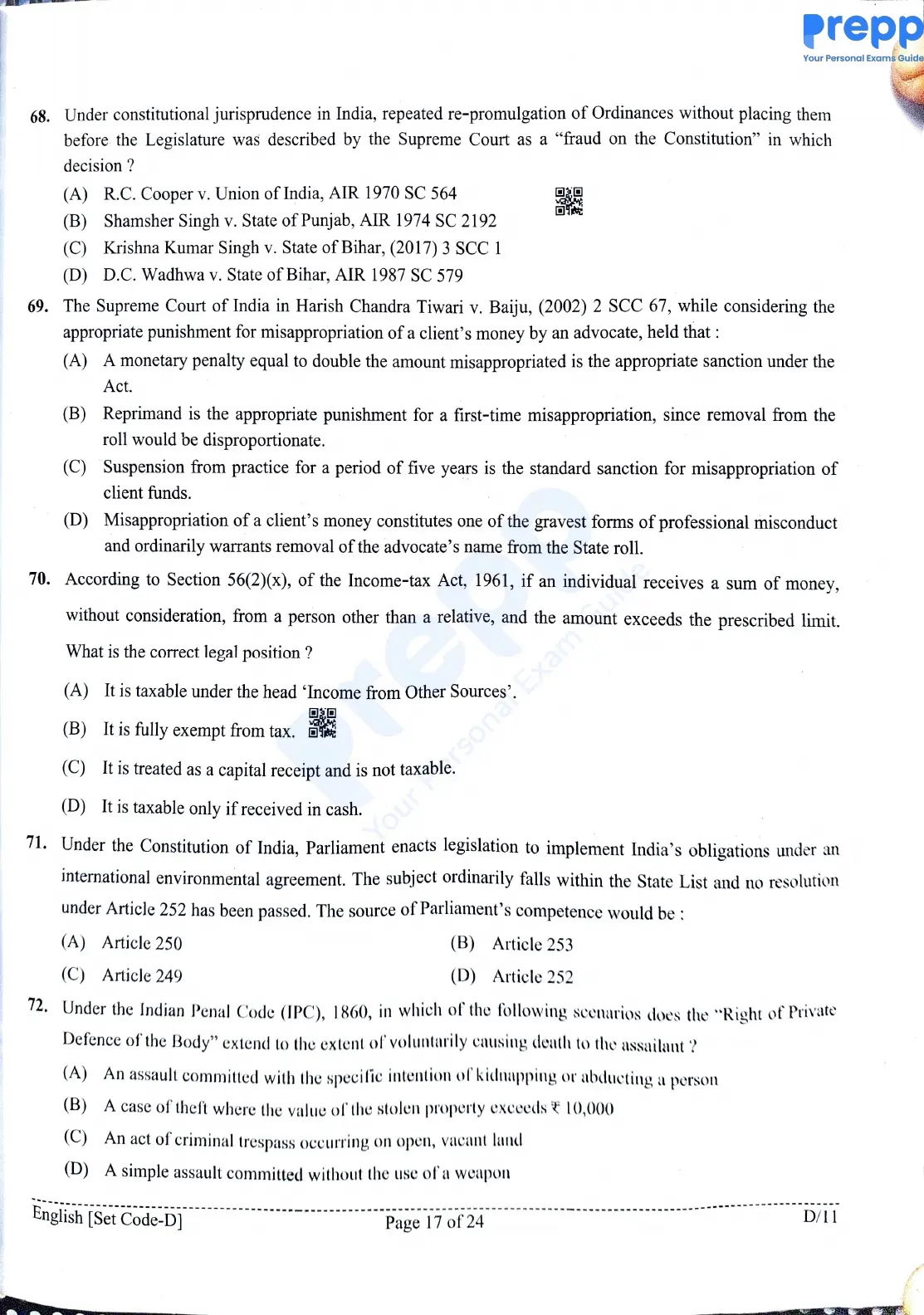
| AIBE 21 2026 Question Paper and Answer Key PDF (Jun 07, 2026) (SET D) |
Download PDF | Attempt Now |
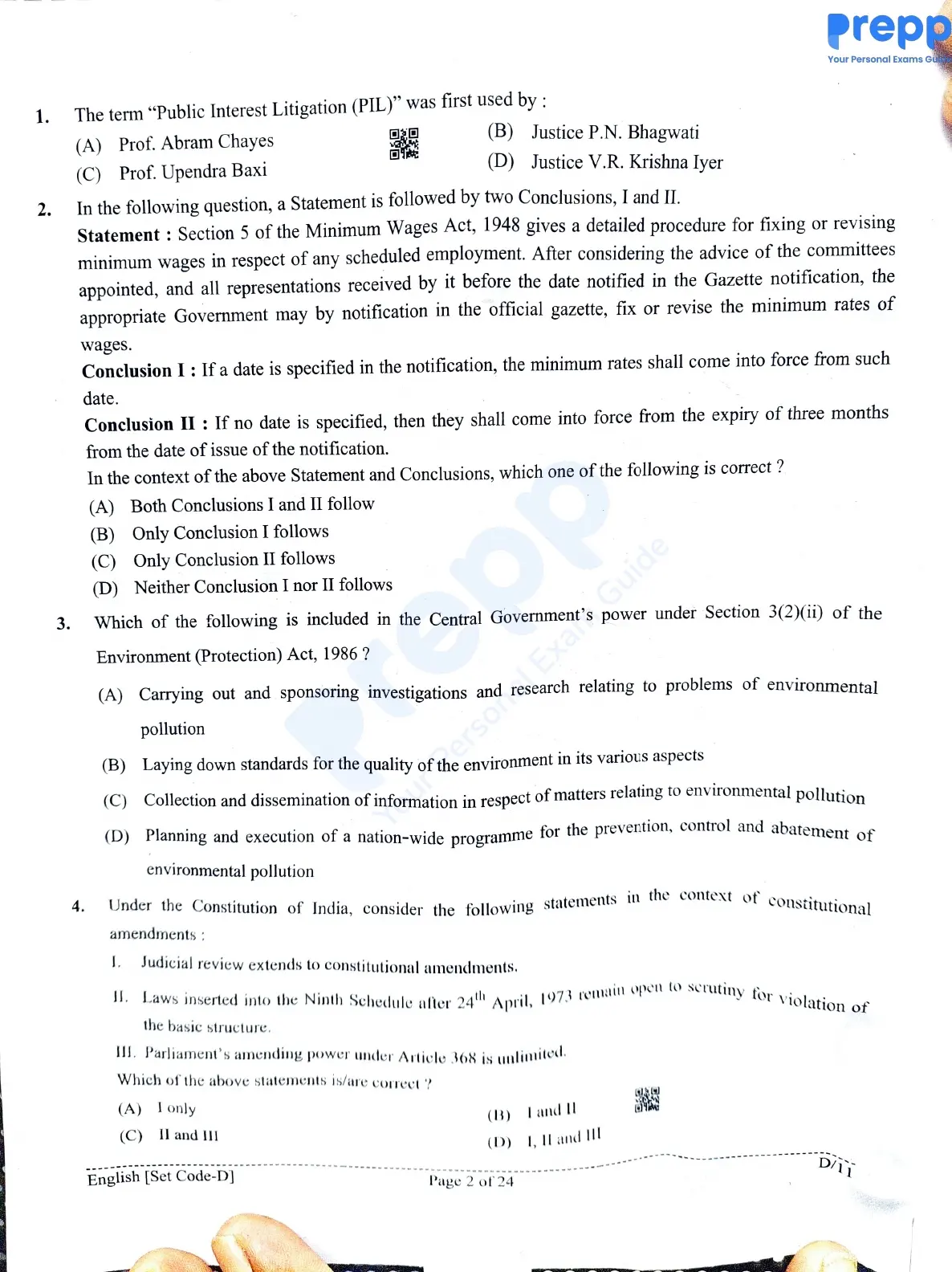
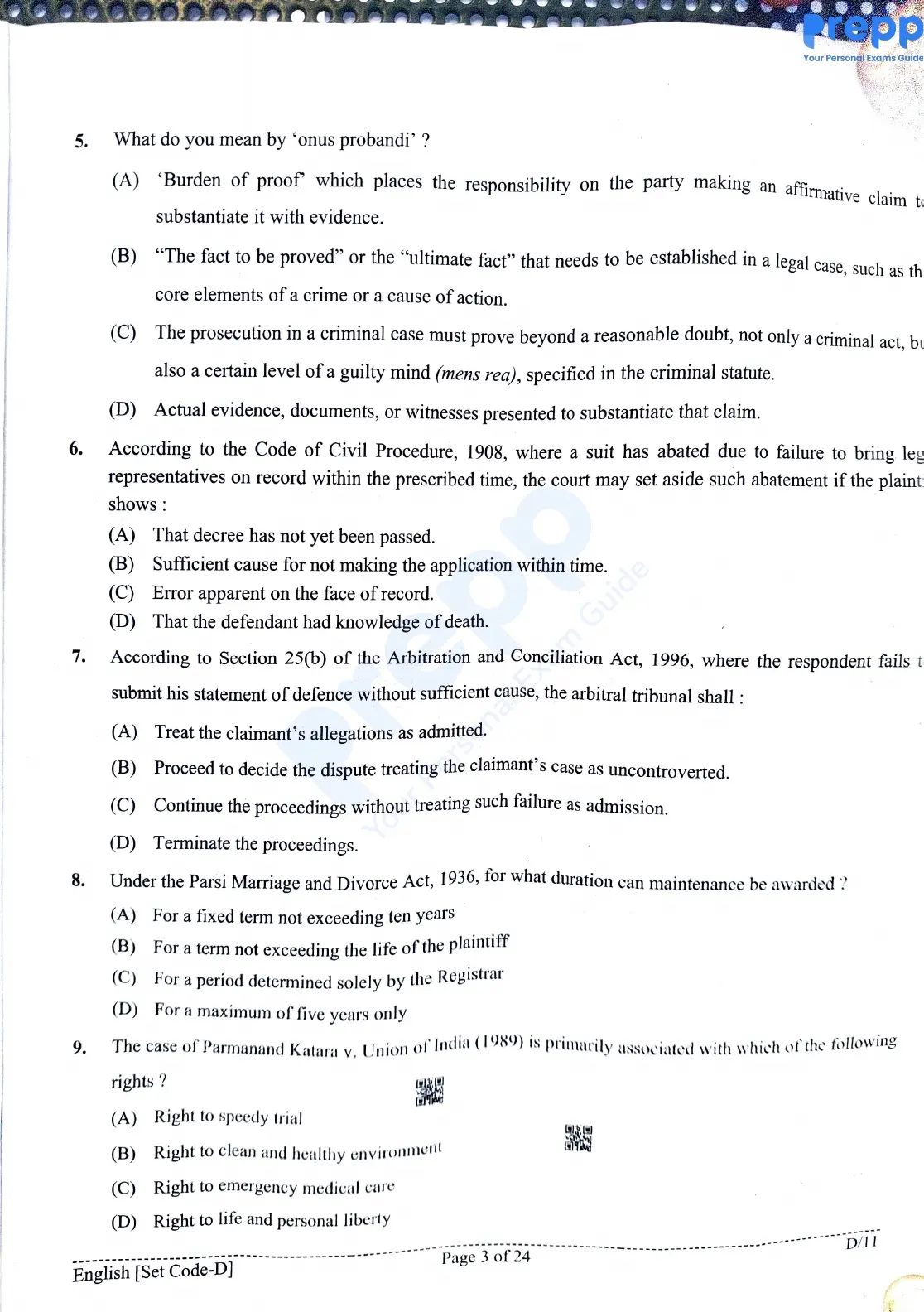
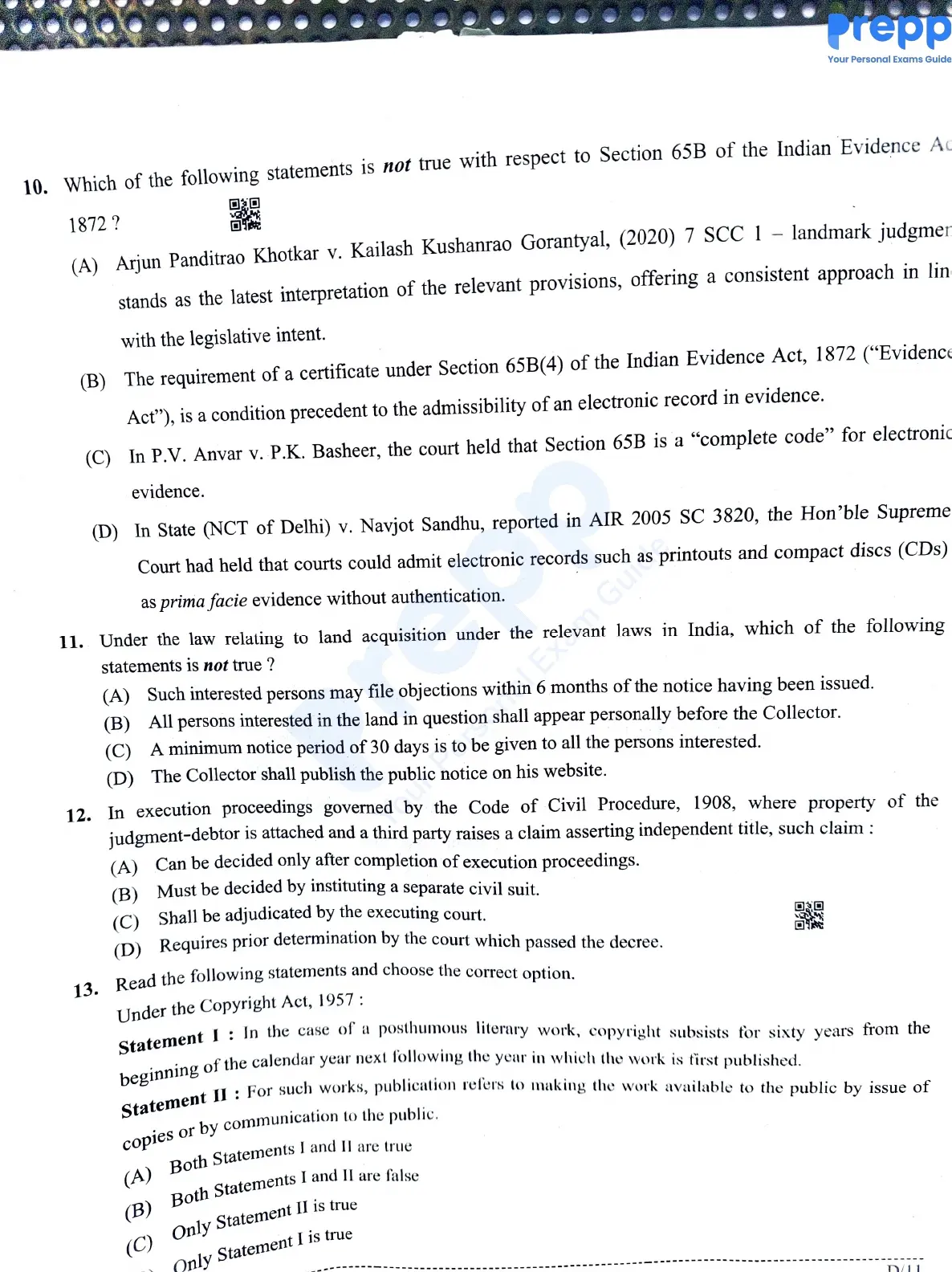
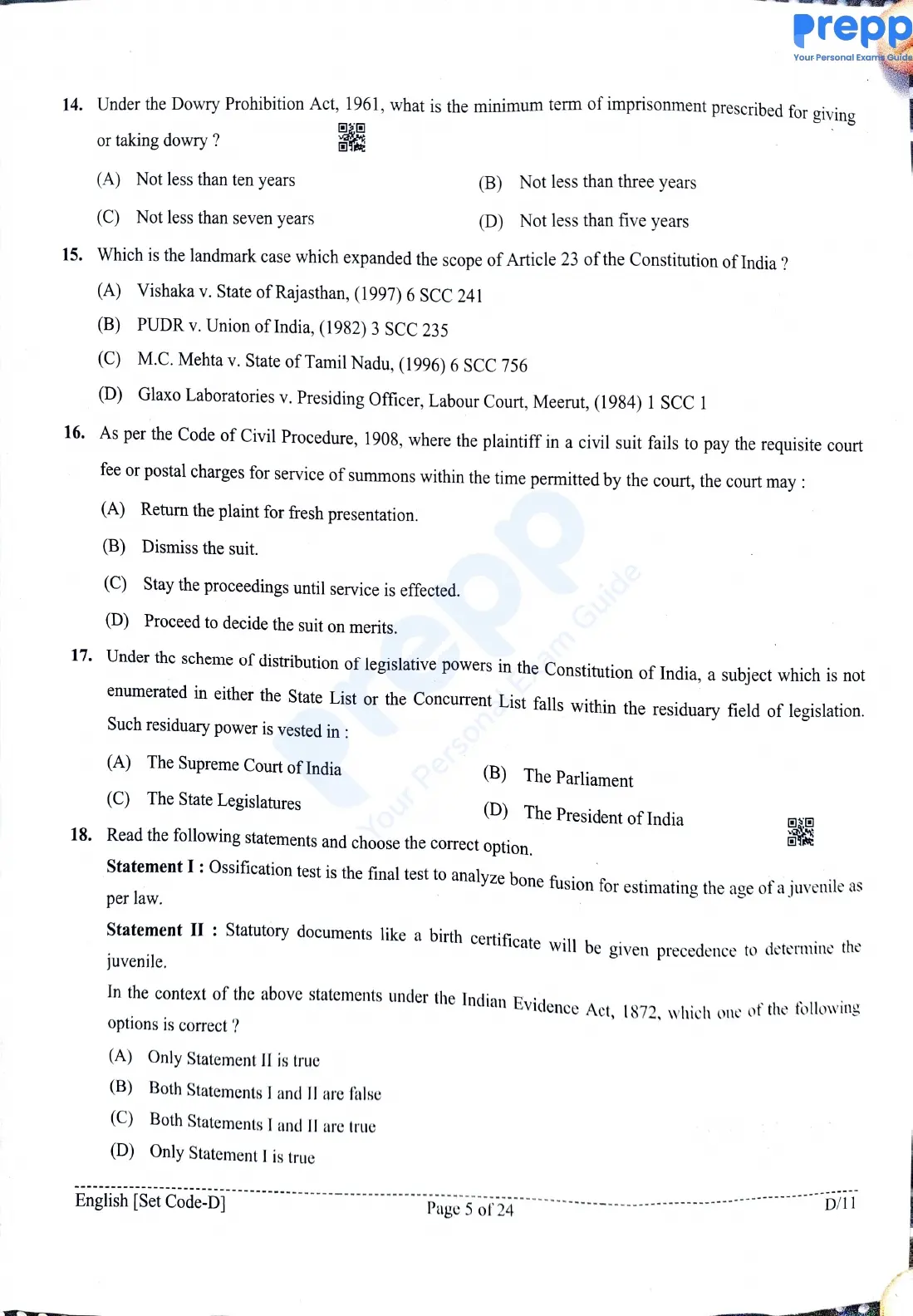
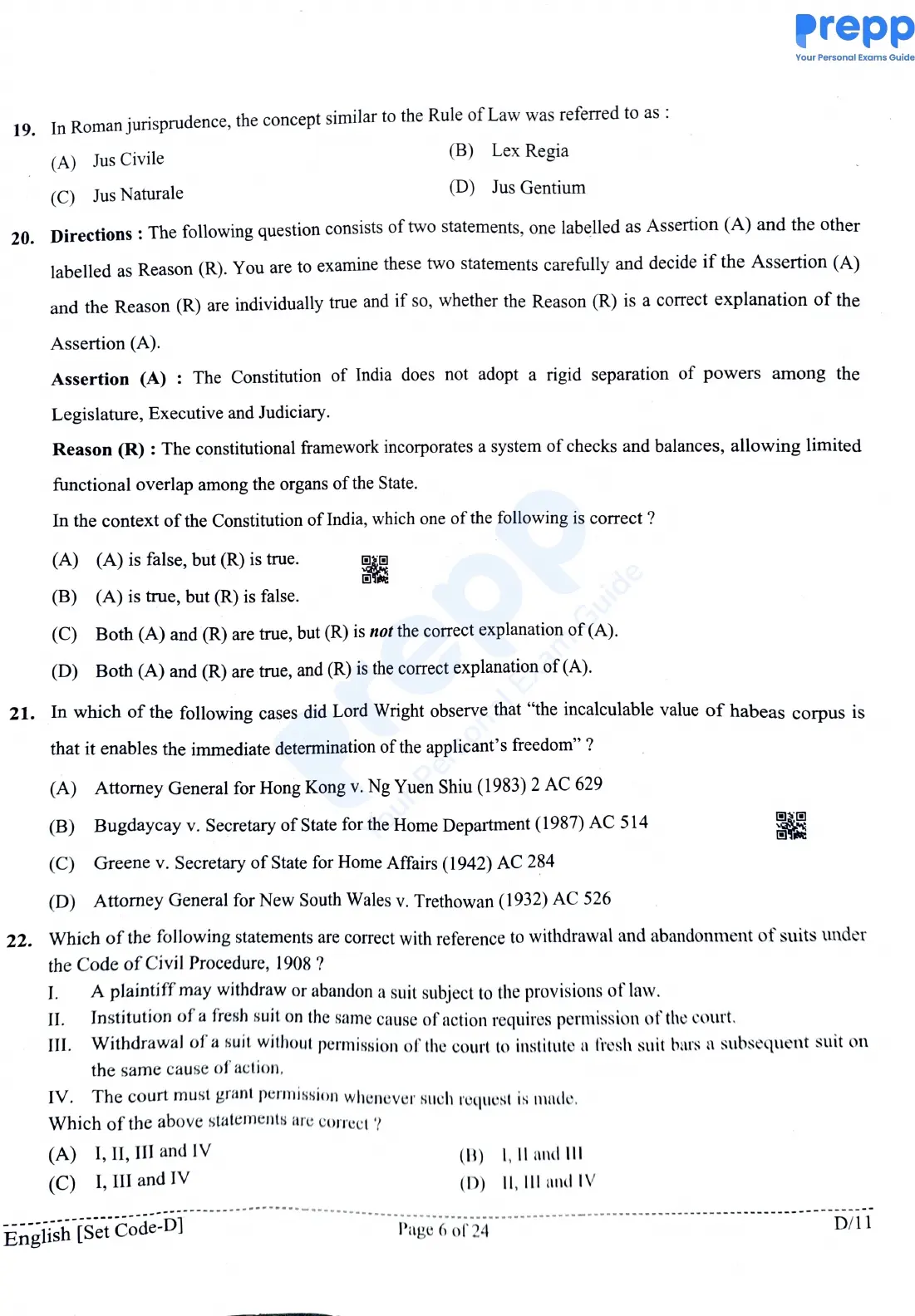
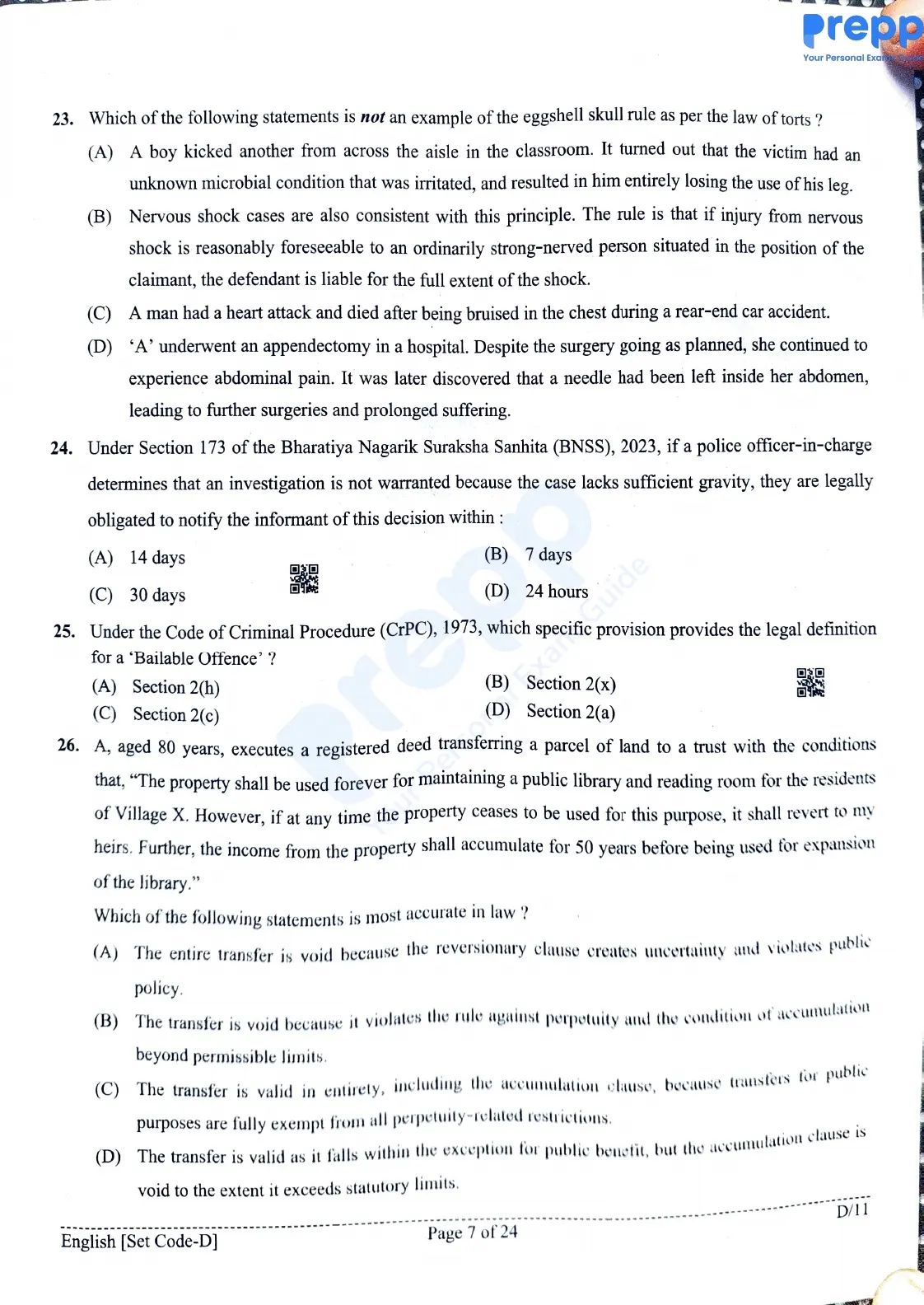
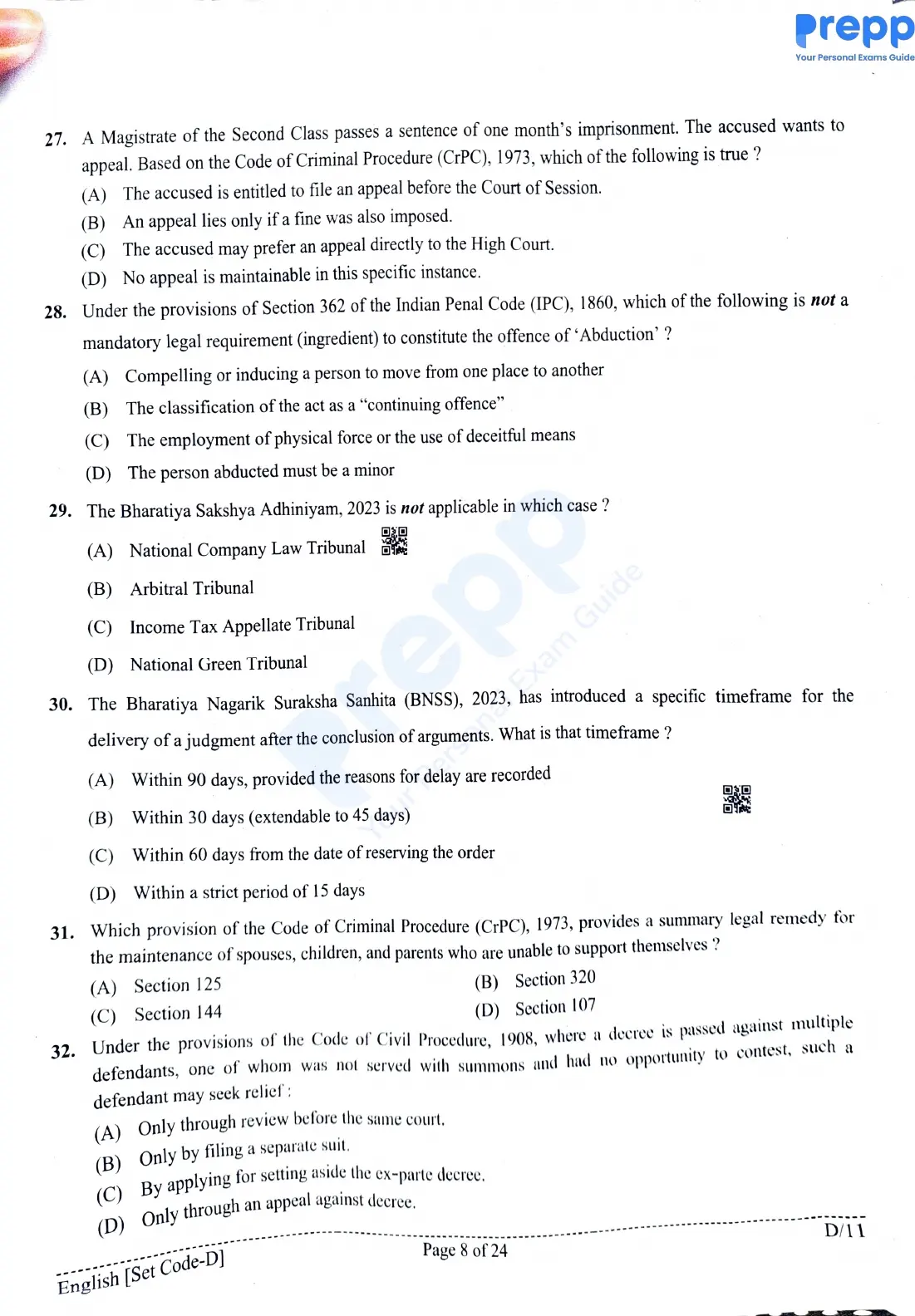
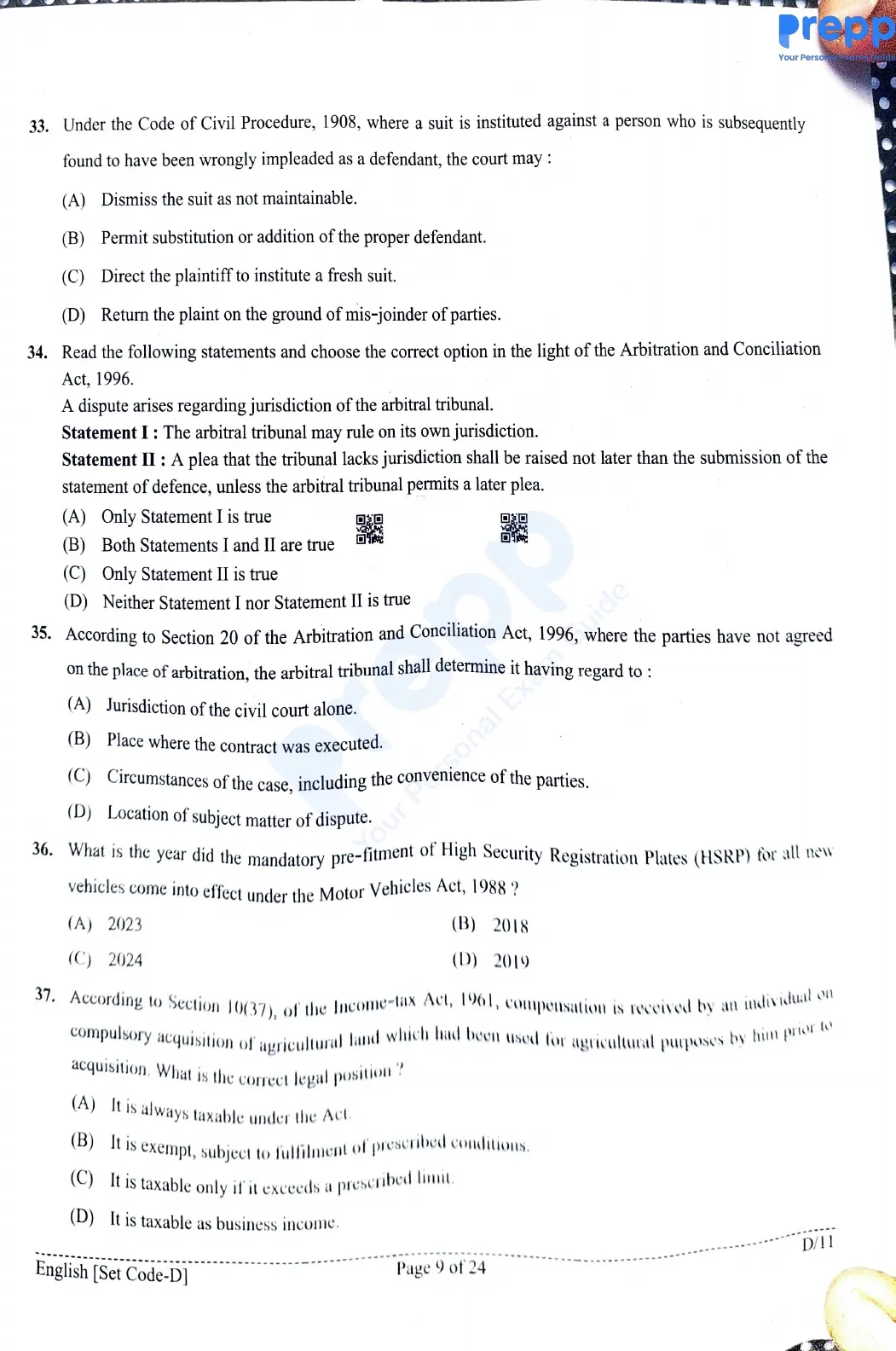
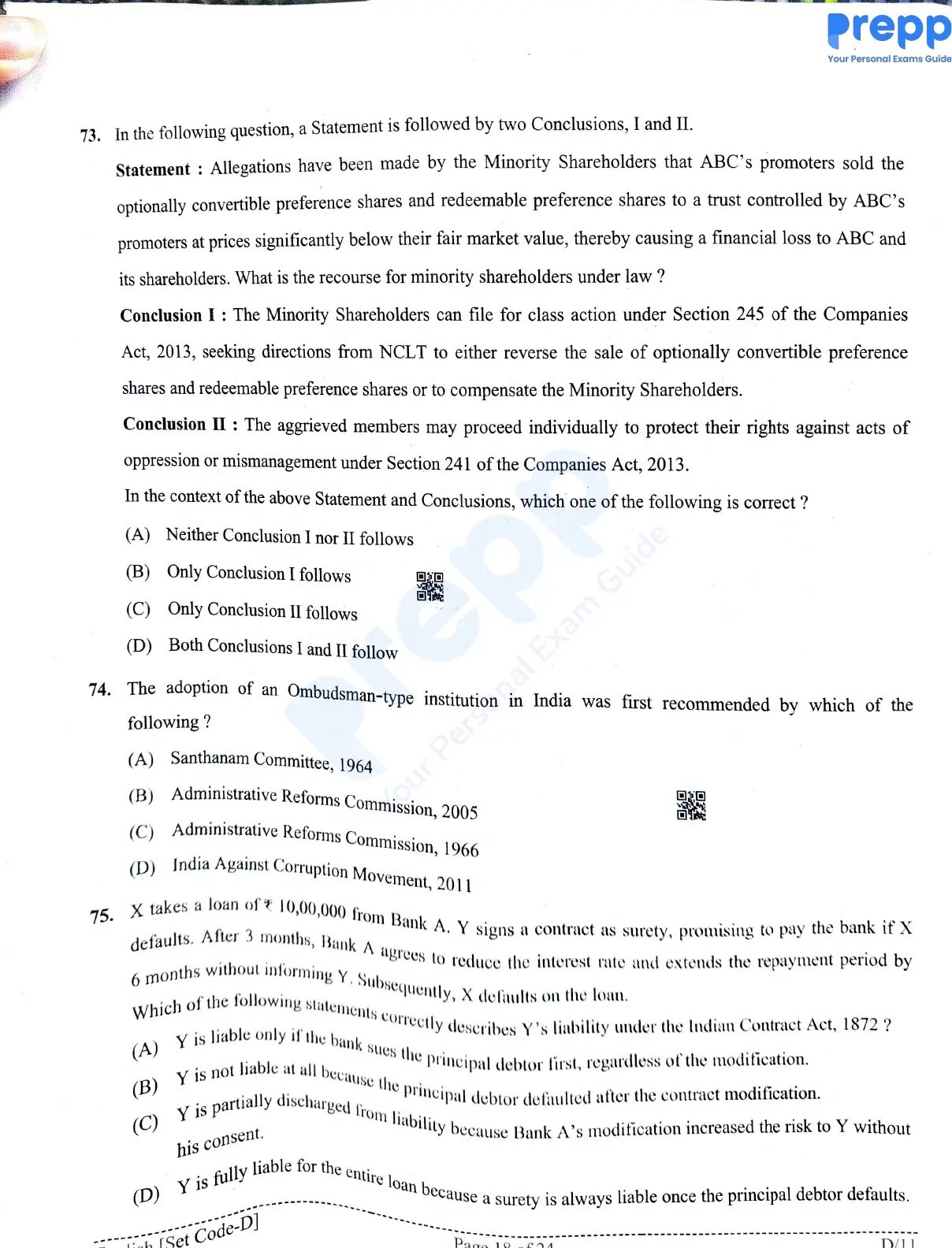
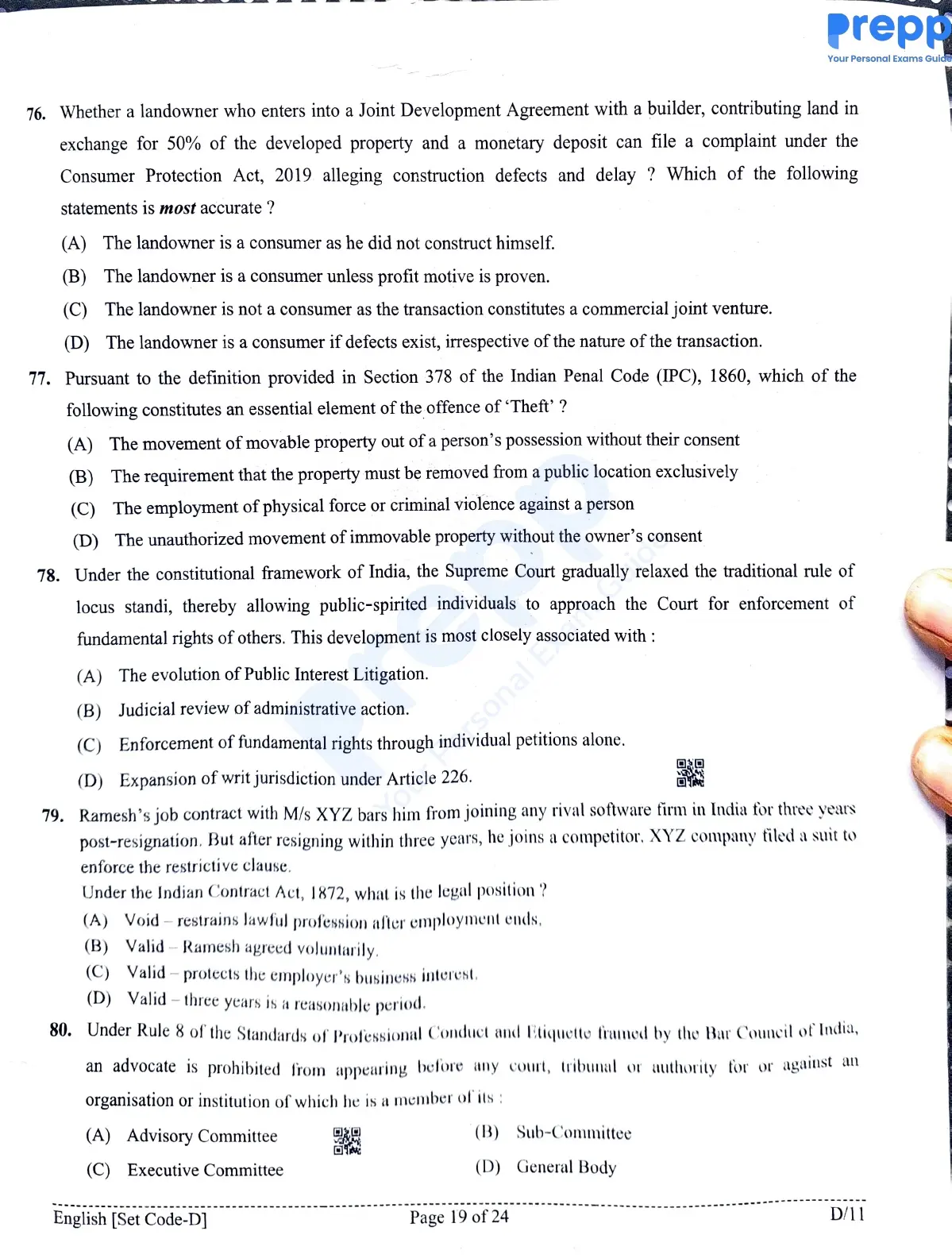
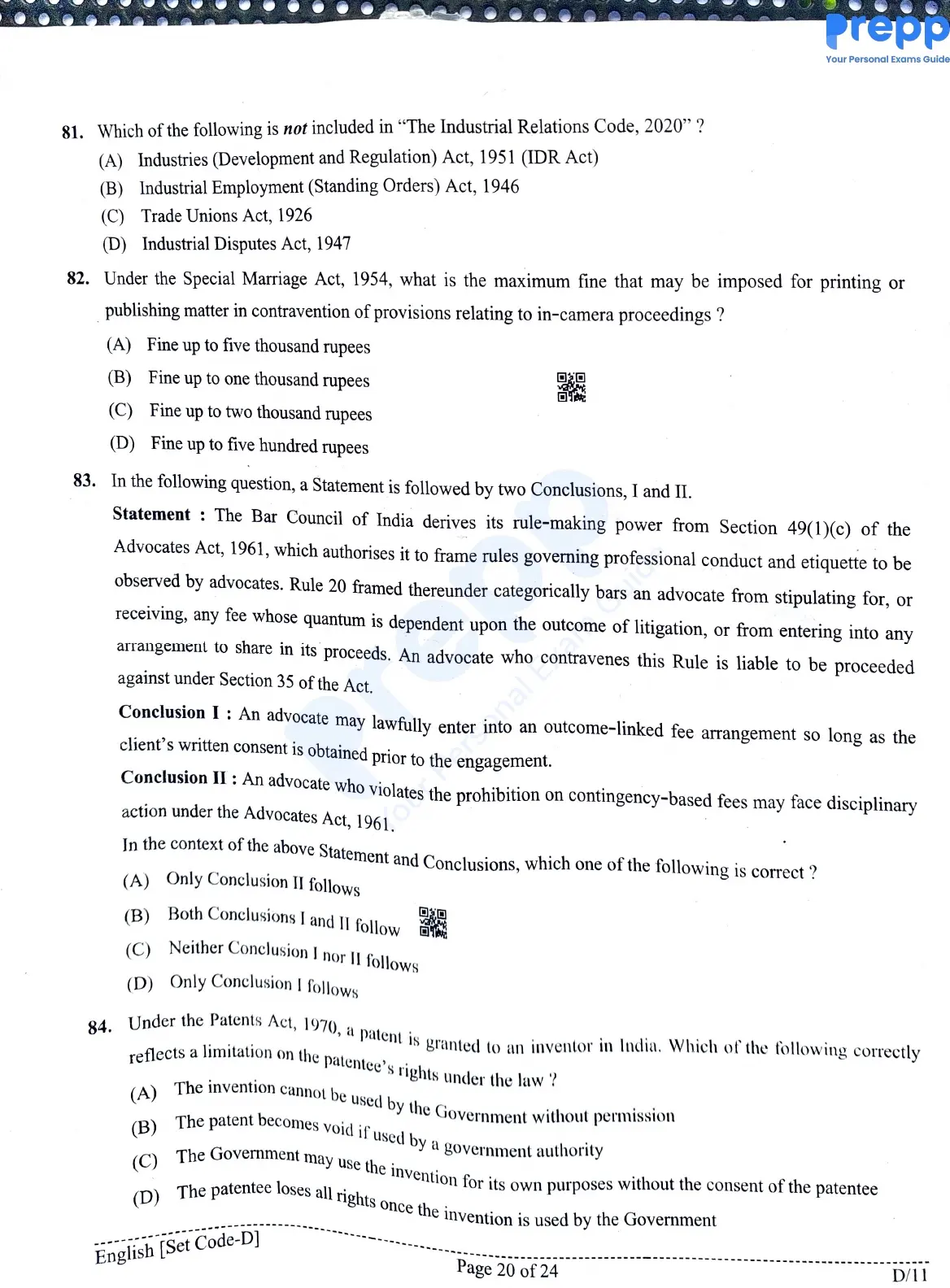
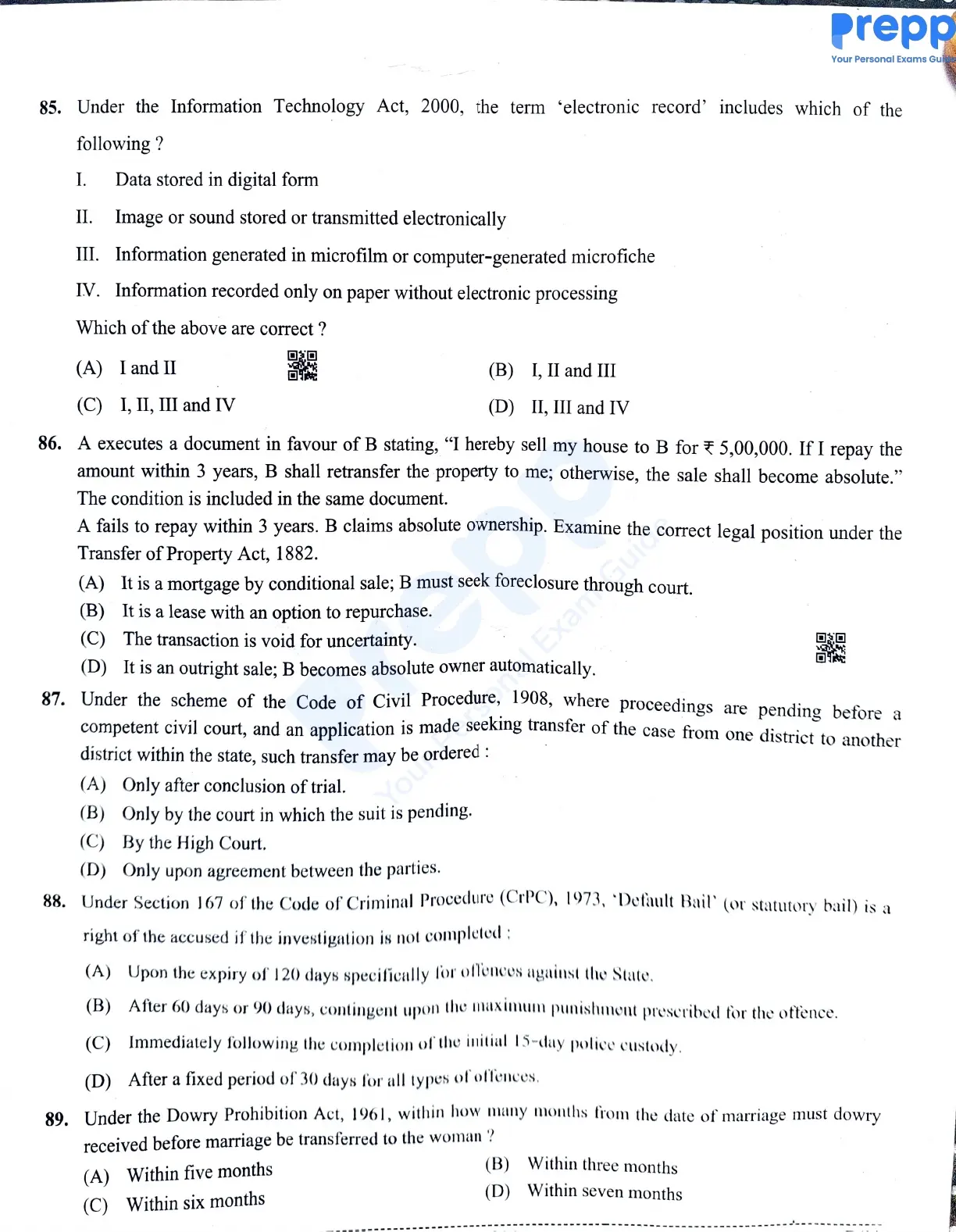
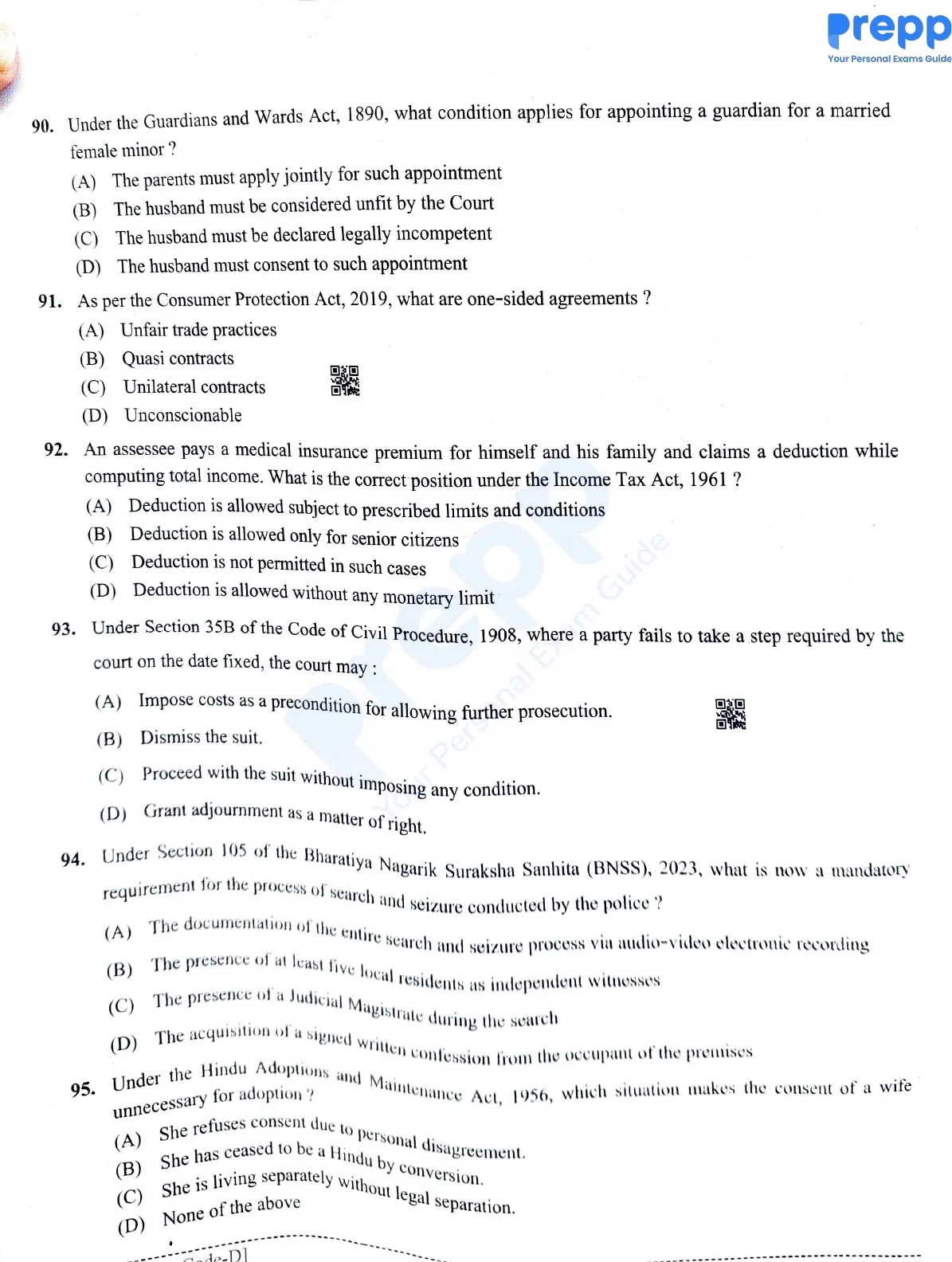
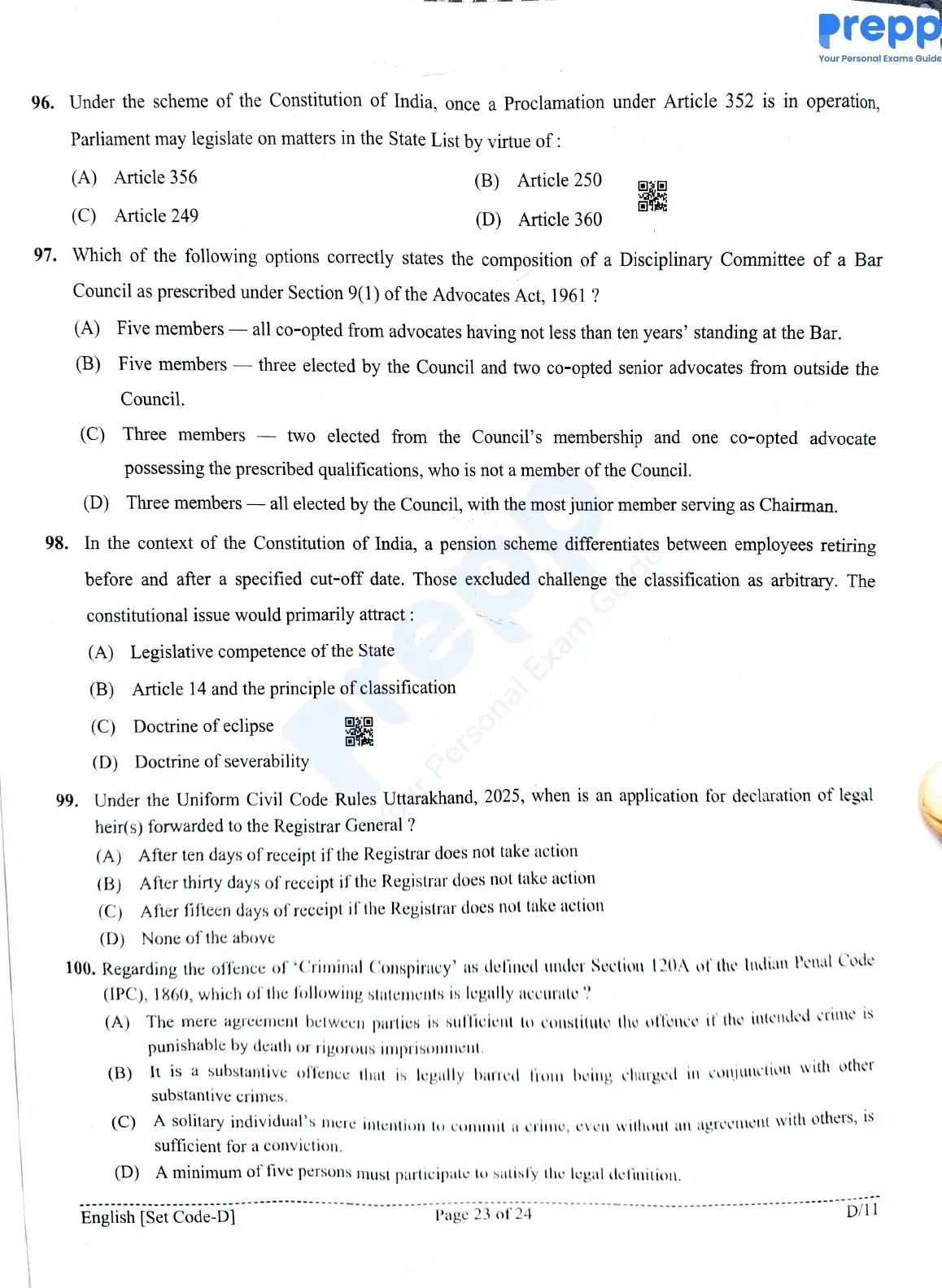
AIBE 2026 Exam Analysis
AIBE 2026 is easy to moderate. The paper is not very difficult conceptually, but it is lengthy because candidates have to answer questions from 19 different subjects. The most important challenge in AIBE is not only knowing the law but also finding the relevant provision quickly during the exam.
The question paper is likely to include a mix of direct, conceptual, and Bare Act-based questions. Core law subjects such as Constitutional Law, CPC, CrPC/BNSS, IPC/BNS, Evidence/BSA, Family Law, and Contract Law are expected to carry high weightage. These subjects should be given maximum attention during preparation.
Professional Ethics is another important scoring area. Since AIBE is directly related to legal practice, questions from the Bar Council of India Rules, duties of advocates, professional misconduct, and advocate-client relationships are commonly expected. Candidates are advised to revise this section separately instead of leaving it for the final day.
| Section | Difficulty Level | Question Type |
|---|---|---|
| Constitutional Law | Moderate | Articles, writs, Fundamental Rights, landmark principles |
| IPC/BNS | Moderate | Offences, general exceptions, punishment, criminal liability |
| CrPC/BNSS | Moderate | Arrest, bail, trial, investigation, powers of courts |
| CPC | Moderate | Suits, orders, decrees, execution, appeals |
| Evidence/BSA | Moderate | Admissions, confessions, burden of proof, witnesses |
| Family Law | Easy to Moderate | Marriage, divorce, maintenance, adoption, succession |
| Professional Ethics | Easy to Moderate | BCI Rules, misconduct, duties of advocates |
| ADR and PIL | Easy to Moderate | Arbitration, mediation, Lok Adalat, PIL principles |
| Company, Cyber, Environmental, IPR | Easy to Moderate | Direct provision-based questions |
AIBE 2026 Based Time Management and Attempt Strategy
Time management plays a major role in AIBE 2026. Candidates get 3 hours and 30 minutes to attempt 100 questions. This gives around two minutes per question, but all questions should not be treated equally. Some questions can be solved directly, while others may require checking the Bare Act.
| Time Slot | What to Do | Target |
|---|---|---|
| First 60 minutes | Attempt easy and direct questions | Complete 35–40 questions |
| Next 90 minutes | Solve moderate questions using Bare Acts | Complete 40–45 questions |
| Next 45 minutes | Attempt difficult, lengthy, or doubtful questions | Complete remaining questions |
| Last 15 minutes | Check OMR sheet and unanswered questions | Avoid marking mistakes |
Candidates should also be careful while filling the OMR sheet. Wrong marking, incorrect question number matching, or leaving questions unanswered can affect the final score. It is better to mark answers carefully in intervals rather than waiting until the end to fill the entire OMR sheet.
| Attempt Strategy | Explanation |
|---|---|
| Start with familiar subjects | Begin with topics where you are confident to save time |
| Do not search every answer immediately | First solve direct questions, then use Bare Acts for doubtful ones |
| Keep Bare Acts arranged | Arrange subject-wise Bare Acts before entering the exam hall |
| Use elimination method | Remove clearly wrong options to improve accuracy |
| Attempt all questions | No negative marking makes full attempt important |
| Review OMR carefully | Check roll number, booklet code, and answer marking before submission |
AIBE 2026 Weightage: Subject-Wise Important Chapters
AIBE 2026 preparation is based on the official syllabus and previous year question trends. Candidates should focus more on high-weightage subjects but should also revise low-weightage subjects for easy marks. The subject-wise important chapters given below help candidates plan their revision properly.
| Subject | No. of Questions | Most Repeated / Important Topics |
|---|---|---|
| Constitutional Law | 10 | Fundamental Rights, DPSP, writs, emergency provisions, Parliament, Supreme Court, High Courts, Article 14, Article 19, Article 21, Article 32, Article 226 |
| IPC and Bharatiya Nyaya Sanhita | 8 | General exceptions, offences against body, offences against property, theft, robbery, dacoity, cheating, criminal breach of trust, murder, culpable homicide, attempt, abetment |
| CrPC and Bharatiya Nagarik Suraksha Sanhita | 10 | FIR, arrest, bail, investigation, charge, trial, summons case, warrant case, maintenance, appeal, revision, powers of magistrate |
| Code of Civil Procedure | 10 | Jurisdiction, res judicata, plaint, written statement, parties to suit, summons, temporary injunction, decree, execution, appeal, review, revision |
| Evidence Act and Bharatiya Sakshya Adhiniyam | 8 | Relevancy of facts, admissions, confessions, dying declaration, burden of proof, estoppel, expert opinion, witness examination, primary and secondary evidence |
| Alternative Dispute Redressal including Arbitration Act | 4 | Arbitration agreement, appointment of arbitrator, arbitral award, mediation, conciliation, Lok Adalat |
| Family Law | 8 | Marriage, divorce, maintenance, adoption, guardianship, succession, Hindu Marriage Act, Muslim Law, Special Marriage Act |
| Public Interest Litigation | 4 | Locus standi, PIL procedure, environmental PIL, social justice PIL, important Supreme Court judgments |
| Administrative Law | 3 | Natural justice, delegated legislation, judicial review, administrative discretion, tribunals, rule of law |
| Professional Ethics and Professional Misconduct | 4 | Duties of advocates, BCI Rules, professional misconduct, advocate-client relationship, disciplinary proceedings, restriction on advertising |
| Company Law | 2 | Incorporation, separate legal entity, directors, meetings, winding up, corporate liability |
| Environmental Law | 2 | Environment Protection Act, Water Act, Air Act, National Green Tribunal, polluter pays principle, sustainable development |
| Cyber Law | 2 | Information Technology Act, cyber offences, digital signature, electronic records, data protection basics |
| Labour and Industrial Law | 4 | Industrial disputes, wages, maternity benefits, employee welfare laws, labour rights |
| Law of Tort including Motor Vehicle Act and Consumer Protection Law | 5 | Negligence, nuisance, defamation, strict liability, vicarious liability, motor accident claims, consumer rights |
| Law related to Taxation | 4 | Basic taxation concepts, direct tax, indirect tax, GST basics, taxable income |
| Contract, Specific Relief, Property Laws and NI Act | 8 | Offer, acceptance, consideration, free consent, breach of contract, specific performance, injunction, transfer of property, cheque dishonour |
| Land Acquisition Act | 2 | Compensation, acquisition procedure, public purpose, rehabilitation and resettlement |
| Intellectual Property Laws | 2 | Copyright, trademark, patent, infringement, passing off, basic IPR definitions |
Candidates should give extra attention to the subjects carrying 8 to 10 questions because they strongly affect the final score. However, subjects carrying 2 to 4 questions should also be revised because they often have direct and less time-consuming questions.
| Priority Level | Subjects | Reason |
|---|---|---|
| High Priority | Constitutional Law, CrPC/BNSS, CPC, IPC/BNS, Evidence/BSA, Family Law, Contract Law | These subjects carry higher weightage and form the core of the paper |
| Medium Priority | Professional Ethics, ADR, PIL, Labour Law, Taxation, Tort | These subjects are scoring and often include direct questions |
| Low but Important Priority | Company Law, Environmental Law, Cyber Law, Land Acquisition, IPR | These carry fewer questions but can help improve the final score |
AIBE Question Paper 2026 FAQs
Ques. Is there any negative marking in AIBE 2026?
Ans. No, there is no negative marking in AIBE 2026. Candidates are advised to attempt all questions, even if they are unsure about some answers, because wrong answers will not reduce their marks.
Ques. Which subjects are most important for AIBE 2026 preparation?
Ans. The most important subjects for AIBE 2026 include Constitutional Law, IPC/BNS, CrPC/BNSS, CPC, Evidence Act/BSA, Family Law, Contract Law, and Professional Ethics. These subjects usually carry higher weightage and should be revised carefully.
Ques. What is the best time management strategy for AIBE 2026?
Ans. Candidates should first attempt easy and direct questions, then solve Bare Act-based questions, and finally return to doubtful or lengthy questions. They should also keep the last 10 to 15 minutes for checking the OMR sheet and unanswered questions.
Download the PREPP App and attempt FREE AIBE Mock Tests and get complete study material!


Comments