
The Student’s Guide to Traveling Between the UK and Europe on a Budget: Why Eurostar Is Worth It
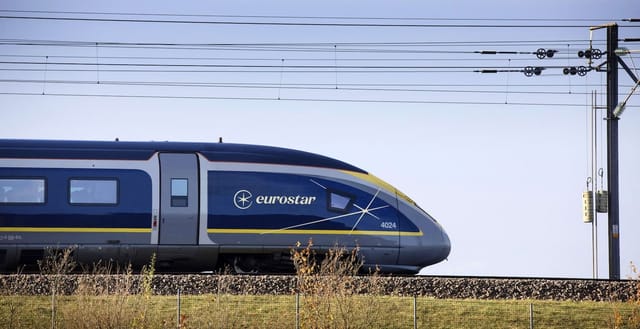
If you’re a student based in the UK — whether you’re studying for a degree, sitting professional exams, completing an internship, or preparing for a graduate school application — Europe is closer than it probably feels. London’s St Pancras International station sits in the middle of the city, and from there a single train can have you in central Paris in just over two hours, Brussels in under two, or Amsterdam in just over four. No long-haul coaches to the airport. No 100ml liquid rules. No middle-seat compromises at 35,000 feet. Just a train that goes under the English Channel and arrives directly in the heart of the city you’re heading to.
The challenge for most students is figuring out whether Eurostar is actually affordable, or whether it sits in a premium bracket reserved for business travellers and weekend-break tourists. The honest answer is: it depends entirely on how you book, and on how you account for the full cost of the trip. This guide breaks all of that down — what Eurostar actually costs at different booking windows, how it compares to flying on total door-to-door spend, the specific discounts and tools available to younger travellers, and practical tips to make the most of the journey itself.
Prepp readers spend a significant amount of time preparing for high-stakes exams — GRE, GMAT, IELTS, LNAT, CFA, and more — and many of those exams are sat at international test centres, or lead to opportunities at universities and employers across the UK and Europe. This guide is built around that reality: budget-conscious, time-aware, and aimed at making cross-border travel less stressful rather than more.
What Eurostar Is and Why It’s Different From Flying
Eurostar is the high-speed passenger train service that connects London St Pancras International with Paris Gare du Nord, Brussels-Midi, Amsterdam Centraal, Rotterdam, and Lille via the Channel Tunnel. Trains travel at up to 300 km/h (186 mph) and pass through the 31-mile undersea tunnel at speeds that make the crossing feel almost unremarkable — about 20 minutes of tunnel, bookended by French or English countryside.
What makes Eurostar different from flying isn’t just the in-tunnel experience. It’s the end-to-end journey design. You check in at a central London station, walk through security (no liquid restrictions beyond passport control requirements), and step off the train in the heart of Paris or Brussels. No bus or train to a remote airport, no 45-minute transfer to your actual destination once you land. The city centre to city centre time advantage is real and it compounds over longer trips.
Since its 2022-2023 merger with Thalys, Eurostar now operates two train types: the classic blue trains on UK routes and the red (formerly Thalys) trains for mainland European routes between Paris, Brussels, Amsterdam, and Cologne. This expanded network means that once you’re on the continent, onward connections across France, Belgium, the Netherlands, and Germany are also branded under the same Eurostar umbrella.
- London to Paris: approximately 2 hours 15 minutes centre to centre
- London to Brussels: approximately 2 hours 1 minute, the fastest of the three main routes
- London to Amsterdam: approximately 4 hours 11 minutes, with a stop in Brussels
- London to Rotterdam: approximately 3 hours 15 minutes
- London to Lille: approximately 1 hour 20 minutes — useful for connections into France
The Real Cost Comparison: Eurostar vs. Flying
The headline price comparison between Eurostar and budget airlines tends to mislead students, because it compares the cheapest advertised rail fare to the cheapest advertised flight fare without accounting for the full trip cost. A flight from London to Paris might show a headline fare of £25–£45 on easyJet or Vueling, but that number is departure-airport-to-arrival-airport. Once you add the cost of actually getting there and back, the picture changes considerably.
| Journey Element | Flying (London–Paris) | Eurostar (London–Paris) |
|---|---|---|
| Base fare (advance booking) | £25–£60 (easyJet, Vueling) | £39–£52 standard (early booking) |
| Departure transfer | £25–£40 (Heathrow Express or Gatwick Express) | £0 (central London station) |
| Arrival transfer (CDG to central Paris) | £10–£18 (RER B or Orlybus) | £0 (Gare du Nord is central Paris) |
| Checked bag (if needed) | £12–£40 per bag depending on airline | Included (2 bags up to 85cm) |
| Time cost (extra airport hours) | 3–4 additional hours total | None — city centre departure |
| Realistic total spend | £80–£150+ on a typical student trip | £39–£80 for advance Standard booking |
The point isn’t that Eurostar is always cheaper than flying — it’s that the comparison is almost never as lopsided as the headline fare comparison suggests, and on many routes and booking windows, Eurostar comes out ahead on total spend while saving several hours of travel time in the process.
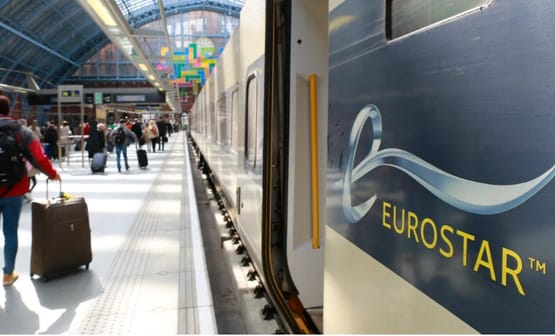
There’s also a practicality argument that students rarely see listed in price comparisons: no 100ml liquid restrictions, no shoe removal at security, no gate changes, no running across a terminal. You arrive at St Pancras 45–60 minutes before departure, walk through passport control and a bag scan, and board. That simplicity has real value when you’re travelling with a laptop bag full of exam notes and a carry-on that’s exactly one pair of jeans over the easyJet “sizer” limit.
How to Find the Cheapest Eurostar Fares as a Student
Eurostar fares operate on a dynamic pricing model similar to airlines — the cheapest seats sell first, and prices rise as the departure date approaches and trains fill up. Understanding the booking window is the single most impactful thing you can do to keep costs down.
- Book as early as possible. Eurostar releases tickets up to around 120 days in advance. For popular routes like London–Paris on a Friday or Sunday, the cheapest Standard fares can sell out weeks or months before travel.
- Travel midweek. Tuesday and Wednesday departures are consistently the cheapest days on the London–Paris route. Avoiding Monday morning and Friday afternoon trains cuts costs noticeably.
- Use Eurostar Snap for last-minute flexibility. Eurostar’s Snap product offers heavily discounted fares (sometimes up to 50% off) on specific trains where Eurostar doesn’t confirm your exact departure time until 24–48 hours before. It suits students with flexible schedules particularly well.
- Check youth fares. Travellers aged 12–25 qualify for a youth fare that offers around 20% off standard ticket prices on European routes. Select “youth” in the passenger type field when booking.
- Join Club Eurostar (it’s free). The loyalty programme earns 1 point per £1/$1 spent. Points convert to free travel, so even occasional trips add up over a student year.
- Flexible dates matter more than flexible times. If you can move your trip by a day, use Eurostar’s lowest fare finder to compare prices across a range of dates rather than committing to a specific day first.
- Avoid station booking fees. Booking direct on eurostar.com or the Eurostar app avoids the £10–20 service charge that some third-party agents and station ticket offices add.
What’s Included in Your Eurostar Ticket
Unlike most airlines, Eurostar includes a generous luggage allowance in the base fare at no extra charge. This alone can make the price comparison with budget carriers significantly more favourable once you factor in the checked-bag fees that most budget airlines now charge separately.
- Two large bags (up to 85cm in any dimension) per passenger, stored in overhead racks or in the space at the end of carriages — included in all fare types
- One small personal item (handbag, laptop bag, or backpack)
- No restrictions on liquids beyond the passport control requirements for your specific route — you can carry full-size toiletries
- A seat reservation is always included in the fare (no separate reservation fee as some European trains charge)
- Access to an onboard café bar selling hot and cold drinks, snacks, and light meals on UK routes
Eurostar Plus (the first-class cabin, previously called Business Premier) adds meal service, wider seats, and access to exclusive lounges at St Pancras and Gare du Nord. For a student trip, Standard is almost always sufficient. The seats are comfortable, the journey is short enough that the meal service in Plus is rarely the deciding factor, and the lounge access, while pleasant, isn’t worth the significant price jump unless you’re travelling on a corporate or expense account.
The Booking Process, Step by Step
- Go to eurostar.com or download the Eurostar app. Booking direct avoids third-party booking fees and gives you the most current availability.
- Enter your journey details: departure station (London St Pancras International), destination, and travel date. If you have flexible dates, use the calendar view to compare prices across multiple days.
- Select the number of passengers and change the age category to “Youth” if you’re aged 12–25. The discounted youth fare will appear automatically.
- Choose your outbound (and return, if applicable) train. Cheaper fares are typically earlier or later in the day and avoid the popular business-travel slots (07:00–09:00 and 17:00–19:00).
- Select your ticket class. For student trips, Standard is the right choice for most journeys.
- Complete payment. Tickets are delivered digitally to the app or via email — no need to print unless you prefer to.
- Check your passport requirements. UK travellers need a valid passport (and in 2026, should ensure their biometric data has been registered under the EU’s Entry-Exit System if they are non-EU nationals).
Why Students Specifically Make These Journeys
The routes that matter most for students and exam-focused professionals tend to cluster around a handful of recurring use cases, each with a slightly different booking logic.
| Journey Type | Most Useful Route | Booking Tip |
|---|---|---|
| University open days and campus visits (UK students applying to European programmes or exchange years) | London–Paris or London–Brussels | Book as soon as open day dates are confirmed — advance fares can be 40–50% cheaper than last-minute |
| International student travel during term breaks | Any route, with a focus on cheapest total cost | Midweek departures in Snap fares work well for flexible break schedules |
| Professional exam test centres across Europe (ACCA, CFA, IELTS, GRE) | Route-dependent on exam location | Check the exam centre city and work backwards from the exam date for the best booking window |
| Internship or placement travel (e.g. London-based student with a Brussels or Paris internship) | London–Brussels or London–Paris | Monthly or multi-journey subscriptions exist for frequent travellers between specific cities |
| General study abroad support visits or family travel during European programmes | All three main routes | Off-peak midweek youth fares are consistently the best option here |
Practical Tips for Your First Eurostar Journey
A few things that first-time Eurostar passengers often wish someone had told them beforehand:
- Arrive at least 45 minutes before departure, not 30. Unlike domestic trains, Eurostar has passport control and a bag scan that can back up during busy periods, particularly at St Pancras on Friday mornings.
- Bring your passport, not just a driving licence or national ID. UK citizens need a full passport for Eurostar travel to France, Belgium, and the Netherlands.
- Sit in the direction of travel if motion affects you. On the outbound London–Paris journey, forward-facing seats face the front of the train; the seating direction is shown on the seat reservation.
- Download content before you board. Wi-Fi is available but can be patchy in the Channel Tunnel section. Download anything you want to watch, read, or review before departure.
- The Eurostar app shows your e-ticket. Screenshot it before you board in case of poor signal at the gate.
- At Gare du Nord in Paris, follow the clearly signed exit routes. The station is large and busy, and the taxi rank is on a different level from the metro entrance — knowing where you’re heading before you arrive saves time.
- At Brussels-Midi, the Eurostar terminal is at the platform 1 end of the main concourse. Signage is clear but the station itself is busy and spread across multiple levels.
Common Mistakes Student Travellers Make on Eurostar
These are the errors that come up repeatedly when students travel on Eurostar for the first time, and they’re all avoidable with a small amount of advance planning.
- Booking too late. The cheapest Standard fares disappear weeks or months before departure on popular routes. Students who book in the same week they travel almost always pay significantly more than those who planned ahead.
- Not selecting youth fare during booking. The youth discount (for those aged 12–25) has to be selected at the time of purchase — it can’t be applied retroactively or claimed at the ticket gate.
- Assuming the ticket is transferable or shareable. Eurostar tickets are tied to the named passenger. The name on the ticket must match the passport presented at the gate.
- Forgetting passport validity requirements. Many countries require your passport to be valid for at least three months beyond your travel dates. Check this before booking, not the morning of departure.
- Missing the check-in window. Unlike a domestic train where you can jump on at any point before departure, Eurostar closes its check-in gates around 30 minutes before departure. Missing this window means missing the train entirely.
- Underestimating Brussels-Midi. The station has limited food options in the departure area and no waiting lounge equivalent to St Pancras. Plan to eat or buy provisions before clearing check-in.
The Environmental Case for Choosing the Train

For students who factor sustainability into travel decisions, the environmental difference between Eurostar and flying on the London–Paris route is significant. Eurostar publishes that its trains emit around 90% fewer CO₂ emissions per passenger than the equivalent flight on this route — a reflection of both the train’s electricity source (predominantly nuclear and renewable in France and Belgium) and the fundamental energy efficiency of rail transport over aviation. For a student who makes the same cross-channel journey two or three times a year, the cumulative difference in personal carbon footprint is meaningful.
This isn’t an argument to choose Eurostar purely for environmental reasons — the practical and cost arguments already make the case on their own for most student journeys. But it’s a genuine added benefit, and one that’s increasingly relevant to students and early-career professionals who are mindful of the footprint their travel creates.
Eurostar and Study Abroad: Making the Most of the Connection
For students on exchange programmes, Erasmus+ placements, or year-abroad arrangements, Eurostar can become a regular feature of the academic year rather than a one-off trip. The convenience of the journey from a central London station to central Paris or Brussels makes weekend trips to visit family or friends in the UK genuinely feasible in a way that a flight rarely is — you lose less of Saturday to airports, transfers, and boarding queues.
A few patterns that students in this position find useful: booking return tickets in advance as a block when you know your term dates reduces the per-trip cost significantly. Midweek departures at either end of a visit (leaving Paris on a Tuesday evening, returning on a Thursday morning) consistently undercut weekend prices. And the Eurostar app’s price calendar view makes it easy to scan a four-week window and identify the two or three cheapest combinations before committing.
For students whose programme includes placements or internships in Brussels — particularly relevant to those studying EU law, international relations, European economics, or public policy — the London–Brussels route at under two hours makes weekly commuting between the two cities a genuinely practical option during short placement windows, rather than something that requires an overnight stay at both ends.
A Practical Timeline for Planning a Student Trip via Eurostar
| How Far in Advance | What to Do |
|---|---|
| 3–4 months ahead | Set up a price alert on eurostar.com or a comparison site, and book as soon as the fare drops into your target range for popular travel dates |
| 6–8 weeks ahead | The sweet spot for most midweek trips — fares are typically significantly lower than last-minute but the schedule is confirmed |
| 2–4 weeks ahead | Still worth checking; off-peak trains can have good Standard availability at this stage, especially for Tuesday/Wednesday travel |
| Less than 1 week | Check Eurostar Snap for last-minute discounts on specific trains; standard fares at this point are usually at their highest |
| Day before | Screenshot your e-ticket, check passport validity, confirm transfer plans at the destination city |
Frequently Asked Questions
Ques: Do students get a discount on Eurostar?
Ans: There is no permanent, year-round student discount, but travellers aged 12–25 qualify for a youth fare that typically reduces Standard ticket prices by around 20% on European routes. Eurostar also runs periodic sales, and the Snap product offers significant last-minute discounts for travellers with flexible schedules.
Ques: How far in advance should I book Eurostar?
Ans: Ideally three to four months ahead for popular routes and travel dates, or as soon as you know you need to travel. Tickets go on sale roughly 120 days before departure, and the cheapest Standard fares sell out first. For flexible travel, the Snap product is an alternative right-up until departure.
Ques: Can I take a large suitcase on Eurostar?
Ans: Yes. Each passenger can bring two large bags up to 85cm in any single dimension, plus a smaller personal item. There are no checked-bag fees. This is one of the practical advantages over budget airlines, where a large suitcase typically costs an additional £15–45 to take in the hold.
Ques: Do I need a passport for Eurostar?
Ans: Yes. A full passport is required for all Eurostar journeys between the UK and mainland Europe. Driving licences and national ID cards are not accepted as travel documents on this route. UK citizens should also check that their passport has sufficient remaining validity for the countries they are visiting.
Ques: Is Eurostar worth it compared to flying for a weekend trip?
Ans: For most weekend trips from London to Paris or Brussels, Eurostar is worth it on total cost and time. Once you account for airport transfers, checked bag fees, and the additional time spent at airports, the effective difference in price and journey time between the two options narrows substantially — and on many combinations, Eurostar comes out ahead on both.
Ques: What happens if my Eurostar is delayed or cancelled?
Ans: Eurostar offers free exchange or a full refund on the unused portion of the ticket in the event of a significant delay or cancellation. Compensation beyond this depends on the reason for disruption and the fare type booked. The Eurostar app and website provide real-time service updates.
Final Thoughts
Eurostar has a reputation for being a premium product, and in some contexts that’s accurate — a last-minute Standard Premier ticket on a peak Friday evening train to Paris is not a budget option. But the same route, booked six weeks in advance on a Tuesday morning, is often cheaper in total than a flight once airport transfers and bag fees are factored in, and it delivers you directly into central Paris rather than to an airport 25 kilometres outside the city.
For students who travel between the UK and Europe for study, exams, internships, or university visits, the combination of central station departures, generous luggage allowances, youth fares, and the Snap product for flexible bookings makes Eurostar the most practical default option on most of the routes it covers. The trick is understanding how the pricing works and booking with enough lead time to access the fares that make that case obvious.
Download the PREPP App and attempt FREE Scholarship Mock Tests and get complete study material!


Comments