
Qatar Airways: Inside the World's Best Airline, Explained
Not every airline needs a slogan to prove it delivers. Qatar Airways has built its reputation the harder way, through consistent service, a young fleet, and a hub that connects nearly every corner of the globe. Named World's Best Airline multiple times at the Skytrax World Airline Awards, it has become the benchmark that other carriers are measured against, especially when it comes to long-haul travel and business class comfort. What makes that reputation interesting is that it wasn't built overnight. Qatar Airways is a relatively young airline by industry standards, founded in 1993 and re-launched under its current model in 1997, yet it has managed to outpace carriers with decades more history behind them. This article takes a deep, detailed look at what actually makes Qatar Airways stand out: its hub and route network, its fleet and cabin products across every class, its loyalty program, its safety and sustainability record, and the practical details that matter most to travelers deciding whether to book a ticket.
A Brief History Worth Knowing
Qatar Airways began operations with a small regional fleet, flying primarily within the Gulf and to a handful of nearby international destinations. The turning point came in 1997, when the airline was restructured under the government of Qatar with a mandate to become a genuinely global carrier rather than a regional one. From there, growth was rapid and deliberate. The airline systematically added long-haul aircraft, built out its route network destination by destination, and invested heavily in the infrastructure needed to support a global hub-and-spoke model. By the 2010s, Qatar Airways had transformed from a modest regional operator into one of the most decorated airlines in the world, collecting Skytrax's top honor on multiple occasions and consistently ranking in the top tier for business class, catering, and overall service quality.
That growth trajectory matters because it shaped the airline's culture. Unlike legacy carriers that built their reputations decades ago and have spent years managing aging fleets and dated cabin products, Qatar Airways grew up in an era where competing on hard product and service quality was the only way to win market share against established players. That competitive pressure is arguably why Qsuite exists, why the fleet skews so young, and why the airline invests so heavily in catering and in-flight entertainment even in economy class.
A Hub Built for Global Connections
Qatar Airways operates out of Hamad International Airport in Doha, a hub that sits almost exactly between Europe, Asia, and Africa. That geography is a big part of the airline's appeal. A traveler flying from London to Bali, or from New York to Nairobi, can often connect through Doha with a shorter total journey than routing through a European or Middle Eastern alternative. The airline has used this geographic advantage to build one of the most extensive long-haul networks of any carrier, serving well over 150 destinations across six continents.
Hamad International Airport itself deserves attention on its own merits. It has been ranked among the best airports in the world multiple years running, and it was purpose-built to support Qatar Airways hub operations rather than retrofitted from an older facility. Passengers connecting through Doha have access to spacious terminals, an indoor tropical garden known as the Orchard, a rooftop swimming pool available to premium passengers, and lounges that are frequently cited as some of the best in the industry. For travelers with long layovers, the airport is designed to make waiting comfortable rather than tedious, with a mix of retail, dining, and quiet rest areas spread across the terminal.
The efficiency of the hub also shows up in connection times. Because Doha was built specifically to handle high-volume transfer traffic, minimum connection times tend to be shorter than at older, more congested hubs, and the airport's layout minimizes the walking and re-screening that can eat into a layover elsewhere.
The Fleet: Young, Modern, and Purpose-Built
Qatar Airways runs one of the youngest fleets in commercial aviation, built primarily around Airbus A350s, Airbus A380s (prior to their phase-out from the fleet), Boeing 787 Dreamliners, Boeing 777s, and Airbus A320-family aircraft for shorter regional routes. A newer fleet isn't just a marketing point, it has real, tangible effects on the passenger experience.
Modern aircraft like the A350 and 787 use composite fuselage materials rather than traditional aluminum, which allows for higher cabin pressurization at altitude. In practical terms, that means the cabin is pressurized to simulate a lower altitude than older aircraft, which reduces fatigue, headaches, and dehydration on long flights. These aircraft also maintain higher humidity levels in the cabin, which further reduces the dryness that makes long-haul flights uncomfortable on older jets.
Noise is another area where the newer fleet makes a difference. Both the A350 and 787 are significantly quieter than older wide-body aircraft, both inside the cabin and from the outside during takeoff and landing. For passengers, this translates into less fatigue after long sectors, since constant background engine noise is one of the underrated contributors to how exhausted people feel after an overnight flight.
A younger fleet also tends to mean fewer mechanical delays and better reliability. Aircraft that are newer require less unscheduled maintenance, which reduces the likelihood of last-minute aircraft swaps, delays, or cancellations that can ripple through a hub-and-spoke network. Qatar Airways has consistently posted strong on-time performance figures relative to other major international carriers, and its fleet age is part of the reason why.
Qsuite: The Business Class That Changed the Industry
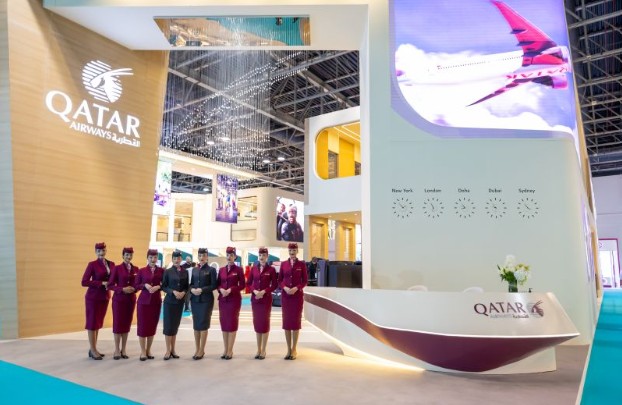
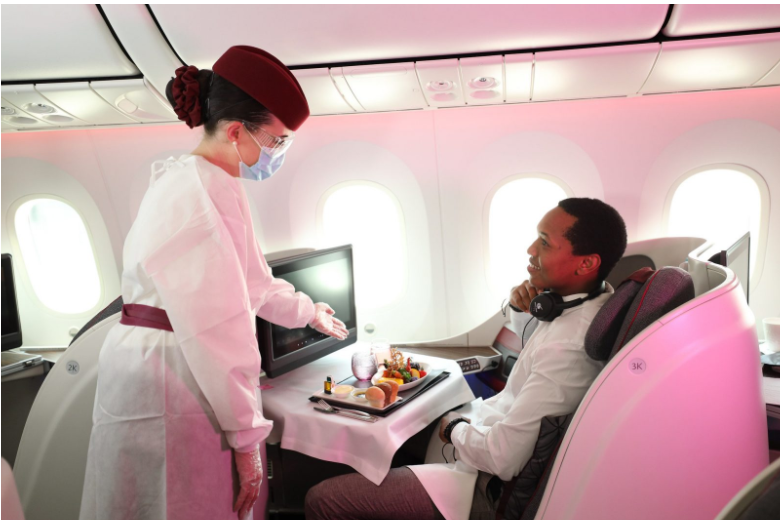
If there's one product responsible for Qatar Airways' reputation, it's Qsuite. Introduced in 2017, Qsuite was the first business class seat in commercial aviation to offer fully closing privacy doors, a feature that had previously been reserved for first class cabins on a handful of airlines. Beyond the doors, Qsuite introduced adjustable side panels that let traveling companions convert adjacent seats into a shared suite, or even into a double bed for couples or families flying together. It was a genuine first, and it pushed several major competitors to redesign their own business class products in direct response, a rare case of one airline's cabin innovation reshaping an entire industry's standards within just a few years.
The seat itself is built around a reverse herringbone layout, which ensures every passenger has direct aisle access regardless of where they're seated, without having to climb over a neighbor. Each suite includes a fully lie-flat seat that converts into a proper bed, a dedicated wardrobe space for hanging jackets or storing bags, ample storage for personal items, and a large entertainment screen paired with noise-cancelling headphones.
Dining in Qsuite is designed to feel closer to a restaurant experience than a standard airline meal service. Rather than being served at fixed times dictated by the crew's schedule, passengers can typically order from a curated menu on demand, choosing when they want to eat rather than being woken up or interrupted mid-work. Menus are seasonally rotated and often include a mix of international and regionally inspired dishes, paired with a substantial wine and beverage list curated specifically for the cabin.
For families or groups of four traveling together, some Qsuite configurations allow four adjoining seats to be converted into a single private room with a table in the middle, effectively creating a semi-private suite for the group. This kind of flexibility is still rare across the industry and remains one of Qsuite's most talked-about features among frequent flyers and aviation enthusiasts alike.
Premium Economy: The Middle Ground
Qatar Airways introduced Premium Economy more recently than many of its competitors, but the product reflects the same attention to detail found elsewhere in the airline's cabins. Seats offer significantly more recline and legroom than standard economy, along with a footrest, a larger entertainment screen, and enhanced amenity kits. Premium Economy passengers also get access to a distinct meal service with more course options than economy, served on proper tableware rather than a standard tray.
For travelers who find full business class pricing hard to justify but want meaningfully more comfort than economy on a long sector, Premium Economy has become a popular middle option, particularly on ultra-long-haul routes where the extra recline and space make a noticeable difference over ten or more hours in the air.
Economy Class Still Gets Real Attention
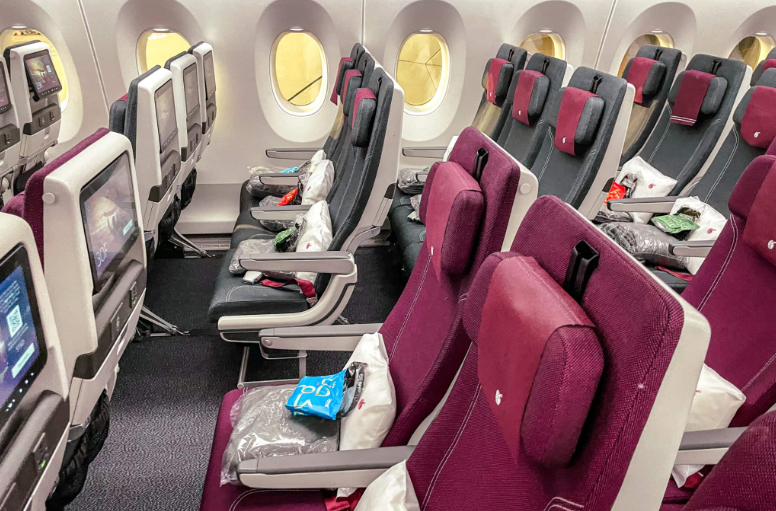
Qatar Airways doesn't reserve all its effort for the front of the cabin. Economy passengers get generous seat pitch compared to many competitors, a wide in-flight entertainment selection with hundreds of movies, TV series, and music options across multiple languages, and meal service that's noticeably better than the reheated basics some airlines serve on long routes. Meals are typically served with a main course, sides, and a dessert, and dietary requests such as vegetarian, gluten-free, or religious dietary needs can be arranged in advance through the booking system.
On ultra-long-haul flights, the airline also offers amenity kits and blankets in economy, a detail that many budget-focused and even some full-service carriers skip entirely on shorter long-haul sectors. The in-flight entertainment system, branded Oryx One, is regularly updated and includes a large catalog spanning recent theatrical releases, classic films, and regional content tailored to the routes being flown, which matters for a global network serving passengers from dramatically different cultural backgrounds.
Seat pitch in economy tends to run slightly more generous than the industry average, particularly on the airline's Boeing 787 and Airbus A350 aircraft, and the newer cabin materials mean even economy passengers benefit from the quieter, better-pressurized environment that the modern fleet provides.
Catering: A Point of Genuine Differentiation
Catering across all cabins is one of the areas where Qatar Airways consistently outperforms competitors, and it's worth calling out separately because it affects every passenger regardless of what they paid for their ticket. The airline's in-flight catering is developed in partnership with a dedicated culinary team that includes chefs with backgrounds in fine dining, and menus are rotated seasonally and regionally rather than staying static year-round.
Special meal requests are handled with more flexibility than many carriers offer, covering religious dietary requirements, medical dietary restrictions, and general preferences like vegetarian or vegan options. On longer routes, meal timing is also adjusted to help passengers manage jet lag, with service designed around the destination time zone rather than strictly the departure time zone.
Privilege Club: The Loyalty Program
Qatar Airways' frequent flyer program, Privilege Club, works on a tier system: Burgundy, Silver, Gold, and Platinum, each unlocking progressively more lounge access, baggage allowance, priority check-in and boarding, and bonus mile earning rates. Miles in the program are called Qmiles, and they can be earned not just on Qatar Airways flights but through its membership in the Oneworld alliance, which includes major global carriers like American Airlines, British Airways, Cathay Pacific, Japan Airlines, and Qantas, among others.
That alliance membership matters significantly for travelers who fly a mix of airlines rather than sticking to a single carrier. Miles and elite status earned with Qatar Airways can often be recognized across the Oneworld network, meaning a traveler who primarily flies American Airlines domestically in the United States can still earn meaningful benefits when booking a Qatar Airways long-haul segment, and vice versa. This cross-network value is one of the most underrated aspects of loyalty programs tied to global alliances, since it reduces the pressure to fly a single airline exclusively just to maintain status.
Privilege Club also offers a separate program called Avios for more casual travelers who want flexibility in redeeming miles across partner airlines, along with family pooling options that let members combine miles across household accounts, which can accelerate reward bookings for families who travel together regularly.
Safety, Awards, and Industry Recognition
Qatar Airways has built a substantial track record of industry recognition beyond its Skytrax World's Best Airline titles. The airline has also picked up awards for World's Best Business Class, World's Best First Class Airline Lounge, and World's Best Airline Cabin Crew in various years, reflecting that its reputation isn't built on a single standout product but on consistency across multiple categories that matter to different types of travelers.
Safety performance is another area frequently cited by aviation analysts and frequent flyers alike. The airline maintains a strong operational safety record, supported by its investment in a young, well-maintained fleet and rigorous crew training standards. For travelers who research airline safety records before booking long-haul flights, Qatar Airways consistently ranks among the carriers considered safest globally by independent aviation safety organizations.
Sustainability Efforts
Like most major international carriers, Qatar Airways has faced growing pressure to address its environmental footprint, and the airline has responded with a mix of fleet modernization and operational efficiency initiatives. Its young fleet composition plays a direct role here, since newer aircraft like the A350 and 787 are significantly more fuel-efficient per passenger mile than the older wide-body aircraft they're designed to replace across the industry.
The airline has also invested in initiatives around reducing single-use plastics on board, more efficient flight routing to cut fuel burn, and participation in industry-wide efforts around sustainable aviation fuel adoption. While the aviation industry as a whole still has a long way to go on emissions, Qatar Airways' relatively young and efficient fleet gives it a structural advantage over carriers still operating significant numbers of older-generation aircraft.
How Qatar Airways Compares to Other Gulf Carriers
Qatar Airways is often mentioned in the same breath as Emirates and Etihad Airways, the two other major Gulf-based carriers competing for the same long-haul connecting traffic. Each has carved out a slightly different identity. Emirates leans heavily into scale, operating the world's largest fleet of Airbus A380s and emphasizing size and spectacle in its onboard product. Etihad has positioned itself more around ultra-premium offerings, including its famous multi-room Residence suite on select aircraft.
Qatar Airways' differentiation has largely come from Qsuite's innovation in the standard business class category, rather than competing purely on scale or ultra-luxury novelty. For most travelers who aren't specifically chasing the most extravagant possible experience, Qsuite offers a level of privacy and comfort that rivals what other airlines reserve for first class, at a business class price point, which is a large part of why it's so frequently cited as the best value proposition among the three Gulf carriers.
What Customers Are Saying
Farah:
I flew Qsuite from Doha to London last year for my anniversary, and it genuinely felt like a different category of travel. Being able to close the door and have actual privacy on a long flight made a huge difference. The cabin crew checked on us without being intrusive, and the food was some of the best I've had on a plane. I've flown other airlines' business class before and none of them came close to the level of privacy Qsuite gives you.
Kabir:
I mostly fly economy for work trips, and what stands out to me is how consistent Qatar Airways is. Other airlines feel different depending on the route or the aircraft, but Qatar has been reliable every time I've flown them, from short Doha connections to long-haul legs to North America. The entertainment system alone makes a ten hour flight feel shorter, and the meals are genuinely good rather than just adequate.
Layla:
I flew Premium Economy with my mother on a trip to Australia, and it was the right call for a flight that long. The extra recline made a real difference for her, and the meal service felt more like a proper occasion than the usual economy tray. Connecting through Doha also meant we got to use the lounge during our layover, which made a fourteen hour journey much more manageable.
Pros and Cons
Pros
- Qsuite is widely regarded as one of the best business class products in the industry, with a level of privacy that rivals first class on other airlines
- Young, modern fleet built around the Airbus A350 and Boeing 787, which means quieter cabins and better pressurization
- Doha hub offers efficient, well-designed connections across Europe, Asia, Africa, and the Americas
- Strong economy class experience relative to competitors, including generous meal service and entertainment
- Oneworld alliance membership extends loyalty value across a wide network of partner airlines
- Consistently high safety ratings and strong on-time performance
- Catering quality stands out across every cabin, not just premium classes
Cons
- Doha layovers can be long depending on the specific route and connection, particularly on less frequently served routes
- Qsuite availability is limited on shorter or less popular routes, and demand for the most sought-after configurations (like the double bed and four-seat family suite) often exceeds supply
- Pricing for peak Qsuite seats can be significantly higher than standard business class fares on other carriers
- Premium Economy is a relatively newer addition to the fleet and isn't yet available on every aircraft type
Tips for Booking Qatar Airways
- Book Qsuite routes early. The most in-demand Qsuite flights, especially those with double bed configurations or four-seat family suites, tend to sell out well in advance, particularly around holidays and peak travel seasons.
- Watch for stopover deals. Qatar Airways frequently offers free or discounted hotel stays in Doha for passengers with long layovers, which is a good way to explore the city and rest comfortably without booking extra flights.
- Use Oneworld partner miles strategically. If you already hold elite status with another Oneworld carrier, check whether it applies to Qatar Airways bookings before assuming you need to build status from zero within Privilege Club.
- Check baggage allowance by fare class. Economy fare types vary in checked baggage allowance and change flexibility, so it's worth confirming the specific fare rules before booking, especially if traveling with extra luggage or planning a trip with an uncertain return date.
- Consider shoulder season for better fares. Prices on popular long-haul routes, particularly to Europe, Southeast Asia, and North America, tend to dip outside peak summer and major holiday travel windows.
- Request special meals in advance. Dietary requirements are handled with more flexibility when requested at the time of booking rather than at the airport, so it's worth submitting any special meal requests as early as possible.
- Check aircraft type before booking. Since Qatar Airways operates a mix of aircraft types across different routes, checking which aircraft is assigned to a specific flight can help travelers confirm whether Qsuite, Premium Economy, or specific seat configurations are actually available on that particular sector.
Frequently Asked Questions
Ques: Is Qatar Airways actually the world's best airline?
Ans: Qatar Airways has won the Skytrax World's Best Airline title multiple times and is consistently ranked among the top airlines globally for service, cabin quality, and passenger experience.
Ques: Is Qsuite worth the extra cost over standard business class on other airlines?
Ans: Qsuite can be worthwhile for travelers who value privacy and comfort on long-haul flights, especially because of its sliding doors and flexible seating arrangements.
Ques: How long are typical layovers in Doha?
Ans: Layover times in Doha vary depending on the route and schedule, but Qatar Airways often offers convenient connections through Hamad International Airport.
Ques: Does Qatar Airways fly to the United States?
Ans: Yes, Qatar Airways operates flights to several major cities in the United States, with many routes connecting through its Doha hub.
Conclusion
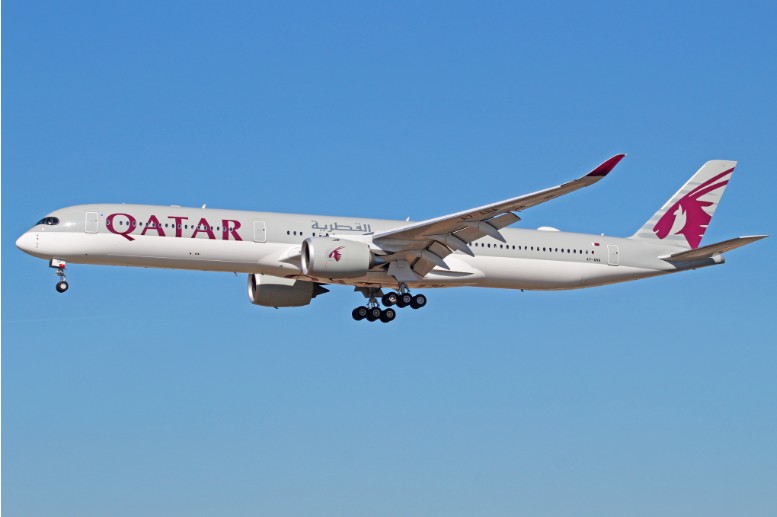
Qatar Airways earned its reputation the way most lasting brands do, by consistently delivering on the details that matter to travelers rather than relying on marketing alone. Qsuite redefined what business class could be and pushed the entire industry to raise its standards, the Doha hub makes global connections genuinely efficient thanks to deliberate infrastructure investment, and even economy passengers get a level of catering and entertainment that's increasingly rare across the industry. Add in a young, comfortable fleet, a loyalty program with real cross-airline value through the Oneworld alliance, and a consistent safety and reliability record, and it becomes clear why Qatar Airways keeps showing up at the top of independent rankings year after year. For anyone planning a long-haul trip and weighing airline options, Qatar Airways is difficult to overlook, whether the priority is maximum comfort up front or simply a dependable, well-run experience in economy.
Download the PREPP App and attempt FREE Scholarship Mock Tests and get complete study material!


Comments