
London to Paris in 2 Hours: How International Students Use Eurostar to Travel Smarter, Not Harder

There is a particular kind of exhaustion that comes with flying a short route. You set an alarm for 4:45am to reach a suburban airport by 6:00 for a 7:30 flight that lands at 8:45, then you take a train or bus from Charles de Gaulle or Orly that deposits you in central Paris sometime around 10:30. Three and a half hours of actual travel time plus two hours of airport processing, and you’ve lost an entire morning to logistics. Compare that to taking Eurostar: you turn up at London St Pancras at 07:15, clear passport control in fifteen minutes, and arrive at Gare du Nord — in the heart of Paris — at 09:39. Total door-to-door time from central London to central Paris: well under three hours.
For international students juggling university schedules, exam dates, open day visits, placement interviews, and trips home during term breaks, this kind of time efficiency isn’t a luxury — it’s a meaningful difference in how much of your day you actually get to use. This guide covers everything you need to know about the London–Paris Eurostar journey: what it looks like from departure to arrival, how to get on it for the cheapest possible fare, and how to make the most of the two-hour window between the two cities.
Whether you’re an international student based in London looking to visit Paris for the first time, a student on a Paris exchange programme making regular trips back to the UK, or someone heading to Paris for a university interview, an exam sitting, or a professional event — this route is one of the most well-served and accessible international journeys in Europe, and understanding it well puts you significantly ahead.
The London–Paris Route: What You Need to Know
The Eurostar service between London St Pancras International and Paris Gare du Nord runs approximately once every hour throughout the day, with the first departures from London typically around 05:45 and the last around 20:00. There are around 14–16 services per day in each direction, including some weekend variations. Journey time on the fastest trains is approximately 2 hours 15 minutes, with some services taking closer to 2 hours 25–30 minutes depending on the schedule.
The train travels at high speed through Kent, dips into the Channel Tunnel for approximately 20 minutes, and continues through northern France before arriving at Gare du Nord — Paris’s main international rail hub, directly served by the Paris Métro (lines 4 and 5), the RER B (to Charles de Gaulle Airport and Orly via Antony), and Thalys Eurostar connections to Brussels and Amsterdam. Everything you’d want to reach in Paris is accessible from Gare du Nord within 20–30 minutes by metro.
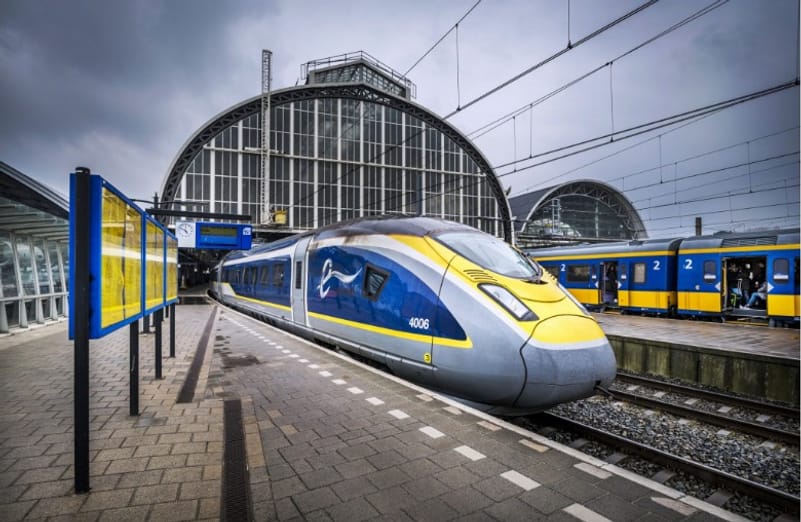
Since the 2022–2023 merger with Thalys, Eurostar has operated the continental European high-speed network under a single brand. The blue trains you board in London are the classic Eurostar fleet (Class 374 Velaro trains, built by Siemens). They are spacious by European rail standards, with two-plus-two seating in Standard class, wide luggage racks, power sockets at most seats, and an onboard café bar that runs the length of one carriage.
London to Paris by Train vs. Plane: The Real Door-to-Door Comparison

The “1 hour 15 minute flight” to Paris is one of the great travel myths, because it describes only the time spent in the air. The actual door-to-door comparison between a typical Eurostar journey and a typical London–Paris flight tells a different story.
| Journey Stage | Eurostar (St Pancras – Gare du Nord) | Flight (Central London – Central Paris) |
|---|---|---|
| Getting to departure point | 15–30 min (central London, well-served by Tube and train) | 45–75 min to Heathrow or Gatwick; 30–45 min to Luton or Stansted |
| Check-in / security | 20–30 min (passport control + bag scan) | 60–90 min recommended at most London airports |
| Wait at gate / boarding | 10–15 min | 15–30 min boarding window |
| Journey time | 2 hours 15 min | 1 hour 15 min (flight only) |
| Getting from arrival point to central Paris | 0–10 min (Gare du Nord is central Paris) | 35–55 min (CDG to central Paris by RER B or bus) |
| TOTAL door-to-door (typical) | 3 hours 10 min to 3 hours 30 min | 4 hours 30 min to 5 hours 30 min |
The door-to-door advantage for Eurostar on this route is typically between 1 and 2 hours. On a day trip, that difference represents a meaningful share of your usable time in Paris. On a trip where you’re heading to an early-morning university appointment, interview, or exam sitting, it can be the difference between a comfortable journey and a stressful one.
Understanding Eurostar Ticket Classes
Eurostar offers two main ticket classes on its UK routes, plus a range of fare flexibility options within each class. For students, the choice is almost always Standard, but understanding what each class includes helps you make an informed decision.
| Ticket Class | What’s Included | Typical Advance Fare (London–Paris) |
|---|---|---|
| Standard | Two large bags + personal item, onboard café access, seat reservation included, power sockets at most seats | From £39–£52 early booking; £100–£200+ last minute |
| Standard Premier | Larger seat, at-seat meal service, dedicated check-in, slightly faster boarding | £100–£180 advance booking; higher last minute |
| Business Premier (now Eurostar Plus) | Widest seats, full meal service, lounge access at St Pancras and Gare du Nord, most flexible refund conditions | £200–£450+ depending on route and date |
For most student journeys — including day trips, university visits, and travel during term breaks — Standard is the correct choice. The seats are comfortable, the journey is short enough that meal service is not essential, and the difference in fare between Standard and Standard Premier is rarely justified by the practical difference in the journey experience.
The exception is if you’re travelling for a high-stakes professional purpose — a job interview in Paris, a professional exam, or a client meeting — and need guaranteed flexibility to exchange the ticket without cost if your plans change at short notice. Standard Premier tickets on Eurostar typically offer more generous exchange conditions than the most restrictive Standard fares.
What London–Paris Fares Actually Look Like in 2026
The cheapest Eurostar Standard fares between London and Paris in 2026 start at approximately £39 one-way when booked well in advance, with sales bringing prices down further periodically. Here’s a realistic picture of what to expect at different booking windows:
| Booking Window | Typical Standard Fare (One-Way) | Notes |
|---|---|---|
| 3–4 months ahead | £39–£55 | Best availability on cheapest fares; midweek travel cheapest |
| 6–8 weeks ahead | £55–£85 | Good for most non-peak journeys; still well below last-minute prices |
| 2–4 weeks ahead | £75–£120 | Prices rising, especially for Friday/Sunday travel |
| Less than 1 week | £120–£200+ | Use Eurostar Snap as an alternative at this stage |
| Youth fare (12–25 yrs) modifier | Approx. 20% off standard prices | Select “Youth” passenger type at booking; valid on European routes |
| Eurostar Snap (last-minute flexible) | £25–£45 when available | Train time confirmed 24–48 hrs before; suits flexible schedules |
The return journey from Paris to London follows the same pricing logic in reverse. Booking a return trip in a single transaction doesn’t always produce the cheapest combination — it’s worth checking whether two separate one-way bookings come out cheaper, particularly if your outbound and return are on different days of the week.
How International Students Actually Use This Route
The London–Paris Eurostar route is genuinely one of the most useful routes in Europe for the international student community. Here are the most common patterns:
| Student Situation | How They Use the Route |
|---|---|
| UK university student, first trip to Paris for a university interview or open day | Day return on a Tuesday or Wednesday; advance booking 4–8 weeks out; arrive Gare du Nord, metro to the university, back to St Pancras by 19:00 |
| Paris-based exchange student making weekend trips to UK friends and family | Friday evening or Saturday morning departure; Sunday or Monday return; youth fare + midday return cuts costs |
| London student with a Paris-based internship placement (short-term) | Sunday evening to Paris, Friday evening return; Standard advance fare round trips; cheaper than flying on total cost |
| Student sitting an exam at a Paris test centre (GRE, IELTS, GMAT) | Early departure the day before; Standard single; hotel near Gare du Nord or exam centre; return after exam |
| Group trip to Paris for a cultural or competitive event (Model UN, case competitions, sports) | Group booking (10+ passengers) qualifies for group discount; advance planning essential for cheapest seats |
What to Do With Your Two Hours on the Train
A two-hour train journey is a more productive block of time than most people treat it as. Unlike a flight, where seatbelt signs, takeoff, drink service, landing preparation, and short runway-to-gate taxi times fragment your attention, a Eurostar journey is continuous and relatively uninterrupted from the moment the train leaves the platform.
- Exam prep and review. The train is quiet, the seats are comfortable, and a two-hour block of focused revision or practice questions is realistic without the noise and distraction of a shared library or a noisy common room. Download your practice tests before departure to avoid relying on Wi-Fi in the tunnel section.
- Application materials and writing. Cover letters, personal statements, or essays that require sustained focus benefit from the interruption-free environment of the train. Many students find rail journeys more productive than working at home or in a busy campus café.
- Sleep. If you’re catching an early morning departure for a full day of commitments in Paris, using the journey to sleep is entirely viable and sensible. The train is quiet enough, and the seats recline slightly.
- Reading ahead for your placement or interview. If you’re heading to Paris for an internship, a university open day, or a professional event, use the journey time to review your briefing materials, read up on the organisation, or review the campus / company you’re visiting.
- Language prep. A two-hour Eurostar journey is a natural window for a focused French revision session, whether that’s vocabulary review, listening practice via headphones, or reading a French-language text you’ve been meaning to get through.
Power sockets are available at most Standard seats, so bringing your laptop charged or plugged in is practical throughout. The onboard Wi-Fi is usable for light tasks but inconsistent during the tunnel crossing — plan for 15–20 minutes of offline time mid-journey.
Arriving at Gare du Nord: What to Know First
Gare du Nord is one of the busiest train stations in the world, handling over 700,000 passengers per day. For a first-time visitor, it can be disorienting to navigate quickly. A few things that help:
- The Eurostar terminal exits into the main station concourse on the first-floor level. Follow the exit signs to the main floor (rez-de-chaussée) for the metro, taxis, and street exits.
- Metro lines 4 and 5 serve Gare du Nord directly. Line 4 connects to central Paris (Chatelet, Saint-Germain-des-Prés, and Montparnasse). Line 5 goes east toward Bastille and the Marais.
- The RER B is the fastest connection to Charles de Gaulle Airport (about 30 minutes) and runs through the city centre, including Chatelet-Les-Halles and Luxembourg, which is near many Paris universities.
- Taxis are on the street level, typically with a short queue. Expect £15–25 (approximately €17–30) to most central Paris destinations.
- Luggage storage is available at the station if you arrive before your accommodation check-in. Eelway and consigne SNCF both operate at Gare du Nord.
- Phone signal and internet typically return immediately upon exiting the tunnel in France. Your UK SIM roaming should work throughout France if you have an EU roaming allowance.
Pre-Departure Checklist for Your London–Paris Journey
- Confirm passport validity — check it has at least 3 months remaining validity beyond your return date.
- Download the Eurostar app and retrieve your e-ticket — screenshot it in case of offline issues at the gate.
- Arrive at St Pancras at least 45 minutes before departure and allow for the Channel Tunnel link lift or escalators to the Eurostar terminal on the upper level.
- Check service status the night before and on the morning of travel — the Eurostar app sends live alerts.
- Pack any work, revision, or reading materials you want accessible during the journey in your seat bag rather than your hold luggage in the overhead rack.
- Download offline maps for Paris (Google Maps or Citymapper both work) and know your metro route from Gare du Nord before you land.
- Check the current currency situation — some Paris student venues, transport, and smaller cafés still prefer card over cash, but having €20–30 in cash for contingencies is sensible.
Changing or Cancelling Your London–Paris Ticket
Life as a student is unpredictable, and understanding the exchange and refund conditions for your Eurostar ticket before you buy it is worth a few minutes of attention during the booking process. The conditions vary meaningfully by fare type.
- Most Eurostar Standard tickets can be exchanged at no additional fee up to 1 hour before departure if you need to move to a different train. You pay the fare difference if the new train is more expensive, but there is no exchange fee on the ticket itself.
- Refund conditions on the cheapest advance fares are typically restrictive — the very cheapest Standard fares are often non-refundable, meaning if you cancel, you lose the ticket cost. Always check the specific refund conditions displayed at the time of booking.
- Flexible Standard fares cost more but allow a refund with a fee (typically around £25–30) up to 7 days before departure — worth considering if there is a realistic chance your plans might change.
- Eurostar Plus (formerly Business Premier) tickets are the most flexible and can typically be refunded or exchanged right up to the departure time with minimal penalty.
- If Eurostar cancels or significantly delays your service, you are entitled to a full refund or a free exchange to the next available service, regardless of your fare type.
For a student who is booking months in advance for a trip that is genuinely fixed — an exam date, a university open day that won’t move — the cheapest non-refundable advance fare is the right choice. For a trip that has some uncertainty around timing, spending a little more on a flexible fare is cheap insurance.
One of the significant advantages of the Eurostar network is that arriving in Paris or Brussels gives you direct access to the wider European high-speed rail network. From Paris Gare du Nord, the former Thalys trains (now Eurostar red trains) connect directly to Brussels in under 1 hour 25 minutes, and Amsterdam in about 3 hours 15 minutes — fast enough to make multi-city student trips genuinely practical without overnight travel.
For students doing extended trips — visiting multiple universities, attending events across several cities, or making the most of a longer break — a London–Paris–Brussels or London–Paris–Amsterdam route is achievable in 2–3 days without the complexity of airport logistics at multiple points in the journey. All legs can be booked on the same Eurostar platform, and the continental connections are generally available through the same booking flow.
Frequently Asked Questions
Ques: How long does the London to Paris Eurostar actually take?
Ans: The fastest services take approximately 2 hours 15 minutes from St Pancras to Gare du Nord, with some services taking up to 2 hours 30 minutes. Door-to-door from central London to central Paris is typically 3 hours 10 minutes to 3 hours 30 minutes when check-in time is included.
Ques: How many Eurostar trains run between London and Paris per day?
Ans: Approximately 14–16 departures per day in each direction on most days, running from early morning to late evening. The full timetable is visible on eurostar.com or in the app when you select your travel date.
Ques: Can I bring food on the Eurostar?
Ans: Yes. You can bring your own food and non-alcoholic drinks on board. There is also an onboard café bar selling hot drinks, cold drinks, sandwiches, and snacks. Alcohol purchased in the café bar may be consumed on board.
Ques: What if I miss my Eurostar?
Ans: Eurostar does not allow you to travel on a later train with a missed-train ticket in the way some domestic UK train operators do. If you miss your Eurostar, you will need to purchase a new ticket for the next available service. This makes arriving early for check-in important, especially on busy departure mornings.
Ques: Is there Wi-Fi on the Eurostar?
Ans: Yes, Wi-Fi is available throughout Standard and Eurostar Plus class carriages, though the signal is interrupted for 15–20 minutes during the Channel Tunnel crossing. Download any large files or content you need before departure.
Ques: What is the cheapest day to travel London to Paris by Eurostar?
Ans: Tuesday and Wednesday are consistently the cheapest days on this route, with Monday morning and Friday afternoon and evening being the most expensive. Midday departures on weekdays also tend to be cheaper than rush-hour trains.
Final Thoughts
The London–Paris route on Eurostar is the most efficient international journey in Western Europe by most practical measures: fastest door-to-door from city centre to city centre, best total cost when luggage and transfers are factored in, and the most straightforward experience for a first-time international traveller who doesn’t want the complexity of airports added to an already busy trip. For students who make this journey regularly or even once, understanding how the booking and pricing system works is the difference between paying £39 for a perfectly comfortable Standard seat and paying £180 for the same seat because the booking was left too late.
The practical advice is simple: book early, select youth fare if you qualify, travel midweek where possible, and use Eurostar Snap if your schedule is flexible and timing is less important than price. Everything else about the journey takes care of itself.
Download the PREPP App and attempt FREE Scholarship Mock Tests and get complete study material!


Comments