
Lenovo Laptops in 2026: The Complete Buying Guide to Every Series and Which One Is Right for You

Lenovo sells more personal computers than any other company in the world, and that scale comes with a side effect that trips up almost every buyer at some point: an enormous, sprawling lineup of series, sub-series, and model numbers that can look nearly identical from the outside while being completely different machines underneath. ThinkPad, Yoga, IdeaPad, Legion, LOQ, and ThinkBook each target a different kind of buyer, and within each of those series there are further tiers that range from budget-friendly to genuinely premium. This guide breaks down exactly what each series is for, what changed in Lenovo's 2026 lineup, and how to actually pick the right model instead of guessing based on price alone.
Understanding Lenovo's Series Structure
The fastest way to make sense of Lenovo's catalog is to think of each major series as answering a different question about what the laptop is primarily for, rather than thinking of the series names as simple good-better-best tiers.
ThinkPad is Lenovo's business and professional line, built around durability, a best-in-class keyboard, and a design philosophy that has barely changed in its visual language for decades because that consistency is exactly what its core audience wants. Yoga is Lenovo's premium consumer line, aimed at buyers who want a thinner, lighter, more design-forward machine, frequently in a 2-in-1 convertible form factor, and often at a price point above the equivalent ThinkPad or IdeaPad spec. IdeaPad is Lenovo's mainstream consumer value line, built for everyday use, schoolwork, and general browsing at the most accessible price points in the catalog. Legion is Lenovo's dedicated gaming line, built around discrete graphics cards, high refresh rate displays, and aggressive cooling systems. LOQ sits underneath Legion as a budget gaming line, launched to give price-conscious gamers a path into dedicated graphics without paying for Legion's more premium build and cooling. ThinkBook rounds out the lineup as a smaller-business line that borrows ThinkPad's professional positioning but wraps it in a more consumer-styled, often more colorful design.
Within each of these series, a further layer of naming indicates specific positioning. ThinkPad splits into the X-series for ultraportable business machines, the T-series as the workhorse mid range business laptop, the P-series for mobile workstations aimed at demanding professional workloads, and the E and L series as more budget-conscious business options. Yoga splits into
Yoga Slim for a traditional clamshell form factor, Yoga branded 2-in-1 models for the convertible touchscreen form factor, and Yoga Pro for a higher-performance creator-focused tier. IdeaPad is now organized primarily under the Slim and Flex naming within the broader IdeaPad brand. Legion splits by number, with the Legion 5 series as the mainstream gaming tier, Legion 7 as the premium tier, and Legion Pro 7 as the workstation-class top tier, alongside the Legion Go handheld gaming device line.
What's New in Lenovo's 2026 Lineup

Lenovo's 2026 product cycle has centered heavily on two themes: a system-wide AI assistant called Lenovo Qira, and a broad refresh across nearly every series that touches design, cooling, and battery efficiency more than it touches raw specifications.
Lenovo Qira is best understood as a personal ambient intelligence layer built into the operating system rather than delivered as a standalone app, designed to work across a user's laptop, phone, tablet, and accessories to maintain context and suggest next steps during active work sessions. Lenovo has confirmed the rollout of Qira across more than twenty devices spanning the ThinkPad, Yoga, Legion, and IdeaPad families through a combination of over-the-air updates to existing hardware and preloads on new devices, with language support currently covering English variants for the US, UK, and India, along with Spanish, French, Italian, German, and Brazilian Portuguese.
On the hardware side, the Yoga line received a substantial refresh headlined by the Yoga 9i as the flagship convertible, alongside the Yoga Slim 7i Aura Edition, a fourteen-inch model aimed at creators who prioritize battery life and portability, shipping with a starting price around eleven hundred euros. Lenovo has paired its flagship Yoga hardware with a matching twenty seven-inch Yoga Pro OLED external display and Yoga-branded headphones, building out something closer to a coordinated ecosystem than a single standalone laptop purchase.
The IdeaPad line saw the introduction of the IdeaPad Slim 3i in a seventeen-inch configuration, positioned as a thin and light option powered by Intel Core processors with Dolby Audio speakers and Lenovo's Rapid Charge Boost battery technology, priced from around eight hundred euros, continuing IdeaPad's role as the accessible entry point into the broader Lenovo catalog.
On the gaming side, the Legion 7a stands out as Lenovo's first gaming laptop built around a unified memory architecture, pairing AMD's Ryzen AI Max+ series processors with a PureSight OLED display panel and Lenovo's AI Engine+ software for dynamically managing performance, thermals, and power consumption. Reviewers have specifically noted this model's relatively light weight for a gaming laptop of its display size, a departure from the traditionally bulky expectations of the category. ThinkPad also received meaningful internal redesign work in 2026 focused on improved cooling and easier, more sustainable repairability, reflecting a broader industry push toward right-to-repair friendly hardware design.
ThinkPad: The Business and Professional Line
ThinkPad remains the series most closely associated with Lenovo's brand identity, built around a keyboard feel that professional typists consistently rate among the best in the industry, a durable chassis that meets military-grade durability testing standards, and a design language that prioritizes function over visual flair.
The X-series is the ultraportable tier within ThinkPad, built for professionals who travel frequently and prioritize low weight and long battery life above raw performance. The X1 Carbon has long been the flagship model in this tier, and the 2026 lineup includes the Gen 13 refresh of this model as one of the newest headline releases in the entire ThinkPad range. A newer addition, the ThinkPad X9, launched at CES 2026 and represents a further evolution of Lenovo's ultraportable business design.
The T-series serves as ThinkPad's workhorse mid-range tier, balancing performance, battery life, and price for the broad base of business buyers who need a reliable daily driver rather than the absolute lightest chassis available. The T14, T14s, and T16 models received a Generation 7 and
Generation 5 refresh respectively as part of the 2026 cycle, continuing this series' role as the default recommendation for most business buyers who do not have a specific reason to choose the X-series or P-series instead.
The P-series targets mobile workstation buyers running demanding professional workloads such as CAD software, video editing, or engineering simulation, and typically pairs a workstation class processor with a professional-grade discrete graphics card and additional memory capacity beyond what the T-series or X-series would offer.
The E-series and L-series exist as ThinkPad's more budget-conscious business options, retaining the core ThinkPad keyboard and durability characteristics while trimming some premium materials and features to hit a lower price point for organizations purchasing in volume.
Yoga: Premium Consumer and Creator Laptops
Yoga occupies the premium consumer space in Lenovo's lineup, generally positioned above IdeaPad on price and design sophistication, with a strong emphasis on thin-and-light builds and, frequently, 2-in-1 convertible functionality that allows the screen to fold back into a tablet-style form factor.
Yoga Slim covers the traditional clamshell form factor within the Yoga family, aimed at buyers who want Yoga's premium build quality and display without needing the touchscreen convertible functionality. The Yoga Slim 7x deserves a specific mention as Lenovo's first generation Snapdragon X Elite laptop, featuring a three-thousand-pixel-class OLED display in a sub-three-pound chassis, though Lenovo has since released a Yoga Slim 7x Gen 11 built on the newer Snapdragon X2 Elite platform, which now represents the current flagship in this specific sub-line.
The 2-in-1 branded Yoga models cover the convertible touchscreen category, with the Yoga 9i standing as the current flagship model in this segment, and the Yoga 7a as a step-down convertible option. One important naming trap worth flagging directly: Lenovo's 2026 refresh of the Yoga 7a convertible moved to the newer Ryzen AI 400 series processor family, but the specific chip used in that refresh, the Ryzen AI 7 445, is a six-core processor that independent reviewers have benchmarked as slower than the eight-core Ryzen AI 7 350 used in the previous generation model. This is a case where the newer model number does not automatically mean better performance, and buyers comparing these two specific models should check the actual processor core count rather than assuming the newer generation number is strictly superior.
Yoga Pro represents the higher-performance, creator-focused tier within the Yoga family, and the Yoga Pro 9i Aura Edition has emerged as a centerpiece of Lenovo's broader creator ecosystem push, paired with the matching twenty-seven-inch color-calibrated external display mentioned earlier.
IdeaPad: Mainstream Consumer Value
IdeaPad exists to serve the largest segment of the personal computer market: everyday users who need a reliable, reasonably priced laptop for browsing, schoolwork, video calls, and general productivity tasks without needing the premium materials of Yoga or the specialized performance of ThinkPad or Legion.
The IdeaPad Slim naming now covers the mainstream tier within this family, with the IdeaPad Slim 3i serving as a well-reviewed entry point that balances price and capability effectively for
buyers who do not need cutting-edge performance. The IdeaPad 1 sits below this as the absolute lowest-priced option in Lenovo's current lineup, appropriate for the most basic use cases where price is the overriding consideration.
A separate and increasingly important sub-category within IdeaPad involves Snapdragon-based ARM models rather than traditional Intel or AMD x86 processors. The IdeaPad Slim 3X, built on a Snapdragon platform, has been specifically highlighted by independent reviewers as one of the strongest Copilot+ PC value options currently available from Lenovo, offering the extended battery life and always-connected capability that ARM-based Windows laptops are increasingly known for, at a price point below what a comparable Snapdragon-powered Yoga model would cost.
IdeaPad also covers Lenovo's Chromebook lineup, which runs on a separate naming convention from the Windows-based IdeaPad models. The IdeaPad Chromebook Duet, a detachable two in-one, along with various IdeaPad Slim Chromebook models, typically occupy the two hundred fifty to five hundred dollar price range and are aimed primarily at students and buyers whose computing needs center on web browsing and lightweight productivity rather than heavy multitasking or professional software.
Legion and LOQ: Gaming Laptops
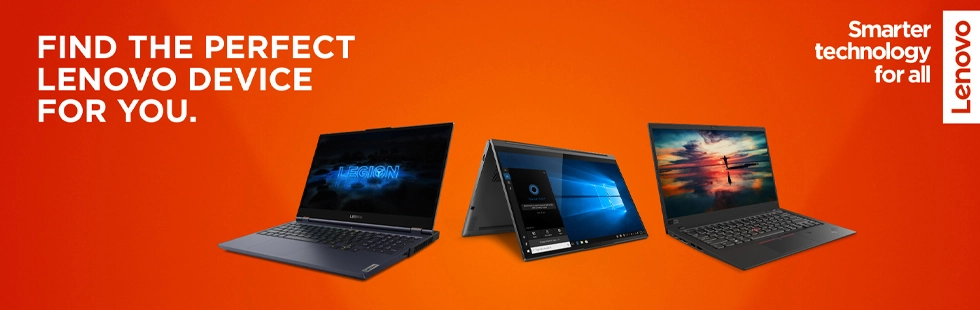
Legion is Lenovo's dedicated gaming brand, built around discrete graphics cards ranging from the RTX 5050 up through the RTX 5090 depending on the specific tier, high refresh rate displays suited to competitive gaming, and cooling systems engineered to sustain higher power draw over extended gaming sessions than a typical consumer laptop would need to handle.
Within Legion, the Legion 5 series represents the mainstream gaming tier, balancing price and performance for the largest segment of PC gamers. Legion 7 sits above it as the premium tier, and Legion Pro 7 occupies the top of the range as a workstation-class option suited to the most demanding gaming and content creation workloads simultaneously. The Legion Go exists as a separate handheld gaming device within the same brand family, competing in the growing portable gaming PC category.
The Legion 7a stands out as a genuinely notable 2026 release, introducing Lenovo's first unified memory architecture in a gaming laptop alongside AMD's Ryzen AI Max+ processors, a PureSight OLED display, and a chassis weight that reviewers have specifically praised as unusually light for a laptop in this performance and display size category.
LOQ was launched in 2023 as a budget gaming tier positioned underneath Legion, giving price conscious buyers a path to dedicated graphics performance without paying for Legion's more premium chassis materials and cooling engineering. LOQ remains the recommended starting
point for gamers on a tighter budget who still want genuine discrete graphics performance rather than settling for integrated graphics.
Which Lenovo Series Should You Actually Buy
For business and professional use where keyboard quality, durability, and long-term reliability matter most, the ThinkPad T-series remains the safest default recommendation for the majority of buyers, with the X-series worth the additional cost specifically for frequent travelers who prioritize minimal weight, and the P-series reserved specifically for professionals running demanding workstation-class software.
For everyday consumer use centered on browsing, schoolwork, and general productivity, IdeaPad Slim delivers the best value, with the Snapdragon-based IdeaPad Slim 3X worth specific consideration for buyers who want maximum battery life and are comfortable with an ARM based Windows experience.
For buyers who want a more premium build, touchscreen convertible functionality, or a stronger creator-focused feature set, Yoga is the right series, with Yoga Slim for buyers who do not need the convertible form factor and the 2-in-1 branded models for those who do, keeping in mind the specific Yoga 7a processor caveat mentioned above when comparing generations.
For gaming, LOQ is the sensible entry point for a tighter budget, Legion 5 covers the mainstream gaming market effectively, and Legion 7 or Legion Pro 7 make sense specifically for buyers who want top-tier performance or need the laptop to double as a content creation workstation alongside gaming.
Decoding Lenovo Model Numbers and Naming Conventions
Beyond the series name itself, Lenovo's model numbers follow a reasonably consistent internal logic once broken down, even though the sheer number of active model lines makes the overall catalog feel chaotic at first glance.
The number that typically follows the series name, such as the 5 in Legion 5 or the 9 in Yoga 9i, generally indicates a relative tier within that series rather than a strict specification, with higher numbers usually correlating with higher performance or a more premium build, though this correlation is a general pattern rather than a fixed rule that applies identically across every
series. A letter suffix, such as the i in Yoga 9i or the a in Legion 7a, typically distinguishes the processor platform used in that specific model, with i-suffixed models generally running Intel processors and a-suffixed models generally running AMD processors, a naming convention Lenovo has used with reasonable consistency across recent generations.
The word Gen followed by a number, as in ThinkPad T14 Gen 7, indicates the specific generation or refresh cycle of that model, roughly analogous to a model year, and is one of the most important details to check when comparing two laptops that otherwise share an identical name, since a Gen 5 and a Gen 7 version of the same base model can differ substantially in processor, display, and battery technology despite sharing the same series and tier name.
Screen size is sometimes embedded directly in the model name, as with the IdeaPad Slim 3i in its seventeen-inch configuration, though the same base model name is frequently sold in multiple screen sizes, which means checking the specific size listed on a given product page matters more than assuming a name alone specifies the display dimensions.
The single most reliable piece of practical advice when comparing two similarly named Lenovo laptops, particularly across generations, is to look past the marketing name entirely and compare the actual processor model, core count, RAM, storage, and display specification side by side, exactly as the earlier Yoga 7a example demonstrated, since a newer generation number is a strong general signal of improvement but not an absolute guarantee in every single case.
Buying Considerations Beyond the Series Choice
Once a series and tier have been narrowed down, a handful of additional factors deserve attention before finalizing a purchase, since these details can matter as much as the headline processor and series choice.
Battery life claims on product pages are typically measured under idealized testing conditions and rarely reflect real-world usage involving video calls, multiple browser tabs, and background applications, so treating an advertised battery life figure as an optimistic ceiling rather than a reliable everyday expectation will prevent disappointment after purchase.
Display quality varies significantly even within a single series and price tier, since Lenovo, like most manufacturers, sometimes ships different panel suppliers or specifications under the same model name depending on region and configuration. Checking independent review coverage of the exact configuration being purchased, rather than the series name in general, is the only reliable way to confirm display quality before buying.
Port selection has become an increasingly important consideration as laptops trend thinner, with some premium ultraportable models in the X-series and Yoga Slim lines trimming the number of full-size ports in favor of a slimmer chassis. Buyers who rely on specific legacy ports for existing peripherals or docking setups should verify the exact port configuration of a specific model rather than assuming parity with a previous laptop generation.
Finally, for buyers considering the Snapdragon-based ARM models within the IdeaPad or Yoga Slim lines, it remains worth confirming that any specific professional software the buyer depends on has native ARM support or a reliably functioning compatibility layer, since ARM based Windows laptops have improved substantially in software compatibility over the past few years but still occasionally encounter friction with older or highly specialized professional applications that have not been updated for the platform.
Final Thoughts on Choosing a Lenovo Laptop

Lenovo's catalog looks intimidating from the outside precisely because it is genuinely comprehensive, covering nearly every use case and price point from a two hundred fifty dollar Chromebook up through a workstation-class ThinkPad or a top-tier Legion Pro gaming rig. The good news is that once the series naming logic clicks into place, narrowing down to the right model becomes a matter of answering a small number of questions: what is the laptop primarily for, how much does raw performance matter relative to portability and battery life, and how much premium build quality is worth paying for over a more basic equivalent. Matching those answers to the series breakdown above, rather than shopping by price point alone, is the most reliable way to land on a Lenovo laptop that will still feel like the right choice a year or two after the purchase, well past the point where the specific model number on the box stops mattering.
Download the PREPP App and attempt FREE Scholarship Mock Tests and get complete study material!


Comments