
Hertz: The Evolution of a Global Car Rental Giant

The global transportation industry has undergone massive transformation over the last century. Advances in technology, changes in travel behavior, environmental concerns, and the rise of digital mobility solutions have all reshaped how people move around the world. Among the companies that have played a major role in this evolution is Hertz, one of the most recognized and influential names in the car rental industry.
Hertz has built a worldwide reputation for providing vehicle rental services to business travelers, tourists, families, and corporate clients. With operations spanning multiple continents and decades of experience, the company has become synonymous with mobility, convenience, and transportation innovation.
This comprehensive blog explores the history of Hertz, its business model, services, digital transformation, sustainability efforts, competitive position, challenges, and future opportunities in the rapidly evolving mobility landscape.
The History of Hertz
Hertz was founded in 1918 by Walter L. Jacobs in Chicago, Illinois. The business began with a small fleet of Ford Model T vehicles available for rent. Jacobs quickly realized the growing demand for temporary transportation solutions, especially as automobiles became more common in American society.
The company experienced rapid growth due to increasing consumer interest in travel and personal mobility. In 1923, the business was acquired by John D. Hertz, a transportation entrepreneur who expanded the company significantly.
Under John Hertz’s leadership, the company adopted the now-famous Hertz brand identity and continued growing throughout the United States.
One of the major milestones in Hertz’s history was its expansion into airport rental services. As commercial air travel increased during the mid-20th century, airports became critical transportation hubs.
Hertz strategically positioned itself at airports to provide arriving travelers with immediate transportation access.
Over the decades, the company expanded internationally and became one of the largest car rental providers in the world.
Today, Hertz operates globally and remains one of the most recognized mobility brands in the transportation industry.
The Growth of the Car Rental Industry
The car rental market has evolved from a niche transportation service into a major global industry.
Originally, rentals primarily served business travelers. Today, customers rent vehicles for many different reasons, including:
- Tourism
- Family vacations
- Business trips
- Relocation
- Temporary vehicle replacement
- Long-distance travel
- Weekend getaways
Companies like Hertz adapted to these changing needs by diversifying their services and modernizing operations.
Airport Car Rentals
Airport rentals remain one of the most important segments of Hertz’s business.
Travelers arriving at airports often need immediate access to transportation.
Hertz provides convenient pickup and return services at major airports worldwide, allowing customers to:
- Reserve vehicles online
- Access rental counters quickly
- Choose vehicle categories
- Manage bookings digitally
Airport convenience continues to be one of the primary drivers of rental demand.
Urban and Neighborhood Rentals
In addition to airports, Hertz operates in cities and residential areas.
Neighborhood rentals support customers who need temporary transportation for:
- Vehicle maintenance periods
- Family events
- Home relocation
- Weekend travel
- Short-term mobility
Local accessibility helps expand the customer base beyond air travelers.
Hertz Services and Vehicle Options
Hertz offers a broad range of vehicles designed to meet varying customer needs.
Economy Vehicles
Economy cars provide affordable transportation with strong fuel efficiency.
These vehicles are popular among:
- Students
- Solo travelers
- Budget-conscious customers
- Urban drivers
Economy options help customers reduce travel costs.
Sedans and Mid-Size Cars
Sedans remain popular for both business and leisure travel.
These vehicles balance:
- Comfort
- Fuel efficiency
- Passenger space
- Driving performance
Mid-size vehicles are often selected by couples, professionals, and small families.
SUVs and Crossovers
SUV demand has grown dramatically over the last decade.
Customers often choose SUVs for:
- Family vacations
- Winter travel
- Road trips
- Outdoor adventures
- Additional luggage capacity
Hertz offers SUVs ranging from compact crossovers to full-size premium models.
Luxury and Premium Cars
Hertz also serves premium travelers seeking enhanced comfort and performance.
Luxury rentals may include brands such as:
- BMW
- Mercedes-Benz
- Tesla
- Audi
- Cadillac
Premium customers often value advanced technology, comfort, and prestige.
Vans and Specialty Vehicles
Larger vehicles support:
- Group travel
- Sports teams
- Event transportation
- Business logistics
Specialty vehicle categories provide flexibility for different travel situations.
Electric Vehicles
As sustainability becomes increasingly important, Hertz has invested heavily in electric vehicle expansion.
Electric rentals allow customers to:
- Reduce fuel consumption
- Experience EV technology
- Support environmentally conscious travel
- Explore new transportation technologies
The inclusion of EV fleets reflects broader industry transformation.
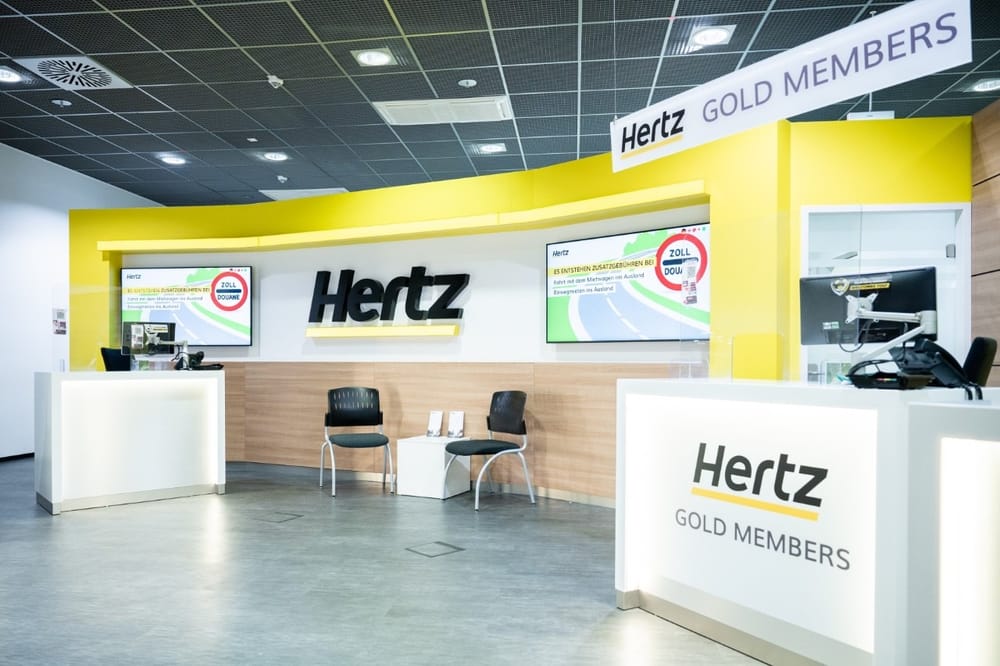
Digital Transformation at Hertz
Technology has become central to the modern rental experience.
Hertz has invested significantly in digital infrastructure to improve convenience and operational efficiency.
Online Reservations
Customers can now reserve vehicles online through websites and mobile platforms.
Digital reservation systems allow users to:
- Compare vehicle options
- Select pickup locations
- Review pricing
- Add insurance coverage
- Modify bookings
Fast online booking has become essential for customer satisfaction.
Mobile Applications
Hertz mobile apps improve the rental experience through features including:
- Mobile reservations
- Contactless pickup
- Digital receipts
- Rental extensions
- Loyalty program management
- GPS integration
Mobile-first services reduce wait times and improve convenience.
Contactless Rentals
Modern travelers increasingly prefer minimal physical interaction.
Hertz expanded contactless technologies to streamline:
- Check-in
- Vehicle pickup
- Returns
- Payment processing
Contactless systems improve both speed and customer comfort.
Data Analytics and Fleet Optimization
Hertz uses data analytics to improve:
- Fleet allocation
- Vehicle maintenance
- Demand forecasting
- Dynamic pricing
- Customer personalization
Efficient data management supports profitability and service quality.
Hertz Gold Plus Rewards Program
Loyalty programs help strengthen customer retention.
Hertz Gold Plus Rewards offers benefits such as:
- Faster reservations
- Priority service
- Vehicle upgrades
- Reward points
- Free rental days
Frequent travelers especially value streamlined rental experiences.
Loyalty ecosystems also encourage repeat business and long-term customer relationships.
Hertz and Business Travel
Corporate travel remains one of Hertz’s most important market segments.
Business travelers prioritize:
- Reliability
- Fast pickup processes
- Airport convenience
- Expense management
- Professional service
Corporate Rental Programs
Hertz provides corporate solutions including:
- Business accounts
- Fleet services
- Long-term rentals
- Reporting systems
- Centralized billing
Corporate clients value efficiency and operational consistency.
Airport Accessibility
Airport locations remain critical for serving professionals traveling between cities and countries.
Time-saving services help business travelers maintain productivity.
Competitive Landscape
The global rental market is highly competitive.
Hertz competes with companies such as:
- Avis
- Enterprise
- National Car Rental
- Sixt
- Europcar
- Budget
Despite intense competition, Hertz maintains several advantages.
Global Brand Recognition
Hertz is one of the most recognized transportation brands worldwide.
Its long operational history contributes to strong consumer trust.
Extensive Airport Presence
The company operates at major airports across multiple continents.
Airport accessibility remains a major competitive strength.
Premium Brand Positioning
Hertz often positions itself as a premium rental provider focused on service quality and vehicle selection.
Technology Investments
Continuous investment in digital systems helps improve customer experience and operational efficiency.

Sustainability and Environmental Responsibility
Environmental sustainability has become a central issue for transportation companies.
Consumers and governments increasingly expect businesses to reduce environmental impact.
Electric Vehicle Expansion
Hertz has accelerated EV adoption within its fleet.
Electric vehicles may help reduce:
- Carbon emissions
- Fuel dependency
- Environmental impact
Consumers are also becoming more interested in testing EV technology before purchasing personal electric vehicles.
Fleet Modernization
Newer vehicles are generally:
- More fuel efficient
- Safer
- Lower-emission
- Technologically advanced
Regular fleet updates improve both customer experience and environmental performance.
Paperless Systems
Digital documentation reduces paper usage.
Electronic contracts, receipts, and communication systems support operational sustainability.
Sustainability Challenges
Despite progress, transportation sustainability remains complex.
Large rental fleets still require:
- Manufacturing resources
- Logistics operations
- Maintenance infrastructure
- Energy consumption
Balancing environmental responsibility with profitability continues to be a key industry challenge.
Download the PREPP App and attempt FREE Scholarship Mock Tests and get complete study material!


Comments