
Eurostar vs Coach/Bus: Speed, Price, and Comfort Compared for Student Travel
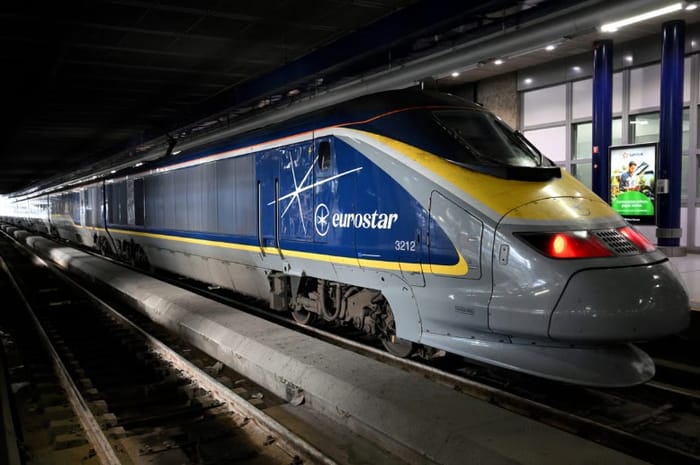
The two cheapest ways to get from London to Paris by land are Eurostar and the coach, and the gap between them in terms of raw ticket price can sometimes be significant. A FlixBus or BlaBlaCar Bus ticket from London Victoria Coach Station to Paris can be found for as little as £16–20 when booked well in advance, while the cheapest Eurostar Standard fare starts at around £39. On headline numbers alone, coach looks like the winner.
But the comparison between these two options isn’t really just about ticket price, and students who have made both journeys know this. A 10–13 hour coach journey and a 2 hour 15 minute train journey are not comparable travel experiences, and the choice between them has significant downstream effects on your day, your energy, and your ability to function when you arrive. This guide compares Eurostar and coach travel across every dimension that matters for a student trip: price, time, comfort, luggage, reliability, and suitability for different types of journeys.
We’re not going to pretend Eurostar is always the right choice for every student. If the coach is genuinely the only option that fits your budget for a particular trip, it’s a legitimate and widely used way to travel. But the full comparison tells a more nuanced story than the headline price difference suggests, and understanding it properly helps you make the right call rather than the one that looks cheapest at first glance.
Price Comparison: What You’re Actually Paying on Each Option
Both Eurostar and coach use dynamic pricing — fares go up as the journey date approaches and as capacity fills. On both, the cheapest fares are available to travellers who book early and travel at off-peak times. The key difference is the floor: the cheapest achievable coach fare is lower, but both options are at their cheapest when booked several weeks ahead.
| Booking Window | Cheapest Coach (FlixBus/BlaBlaCar) | Cheapest Eurostar Standard | Eurostar Youth Fare (12–25) |
|---|---|---|---|
| 8–12 weeks ahead | £16–£25 (very limited seats) | £39–£52 | £31–£42 (approx. 20% off) |
| 4–6 weeks ahead | £25–£40 | £45–£65 | £36–£52 |
| 1–2 weeks ahead | £35–£55 | £75–£120 | £60–£96 |
| Less than 1 week | £45–£70+ | £120–£200+ | Use Eurostar Snap instead |
| Eurostar Snap (flexible) | N/A | £25–£45 when available | £20–£36 (youth Snap) |
A few things stand out from the price comparison. First, the cheapest coach fares and the cheapest Eurostar fares both require booking several weeks in advance — neither option is reliably cheap at short notice. Second, the Eurostar youth fare (available to those aged 12–25) closes a meaningful portion of the gap between the two options, particularly at the 4–8 week booking window. Third, Eurostar’s Snap product, when available, brings the train fare genuinely close to the coach fare for travellers with flexible schedules.
For the total cost comparison, luggage is an important variable. Coach operators including FlixBus allow one checked bag and one carry-on at no extra cost — comparable to Eurostar’s two-bag free allowance. Both options come out ahead of budget airlines on luggage, which is one reason the coach–Eurostar comparison is fairer on total cost than the flight–Eurostar comparison.
Journey Time: The Full Picture
This is where the comparison becomes most significant, and where the choice between coach and Eurostar is almost never as close as the ticket price comparison suggests.
| Journey Stage | Coach (London–Paris) | Eurostar (London–Paris) |
|---|---|---|
| Getting to departure point | 20–35 min (Victoria Coach Station, central London) | 15–25 min (St Pancras, central London) |
| Check-in / boarding time | 15–30 min (arrive 30 min before) | 20–30 min (passport control + bag scan) |
| Journey time (fastest) | 8 hours 40 min (fastest FlixBus schedule) | 2 hours 15 min |
| Average journey time | 10–12 hours including Channel Tunnel transit | 2 hours 15–30 min |
| Border crossing time variability | High — Channel Tunnel truck-and-coach queues can add 1–2 hours | Low — Eurostar goes through its own dedicated Channel Tunnel slot |
| Getting from arrival to central destination | 0–10 min (Bercy bus station is inner Paris) | 0–10 min (Gare du Nord is central Paris) |
| TOTAL (typical) | 10–13 hours (and variable) | ~3 hours (and predictable) |
The 8-hour difference in total journey time is not trivial. It represents a full working day, a full night’s sleep, or the entire examination period of most professional exams. Students who take the overnight coach to Paris and arrive at 7am have been awake since the previous morning (or have slept fitfully in a coach seat), and that condition has a measurable effect on performance in whatever they’re heading to Paris to do.
There is one genuine use case where the overnight coach turns the time difference into an advantage: the budget traveller who is not making a time-sensitive trip and who specifically wants to avoid paying for a night’s accommodation in Paris. Departing London at midnight and arriving in Paris at 9am means you’ve effectively combined travel and overnight accommodation costs into one £16–40 coach ticket. For a flexible student trip where you’re not under any time pressure on arrival, this logic works. It’s a reasonable trade when that’s genuinely your situation.
Comfort: What 10 Hours vs. 2 Hours Actually Feels Like
Modern coach operators including FlixBus have significantly improved their vehicles over the last decade. A 2026 FlixBus coach on the London–Paris route typically includes reclining seats, a toilet on board, free Wi-Fi (variable quality), USB charging points, overhead storage, and a level of overall cleanliness that has improved substantially from the Eurolines era. This is not an uncomfortable way to travel for two or three hours. The question is whether it remains comfortable for ten or twelve.
| Comfort Factor | Coach (FlixBus) | Eurostar (Standard) |
|---|---|---|
| Seat size and space | Standard coach seat with some recline; 2+1 or 2+2 configuration depending on vehicle | Standard train seat; 2+2 configuration; fixed table for window/aisle pairs; more lateral space than a coach seat |
| Legroom | Adequate at the start of the journey; can feel limiting after 4+ hours | More generous than coach; no seat in front reclines into your space |
| Toilet access | On-board toilet (quality and cleanliness vary across the journey) | Dedicated toilet carriages; consistently maintained |
| Wi-Fi | Available but inconsistent, especially in Channel Tunnel and French rural sections | Available; interrupted 15–20 min in Channel Tunnel |
| Power sockets | USB points at most seats; full sockets vary by vehicle | Power sockets at most seats (2-pin EU standard) |
| Sleeping | Possible with travel pillow and neck support; limited recline | Possible but seats recline only slightly; better suited to 2-hour rest than overnight |
| Food and drink | No on-board service; bring your own | Café bar car with hot and cold drinks, snacks, sandwiches |
| Temperature control | Driver-controlled; some passengers find coaches hot or cold with no individual adjustment | Generally better climate control; individual air vent above most seats |
The comfort comparison gives coach a broadly adequate score for a 2–3 hour journey. For a 10–12 hour journey, the accumulated effect of a fixed, slightly reclined seat, shared toilet, variable temperature, and ambient noise of a full coach significantly changes the equation. This is not a theoretical concern — students who arrive in Paris after 11 hours on a coach at 7am will perform differently at a university interview at 10am than students who slept normally and took a 9:00 Eurostar.
Reliability: Which Option Is More Predictable?
Eurostar services are subject to occasional delays, typically due to infrastructure issues in the Channel Tunnel, weather at extreme ends of the network, or, more rarely, security incidents. On-time performance on the main London–Paris route is generally strong, and delays over 30 minutes are the exception rather than the rule.
Coach services on the London–Paris route face a different set of reliability challenges. The main risk factor is Channel border crossing delays, which are driven by the combined weight of commercial traffic (lorries and coaches share the same Channel Tunnel road freight capacity) and, since 2021, additional post-Brexit passport control requirements for UK passengers entering the Schengen Area. These delays can be significant and hard to predict: a coach that is supposed to cross the Channel in 35 minutes can find itself queued for an additional 1–2 hours in peak periods. User reviews of FlixBus and BlaBlaCar Bus on this route consistently mention border crossing delays as the most common cause of journeys arriving significantly later than scheduled.
- Eurostar uses dedicated passenger-only Channel Tunnel slots, separate from freight and road vehicles. Delays at the Channel crossing itself are rare and short when they do occur.
- Coach operators share the road tunnel (Le Shuttle service) with commercial vehicles and private cars. Queuing times at peak periods or during disruption can add 1–2 hours to the journey.
- Eurostar operates frequent services (approximately every hour on the London–Paris route), so a significant delay or cancellation means the next available service is rarely more than an hour behind.
- Coach services run less frequently — typically 4–8 per day on the London–Paris route — meaning that a disruption to your scheduled service may require waiting several hours for the next available coach.
- For time-sensitive journeys (exam sittings, interviews, check-in deadlines), the reliability advantage of Eurostar is significant and should be weighted heavily in the decision.
Coach vs. Eurostar by Journey Type
| Trip Type | Recommended Option | Reason |
|---|---|---|
| Day trip or one-day visit (university open day, interview, exam sitting) | Eurostar | The time cost of the coach makes a single-day round trip impractical; Eurostar gives you a usable day at the destination |
| Weekend leisure trip to Paris, flexible schedule, budget under £30 one-way | Coach (overnight departures) | The overnight coach genuinely saves accommodation costs and the leisure context removes the performance pressure of an early arrival |
| Exchange or placement travel with a full suitcase | Eurostar | Both include checked bags; Eurostar is dramatically faster for the same luggage configuration |
| Last-minute trip, booking within 1–2 days | Coach (if Eurostar Snap unavailable) | Coach last-minute fares are lower than Eurostar last-minute standard fares; check Snap first |
| Group trip to Paris (5–10 students) | Coach (in most cases) | Group coach fares can be very low per person; Eurostar group booking requires 10+ passengers for group discount |
| Travel to an exam or professional event with morning start | Eurostar, always | Arriving well-rested in central Paris at a predictable time is essential when you have a performance obligation |
Environmental Comparison: Coach vs. Eurostar
Both coach and Eurostar are significantly more environmentally efficient than flying on equivalent routes, and the gap between them is smaller than the gap between either and a plane. A full FlixBus coach carrying 50+ passengers produces very low per-passenger CO₂ emissions — typically around 8–12 kg per passenger on the London–Paris route, compared to approximately 55–80 kg for a short-haul flight. Eurostar, running on predominantly nuclear and renewable electricity, is lower still at approximately 2–4 kg per passenger.
For students who factor sustainability into their travel decisions, both options are significantly better than flying. Eurostar has the stronger environmental profile, but a full coach is also a meaningfully low-carbon way to travel this route and should be credited as such rather than dismissed as an environmental compromise.
What the Coach Does Well: Being Honest About Its Strengths
A fair comparison acknowledges what the coach option genuinely offers, rather than treating it as a compromise version of the train. Here is where the coach legitimately wins or holds its own:
- The lowest entry price of any option. For a student on a very tight budget, a £16–25 FlixBus fare is a real and meaningful saving compared to any other way of reaching Paris.
- Central London departure and central Paris arrival. Both Victoria Coach Station (departure) and Bercy Bus Station (arrival) are in central locations, with good onward transport connections. There’s no distant airport involved.
- No liquid restrictions. Like Eurostar, coach travel doesn’t impose the 100ml liquid restriction that makes flying with toiletries inconvenient.
- Night journeys that save accommodation costs. Departing at midnight and arriving at 7am is a deliberate strategy, not just a side effect of the slow journey time. For students who are genuinely budget-constrained, this combination can be the right call.
- Availability. Coaches don’t sell out months in advance the way cheap Eurostar fares do. Last-minute coach tickets, while not at their cheapest, are available without the extreme price premium of last-minute train fares.
Practical Booking Advice for Both Options
Whether you’re booking coach or Eurostar, the same fundamental rules apply: book as far in advance as possible, travel midweek where you can, and compare your total trip cost rather than headline fares before committing.
- For Eurostar: book on eurostar.com or the Eurostar app to avoid third-party booking fees. Select youth fare if you’re aged 12–25. Use the lowest fare finder to compare prices across multiple departure dates before committing to a specific day.
- For coach: book direct on flixbus.co.uk or blacarbus.com. FlixBus route London Victoria to Paris Bercy is the most frequent. Download the operator’s app for digital ticketing and real-time updates.
- For either option: travel midweek (Tuesday/Wednesday) rather than Friday or Sunday for the cheapest fares and least crowded departures.
- For either option: if you need flexibility to change your plans, check the specific exchange and refund conditions before booking. Eurostar’s conditions vary by fare type; FlixBus typically charges a small fee to exchange tickets.
- For coach specifically: allow extra time at the border crossing, particularly during peak summer and Christmas periods. A coach that is scheduled to arrive in Paris at 7am may arrive at 9am in busy periods. Don’t plan a tight morning appointment on the day of a coach arrival.
Frequently Asked Questions
Ques: Is FlixBus or Eurostar cheaper from London to Paris?
Ans: FlixBus is typically cheaper at the headline fare level, with tickets starting from around £16–20 when booked well in advance, compared to Eurostar’s cheapest Standard fares from around £39. However, the luggage allowances are similar on both, so the price gap represents the primary difference for carry-on or one-bag travellers.
Ques: How long does the FlixBus take from London to Paris?
Ans: The fastest scheduled FlixBus service takes approximately 8 hours 40 minutes, with typical journeys running 10–12 hours including border crossing time. Delays at the Channel crossing can extend this further, particularly in peak periods.
Ques: Can I sleep on the overnight coach to Paris?
Ans: Many students do sleep on overnight coaches, particularly with a travel pillow and an eye mask. The seats recline slightly, the coach is generally quiet at night once passengers settle, and the overnight crossing means you arrive in Paris in the morning. The quality of sleep is significantly lower than a proper bed, but for a single overnight journey on a tight budget, it works for most people.
Ques: Does FlixBus or the coach go to Brussels and Amsterdam too?
Ans: Yes. FlixBus operates from London to Brussels (typically 8–10 hours) and London to Amsterdam (typically 10–13 hours). The same pricing and reliability dynamics apply: cheaper than Eurostar in headline fare, longer journey, and subject to similar border crossing variability.
Ques: Is there a bus from London to Paris that goes overnight?
Ans: Yes. FlixBus, BlaBlaCar Bus, and a few other operators run overnight departures from London Victoria, typically between 22:00 and 01:00, arriving in Paris between 06:00 and 10:00 depending on border crossing conditions. Check the specific departure and arrival times when booking.
Ques: Which is better for a student on an exchange programme who travels frequently?
Ans: For a student making this journey more than two or three times a term, Eurostar becomes more clearly the right default, both for time efficiency and for the predictability it offers. The small additional cost per trip is outweighed by the time saved and the consistency of arriving well-rested and on schedule. The Eurostar Snap product and advance midweek Standard fares can keep costs close to coach levels on many of these repeat journeys.
Final Thoughts
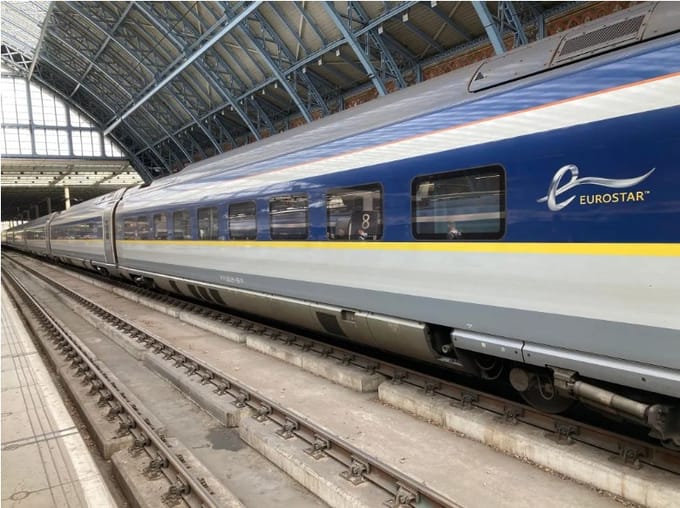
Eurostar and coach are both legitimate options for student travel between London and Paris, and the right choice depends on your specific combination of budget, time, and what you’re heading to Paris to do. Coach wins on the cheapest headline fare and, for overnight budget trips, on the combined travel-plus-accommodation saving. Eurostar wins on every other dimension: total journey time (by 7–10 hours), predictability, working environment, comfort, and the ability to arrive in Paris in a useful state rather than a sleepy one.
For most student trips — particularly any journey with a purpose that matters (an interview, an exam, a university visit, an internship check-in) — Eurostar is the right default choice. The coach is a sensible choice for the specific scenario where budget is the only constraint, time is genuinely flexible, and an overnight journey is acceptable. Both are better than paying for a budget airline once the full cost of the flight is counted.
Download the PREPP App and attempt FREE Scholarship Mock Tests and get complete study material!


Comments