
Eurostar for Students: Everything You Need to Know Before Your First Journey (Fares, Booking Tips, and What to Expect)
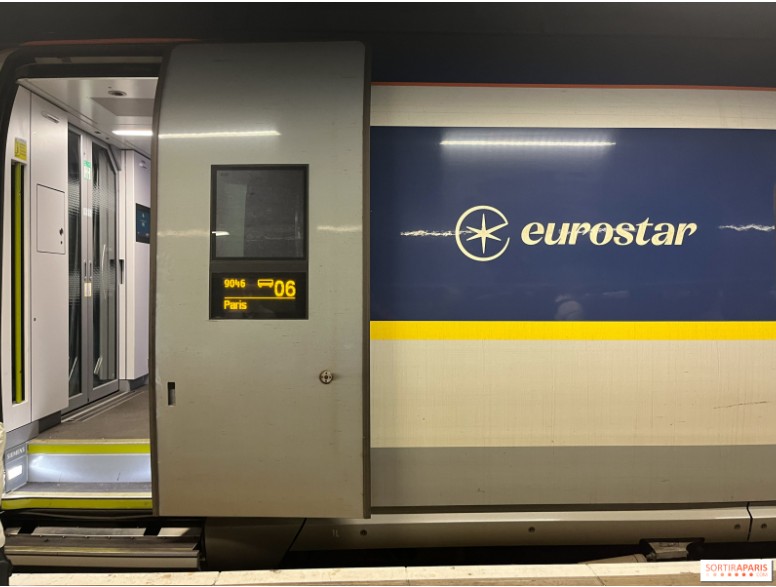
Your first time on Eurostar is almost always less complicated than you expect it to be, and the things people worry about beforehand — the passport control, the Channel Tunnel crossing, the check-in process, whether the trains are really as good as people say — tend to resolve themselves quickly once you’re actually on the train. But there are a few specific things that are worth knowing before you book and before you show up at St Pancras, because getting them wrong costs time or money in ways that are easy to avoid.
This is the complete guide for a student taking Eurostar for the first time: everything from choosing and booking the right fare, through what the departure experience actually looks like, to arriving at your destination and getting where you need to go. It covers the London–Paris, London–Brussels, and London–Amsterdam routes, because those three cover the vast majority of student journeys, but the information on booking, fares, and the departure process applies equally to any Eurostar route from London.
The guide is written specifically for students and early-career professionals preparing for exams, university applications, internships, and career moves across the UK and Europe — travellers who are budget-conscious, time-aware, and who want the most reliable information available before they commit to a booking.
What Eurostar Is: The Basics
Eurostar is the high-speed passenger train service connecting London St Pancras International with Paris Gare du Nord, Brussels-Midi, Amsterdam Centraal, Rotterdam, Lille, and (since the 2022–2023 merger with Thalys) a wider range of European cities including Cologne, Düsseldorf, and others on the continental network. For UK-based journeys, the three main student-relevant routes are London–Paris (about 2 hours 15 minutes), London–Brussels (about 2 hours 1 minute), and London–Amsterdam (about 4 hours 11 minutes).
The train travels through the 31-mile Channel Tunnel at speeds that make the crossing surprisingly unremarkable — about 20 minutes of tunnel with no change in pressure, no discomfort, and no sense of being underwater. If you’re expecting a dramatic or claustrophobic experience in the tunnel, you’ll almost certainly be surprised by how undramatic it actually is.
Eurostar operates its own dedicated terminal at London St Pancras International, separate from the domestic train concourse. Check-in, passport control, and baggage screening all happen at this terminal before you board. Once you’re on the train, the journey is continuous until your destination, with no intermediate stops on the London–Paris and London–Brussels routes (the London–Amsterdam service does stop at Brussels).
How Eurostar Fares Work: A Plain-Language Explanation
Eurostar uses dynamic pricing, which means the same seat on the same train can cost very different amounts depending on when you book and how much of the train’s allocation has already been sold at each price tier. The pricing structure is similar to airline ticketing — cheapest fares sell first, prices rise as departure approaches and as the train fills, and last-minute booking is almost always the most expensive option.
| Fare Type | What It Is | Price Range (London–Paris one-way) | Best For |
|---|---|---|---|
| Standard (advance) | Cheapest available fare on any given train; limited availability; may have restrictions on exchanges/refunds | £39–£65 when available | Students with fixed travel plans, booking 4–12 weeks ahead |
| Standard (flexible) | Higher-priced Standard fare with better exchange conditions; refundable with a fee up to 7 days before | £65–£120 | Students with plans that might change closer to the departure date |
| Standard Premier | Includes at-seat meal, wider seat, dedicated check-in; first step above Standard | £100–£200 | Occasional upgrade when time or comfort is a priority |
| Business Premier (Eurostar Plus) | Widest seats, full meal, lounge access, most flexible conditions | £200–£450+ | Rare for students; relevant on expenses |
| Youth fare (12–25) | Approximately 20% reduction on Standard fares; selected at booking by changing passenger type | Applied as a discount on any Standard fare | Every student aged 12–25 should select this at booking |
| Eurostar Snap | Discounted last-minute fares; date is confirmed but exact time announced 24–48 hrs before departure | £25–£45 when available | Students with flexible schedules who can accommodate an unconfirmed time |
The most important decision for most students is between an advance Standard fare and the youth fare modifier. If you are aged 12–25, always select the youth passenger type when booking — this is not automatically applied, and it cannot be added retroactively after you’ve completed a booking.
How to Book: Step by Step
Booking Eurostar is straightforward, but a few specific choices during the process have a meaningful impact on what you pay and what flexibility you have afterward.
- Go to eurostar.com or download the Eurostar app. Both offer the same fares. Booking direct avoids the £10–20 service charge that some third-party booking sites add to Eurostar tickets.
- Enter your departure and arrival stations. For UK departures, this is London St Pancras International. Check the full station name on your destination (Gare du Nord for Paris, Brussels-Midi / Bruxelles-Midi for Brussels, Amsterdam Centraal for Amsterdam).
- Select your travel date and use the calendar to compare prices across several days. The cheapest day is almost always Tuesday or Wednesday; the most expensive is almost always Friday afternoon or Sunday.
- Change the passenger type from “Adult” to “Youth” if you are aged 12–25. This is the step most first-time bookers miss. The discount applies automatically once the youth type is selected.
- Choose your outbound train. Cheaper fares are typically available on mid-morning and early-afternoon departures; early-morning and peak-hour trains sell the cheapest fares first.
- Add a return if you need one. For return journeys, it is worth checking whether two separate one-way bookings are cheaper than a single return booking, particularly if your outbound and return are on different days of the week.
- Review fare conditions before paying. The cheapest advance fares may have limited or no refund options; check the exchange and refund policy before confirming if there is any chance your plans might change.
- Complete payment and retrieve your ticket. Your e-ticket will arrive by email and is also accessible in the Eurostar app. Screenshot it before you travel in case you have limited signal at the station.
What to Bring: Documents, Luggage, and Practical Items
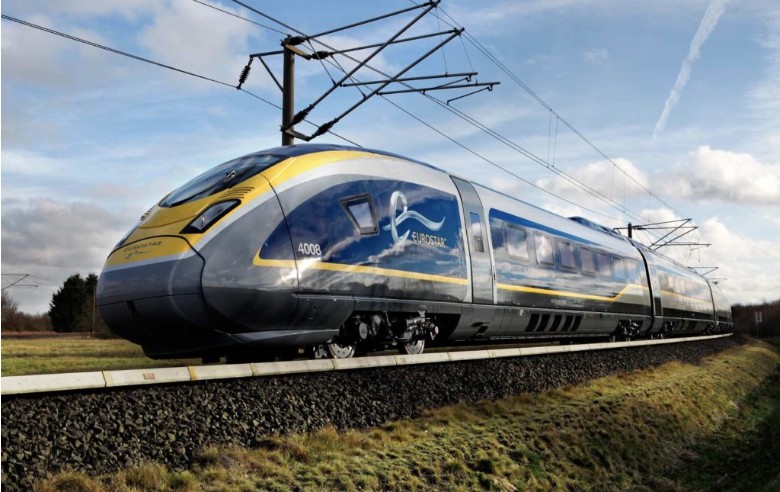
Eurostar journeys require fewer special preparations than flying, but a few specific things need to be in order before you arrive at St Pancras.
Documents
- A valid passport. UK citizens need a full passport for travel to France, Belgium, and the Netherlands. Driving licences and national ID cards are not accepted as travel documents for Eurostar. Check that your passport has sufficient remaining validity for your destination (most Schengen countries require at least three months’ validity beyond your departure date).
- Your e-ticket (from the Eurostar app or your confirmation email). Have it accessible on your phone before you arrive at the terminal — you’ll need to scan it at the check-in gate.
- Any accommodation booking confirmation or evidence of onward plans if you are a non-EU/non-UK citizen subject to entry questioning at passport control.
- Travel insurance documents, if applicable to your trip.
Luggage
- You are entitled to two large bags (maximum 85cm in any single dimension) per person, plus one small personal item (handbag, laptop bag, or small backpack). There are no checked-bag fees.
- Bags go through an X-ray scanner at security, similar to airport security. Remove laptops and large electronics and place them in the tray as you would at an airport.
- There are no 100ml liquid restrictions on Eurostar beyond any specific requirements at passport control for your destination country. You can carry full-size toiletries and liquids.
- Large bags are stored in the overhead racks or in the dedicated luggage areas at the ends of carriages. There is no luggage hold; everything travels with you in the carriage.
- Bicycles are not permitted in standard Eurostar service (only folded bikes meeting specific size requirements are allowed).
Practical Items for the Journey
- Power adapter or device charged before boarding. Eurostar uses two-pin European-style plugs in Standard class. Bring an appropriate adapter or a charged device.
- Food and drink. You can bring your own food and non-alcoholic drinks. The onboard café bar sells drinks, snacks, and sandwiches, but bringing your own is cheaper and guarantees what you want.
- Earphones or noise-cancelling headphones for focus work or entertainment.
- A download queue. Download any content (films, podcasts, playlists, offline apps, documents) before boarding, as the Wi-Fi interrupts for 15–20 minutes during the Channel Tunnel crossing.
What Check-In and Boarding at St Pancras Actually Looks Like
London St Pancras International is a large and well-designed station, and the Eurostar terminal is on the upper level above the domestic train platforms. Follow the signage for “Eurostar” from any entrance to the station — the terminal is well marked. Here’s what to expect from arrival at the station to boarding the train:
| Step | What Happens | Time Required |
|---|---|---|
| Ticket gate | Scan your e-ticket at the automated gate at the terminal entrance | 1–2 minutes |
| Bag drop (if applicable) | Leave large bags at designated bag check area if you have pre-arranged left luggage or bag-delivery service; otherwise, continue with your bags | 2–5 minutes if applicable |
| UK passport control (exit) | Show your passport to a UK Border Force officer (or use an e-gate if eligible). This is UK exit border control — you’re leaving the UK here | 3–10 minutes typically; longer in peak periods |
| French / Belgian border control (entry) | Show your passport to French or Belgian border officials. This is Schengen entry control — all Schengen entry checks happen at St Pancras before you board, not at the destination | 3–10 minutes typically; longer in peak periods |
| Security screening | Bags through X-ray scanner, same process as airport security. Remove laptop and large electronics. | 3–10 minutes |
| Departure lounge | Wait in the departures area, which has seating, a café bar, and a newsagent. The platform and carriage number for your train is announced here | Variable |
| Boarding | Board via the platform gate when announced. Trains board from both ends. | 5–10 minutes before departure |
The total check-in process from arriving at the station to boarding typically takes 25–40 minutes if the queues are normal, which is why arriving 45–60 minutes before departure is strongly recommended. During peak periods (Friday morning, Sunday afternoon) or during disruption, the passport control queues can be longer, and Eurostar’s check-in gates close approximately 30 minutes before departure. If you miss this window, you miss the train entirely and will need to purchase a new ticket.
What the Journey Itself Is Like
Once you’re on board and the train pulls out of St Pancras, the Eurostar experience is straightforward and generally very comfortable. A few things to know about what the journey looks like:
- The first 30–40 minutes of the journey from London is through Kent. Depending on which side of the train you’re sitting on, you’ll see either urban south-east London transitioning to the Kent countryside, or nothing much if the train is underground.
- The Channel Tunnel crossing starts approximately 40–50 minutes into the journey. There is nothing dramatic about it: the lights in the carriage stay on, the air conditioning keeps running, and there is no change in sound except a very brief whoosh as you enter the tunnel. The crossing takes about 20 minutes.
- Wi-Fi drops during the tunnel and resumes after the train exits into France. Plan for this 15–20 minute gap if you’re in the middle of something online.
- After exiting the tunnel in France, the train accelerates to its full 300 km/h speed across northern France. The French countryside visible through the windows is flat farmland, not particularly scenic. Many passengers use this section to sleep, work, or eat.
- The approach to Paris through the northern suburbs is where mobile signal typically returns strongly on both UK and EU SIM cards.
- Arrival at Gare du Nord is announced on board, and the train moves through Gare du Nord station at walking speed to its platform. The platform number is usually announced on board as you approach Paris.
Arriving at Your Destination
Arriving at Gare du Nord, Paris
Gare du Nord is one of the largest and busiest stations in Europe, with over 700,000 passengers per day. For a first-time visitor, it can be overwhelming. The Eurostar terminal exits onto the station’s upper level. Follow the exit signs to the ground floor (rez-de-chaussée) for metro, taxi, and street access. Key connections:
- Metro lines 4 and 5 serve Gare du Nord directly from the ground floor level. Line 4 goes south through the city centre (Châtelet, Saint-Michel, Montparnasse). Line 5 goes east toward Bastille and Bercy.
- The RER B is the fast rail link to Charles de Gaulle Airport (30 minutes) and passes through central Paris stations including Châtelet-Les-Halles and Luxembourg.
- Taxis are available on the street level outside the main station entrance. Expect 15–25 minutes and €15–30 to most central Paris locations depending on traffic.
- Luggage storage services (Eelway, SNCF consigne) are available in the station if you arrive before your accommodation check-in.
Arriving at Brussels-Midi
Brussels-Midi (also called Bruxelles-Midi or Brussel-Zuid) is a large, functional station with 22 platforms. The Eurostar terminal is near platforms 1 and 2, at the Channel Terminal end of the main concourse. After exiting the terminal, connections include:
- Metro lines 2 and 6 run from Brussels-Midi to the city centre (Brussels-Central, Porte de Namur, Arts-Loi near the EU quarter).
- Pre-metro (underground trams) serve additional city centre destinations from the station.
- Taxis are available outside the station. The station is in the south of Brussels; central Brussels and the EU quarter are about 10–20 minutes by metro or taxi.
Arriving at Amsterdam Centraal
Amsterdam Centraal is in the city centre, directly north of the main tourist and university areas. From the station, central Amsterdam is accessible on foot (most attractions are within 30–40 minutes’ walk) or by tram (lines 2, 11, 12, 13 run from the station into the city). The University of Amsterdam and VU Amsterdam are both accessible by public transport from Amsterdam Centraal.
Frequently Asked Questions
Ques: Do I need to print my Eurostar ticket?
Ans: No. Your e-ticket on the Eurostar app or as a screenshot of your booking confirmation is accepted at all gates. Screenshot your ticket QR code before leaving your accommodation in case of poor mobile signal at the station.
Ques: How early should I arrive for Eurostar?
Ans: At least 45 minutes before your scheduled departure, and preferably 60 minutes during busy periods (Friday mornings, Sunday afternoons, bank holiday weekends). The check-in gates close 30 minutes before departure and missing this window means missing the train.
Ques: What happens at passport control?
Ans: You go through two sets of passport control at St Pancras: UK exit control (British Border Force) followed by Schengen entry control (French or Belgian officials). Both happen before you board. At the destination, there is no additional passport control when you exit the station.
Ques: Can I exchange or refund my Eurostar ticket?
Ans: Most Eurostar tickets can be exchanged at no fee up to 1 hour before departure (you pay any difference in fare if the new train is more expensive). Refund conditions vary by fare type — the cheapest advance fares are typically non-refundable; more expensive fares offer refunds with a fee. Check the specific conditions for your fare at the time of booking.
Ques: What if Eurostar is delayed or cancelled?
Ans: In the event of significant delay or cancellation, Eurostar offers a free exchange to a later service or a full refund on the unused portion of the ticket. Check the Eurostar app for real-time service status updates. On the day of travel, the departures board at St Pancras is updated in real time.
Ques: Is there a student card I can use for Eurostar discounts?
Ans: There is no universal student card discount on Eurostar. However, if you are aged 12–25, the youth fare discount (approximately 20% off Standard fares) is available directly on the booking platform without a separate card. Various occasional promotions through platforms like Student Beans or Unidays may appear during specific periods, but these are not guaranteed.
Ques: Can I bring a bicycle on Eurostar?
Ans: Full-size bicycles are not permitted on Eurostar services. Folding bikes that can be carried as hand luggage within the standard size limits are accepted. Eurostar does offer a bike transport service on some routes where bicycles are boxed and sent as unaccompanied luggage through a cargo service — check the Eurostar website for current details.
Ques: Does my UK mobile work in France and Belgium?
Ans: Most UK mobile plans include EU roaming as standard, though the specific data allowance and roaming terms depend on your operator. Check with your provider before travelling if you’re unsure. Signal drops during the Channel Tunnel crossing and resumes when the train exits in France.
Final Thoughts
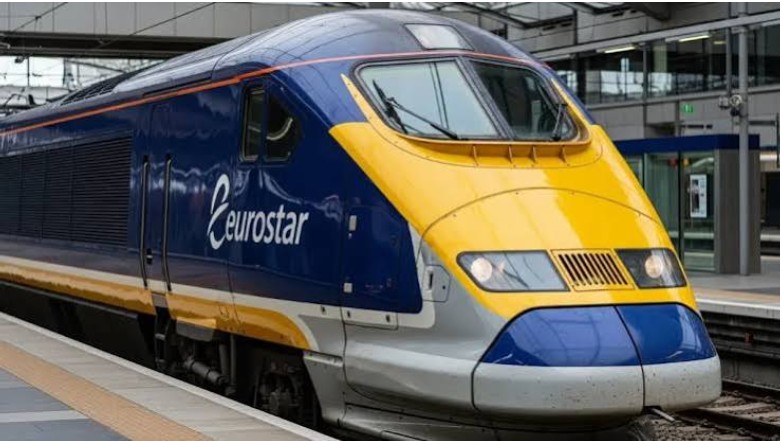
Your first Eurostar journey is almost always smoother than you expect. The check-in process is logical, the passport control is quick in most circumstances, and once you’re on the train, the journey is comfortable, quiet, and productive. The things that most commonly catch first-time travellers out — booking too late and overpaying, not selecting the youth fare, arriving too close to departure, or not having a passport ready — are all avoidable with a few minutes of preparation.
If you take one thing from this guide, let it be this: book early, book direct on eurostar.com, and select youth fare if you qualify. Those three decisions together will save you meaningful money on every single trip you take, and the rest of the experience will take care of itself.
Download the PREPP App and attempt FREE Insurance Mock Tests and get complete study material!


Comments