
DataCamp Review 2025: The Ultimate Platform to Learn Data Science, AI, and Analytics (Even With No Experience)
In today’s data-driven world, understanding data is no longer optional — it’s essential. Whether you’re an aspiring data scientist, a marketing analyst, a business leader, or someone simply looking to future-proof your career, learning how to use data effectively gives you a massive edge.
But with so many online learning platforms available — from Coursera to Udemy to LinkedIn Learning — it can be hard to decide where to start.
That’s where DataCamp comes in.
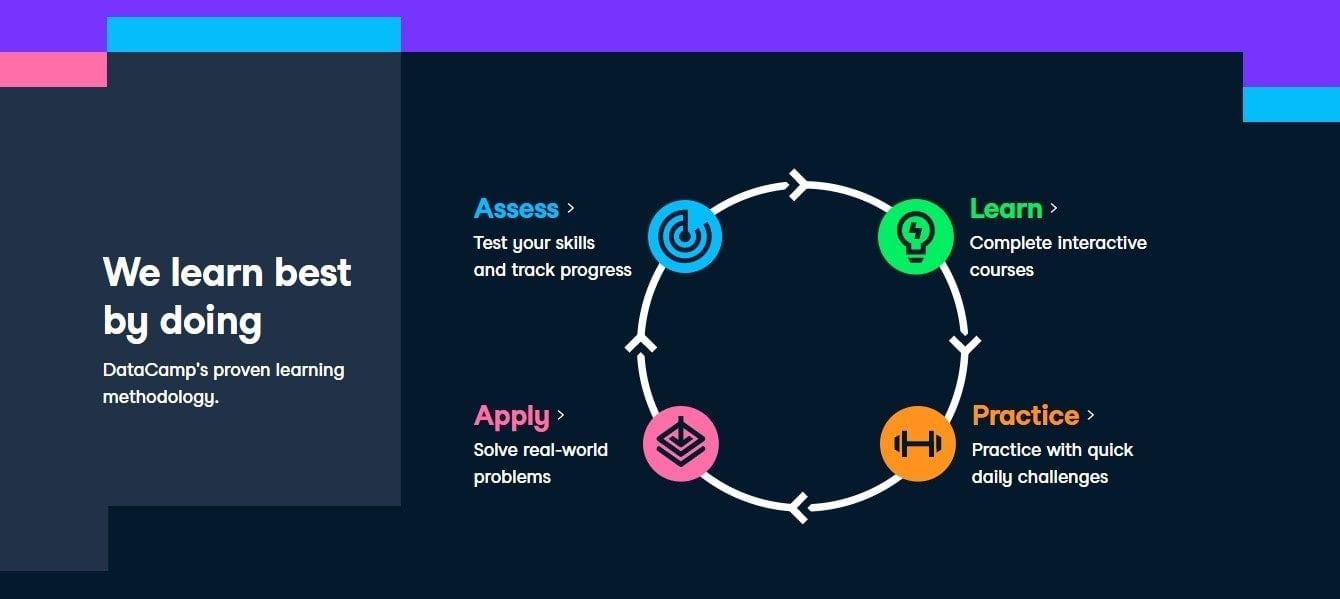
DataCamp has become one of the most trusted, user-friendly, and comprehensive platforms for learning data science, machine learning, and AI skills — no matter your starting level. With hands-on lessons, interactive projects, and career-oriented tracks, it helps you learn by doing, which is the key to mastering data.
In this review, we’ll dive deep into what makes DataCamp stand out, who it’s best for, its key features, pricing, and why it’s one of the best investments you can make in your career in 2025 and beyond.
What Is DataCamp?
DataCamp is an online learning platform that focuses entirely on data-related skills — including data science, data analytics, machine learning, programming, and AI.
Founded in 2013, it has quickly grown into a global leader, helping over 12 million learners gain the skills needed to thrive in a data-driven economy.
Unlike traditional courses that rely on long lectures or passive video content, DataCamp focuses on interactive learning. Every lesson combines short video tutorials with real-time coding exercises you complete directly in your browser.
You don’t need to install Python, R, or any other tools — everything happens right inside DataCamp’s interface.
This approach allows you to practice while you learn, which significantly improves retention and confidence.
Why DataCamp Has Become So Popular
So, what makes DataCamp a standout choice in 2025?
Here are the main reasons professionals and beginners alike are turning to DataCamp:
1. Hands-On Learning That Actually Works
Unlike most online learning sites where you simply watch videos, DataCamp makes you code, analyze, and visualize data directly.
This interactive learning style helps bridge the gap between theory and real-world application.
You don’t just watch someone else code — you do it yourself, in small, digestible exercises. This is a game-changer for mastering data-related skills.
2. Beginner-Friendly Yet Powerful
DataCamp is designed for all levels.
Whether you’ve never written a single line of code or you’re already familiar with programming, the platform adapts to your pace.
Their skill tracks and career tracks guide you step-by-step — so you always know what to learn next.
For example:
- Data Analyst with Python Track
- Data Scientist with R Track
- Machine Learning Specialist Track
- SQL Fundamentals Track
Each track is curated by experts and designed to take you from beginner to job-ready professional.
3. Short, Engaging Lessons
Let’s face it — online learning can sometimes feel overwhelming.
DataCamp solves this by breaking lessons into bite-sized modules that are easy to follow and complete in small time blocks.
Each video typically lasts 3–5 minutes, followed by interactive challenges or quizzes. You can easily learn during a coffee break or while commuting.
4. Built for Career Growth
One of the biggest strengths of DataCamp is how career-oriented its content is.
Every course, track, and project is built with real-world job skills in mind.
You’re not just learning syntax — you’re learning how to analyze business data, clean datasets, build machine learning models, and present insights.
By the time you complete a career track, you’ll have both the skills and portfolio to show employers.
What You Can Learn on DataCamp
DataCamp offers hundreds of courses covering all major areas of data science, AI, and analytics.
Here’s a breakdown of the main learning paths:
1. Data Science
Learn the full data science workflow — from cleaning and visualizing data to building predictive models.
You’ll master tools like:
- Python (NumPy, Pandas, Matplotlib, Seaborn, scikit-learn)
- R programming
- SQL
- Machine Learning
- Deep Learning
- Data Visualization
2. Data Analytics
Perfect for professionals in marketing, business, or operations who need to make data-driven decisions.
You’ll learn:
- SQL for data querying
- Excel for analysis
- Power BI and Tableau for visualization
- Statistical techniques for business insights
3. Machine Learning & AI
If you want to go beyond analytics into automation and intelligent systems, DataCamp offers specialized courses in:
- Supervised and unsupervised learning
- Natural Language Processing (NLP)
- Deep learning with TensorFlow and PyTorch
- Generative AI and LLMs
4. Programming
Master the languages that drive modern data analysis:
- Python
- R
- SQL
- Shell
- Scala
5. Data Engineering & Cloud Tools
DataCamp also covers the technical backbone of modern data systems — data pipelines, databases, and cloud technologies like AWS and Azure.
Top Features That Make DataCamp Stand Out
Let’s explore some of the platform’s most impressive features that set it apart from other e-learning options:
1. Interactive Browser-Based Coding
You don’t need to install any software.
DataCamp’s in-browser coding environment lets you practice Python, R, or SQL immediately.
This is perfect for beginners who don’t want to deal with complicated setup steps.
2. Skill & Career Tracks
Rather than taking random courses, you can follow structured paths designed to help you reach a specific career goal.
Each track includes a curated sequence of courses, projects, and assessments, ensuring you build a well-rounded skill set.
3. Real-World Projects
Once you’ve learned the basics, you can apply your knowledge with guided projects — like analyzing Airbnb data, predicting movie revenue, or visualizing COVID-19 trends.
You can even showcase these projects in your DataCamp portfolio, making it easier to impress employers.
4. Mobile Learning App
DataCamp’s mobile app (available on iOS and Android) lets you practice on the go with mini-exercises and flashcards.
You can learn anywhere — even offline.
5. Certificates and Skill Badges
Every time you complete a course or track, you’ll earn a certificate that you can share on LinkedIn or include in your resume.
These certificates are verified by DataCamp and show that you’ve completed structured, expert-led training.
6. Workspace and Portfolio
DataCamp’s Workspace is a cloud-based notebook environment where you can experiment with data, practice projects, and build a public portfolio.
Employers can see your hands-on work — not just what you’ve learned.
7. Constantly Updated Content
DataCamp’s team of instructors and data experts regularly update courses to reflect new technologies and industry trends.
This means you’re always learning the latest tools, not outdated material.
DataCamp Pricing (2025 Update)
DataCamp offers several plans to fit different needs and budgets:
| Plan | Best For | Key Features | Price (Approx.) |
|---|---|---|---|
| Free Plan | Beginners exploring data science | Access to the first chapter of each course | Free |
| Premium Plan | Serious learners and professionals | Full access to all courses, projects, and tracks | Around $25/month (billed annually) |
| Teams/Business Plan | Organizations training multiple employees | Admin dashboard, progress tracking, and analytics | Custom pricing |
 Pro Tip: DataCamp often runs discounts and promotions, especially around New Year and Back-to-School season. If you’re planning to subscribe, it’s worth keeping an eye out for deals.
DataCamp vs Competitors
Here’s how DataCamp stacks up against some of the most popular e-learning platforms:
| Platform | Focus | Strength | Limitation |
|---|---|---|---|
| DataCamp | Data science & analytics | Hands-on learning, interactive coding, guided tracks | Focused mainly on data-related fields |
| Coursera | University-level courses | Academic credentials | More theoretical, less interactive |
| Udemy | Variety of topics | Affordable one-time purchases | Quality varies by instructor |
| edX | University programs | Official certificates | Courses are longer and more expensive |
| LinkedIn Learning | Professional skills | Integrates with LinkedIn profiles | Less coding practice |
✅ Verdict:
If your goal is to learn data science or analytics through practice, DataCamp remains the #1 choice for 2025.
Who Should Use DataCamp?
DataCamp is ideal for a wide range of learners, including: ????
Students
If you’re studying computer science, math, or business, DataCamp can complement your studies with hands-on experience.
Professionals
Whether you’re in marketing, finance, or HR, data skills make you more valuable. DataCamp helps you turn raw data into actionable insights.
Career Changers
Thinking of moving into data science or tech? DataCamp gives you a structured, low-risk way to build new skills without going back to school.
Educators
Teachers and professors can use DataCamp for classroom support, especially through DataCamp for Classrooms, which is free for educators.
Companies
Organizations can use DataCamp for Business to upskill their teams in data literacy, analytics, and AI.
How Long Does It Take to Learn Data Science on DataCamp?
That depends on your pace and commitment, but here’s a general idea:
- Beginner (0–3 months): Learn Python/R basics, data visualization, and simple analysis.
- Intermediate (3–6 months): Build projects, explore SQL, machine learning, and dashboards.
- Advanced (6–12 months): Master deep learning, NLP, and big data workflows.
The key is consistency. Spending just 30 minutes a day on DataCamp can make you job-ready in less than a year.
Pros and Cons of DataCamp
Here’s an honest look at the pros and cons:
✅ Pros
- Extremely user-friendly
- Hands-on, interactive learning
- Beginner-friendly progression
- Affordable compared to degree programs
- Certificates and portfolio building
- Regularly updated courses
- Great for learning Python, R, SQL, and ML
❌ Cons
- Focused mostly on data-related topics (not for general programming)
- Some advanced users may outgrow it eventually
- Limited peer interaction compared to live cohort courses
Still, for 80–90% of learners, these are minor issues — and the platform delivers exceptional value.
What Makes DataCamp Worth It in 2025
The data landscape is evolving fast. AI, automation, and analytics are now part of every industry — from healthcare and finance to retail and education.
That’s why DataCamp’s mission — to make data skills accessible to everyone — feels more relevant than ever.
Here’s why it’s worth the investment:
- You learn practical, job-ready skills.
- You build confidence through hands-on coding.
- You can switch or boost your career in under a year.
- You don’t need prior experience — or a math degree.
And most importantly, you can do it at your own pace, anytime, anywhere.

Tips to Get the Most Out of DataCamp
Here are a few tips to help you maximize your learning experience:
- Set a weekly goal – Aim for 3–5 hours per week of consistent practice.
- Follow a track – Stick to one career or skill track to avoid getting overwhelmed.
- Do the projects – They help you apply what you’ve learned in real scenarios.
- Build your portfolio – Use DataCamp Workspace to showcase your projects.
- Earn certificates – Add them to LinkedIn and your resume to stand out.
- Review regularly – Redo exercises or quizzes to reinforce learning.
DataCamp Pricing (for Comparison and Upskilling)
Since many creative professionals also benefit from data and analytics skills, here’s a quick overview of DataCamp’s pricing:
- Basic (Free) Plan: Free — gives access to the first chapter of every course. DataCamp+2support.datacamp.com+2
- Premium (Individual):
- US$ 14/month, billed annually, for full content access. DataCamp
- There is also a monthly Premium option, but the pricing may vary. support.datacamp.com
- Business / Teams Plan:
- US$ 14 per user/month, billed annually for Teams. DataCamp+1
- Enterprise Plan: Custom pricing (contact DataCamp sales). DataCamp+1
- DataLab (Cloud Coding Environment): DataCamp’s own product — allows more powerful code execution (not part of all Learn plans)
Real User Reviews and Success Stories
Thousands of learners have used DataCamp to launch or grow their careers. Here are a few examples:
“I went from having zero coding experience to landing my first data analyst job — all thanks to DataCamp’s guided learning paths.”
— Sarah M., USA
“I tried multiple platforms, but DataCamp was the only one that made coding feel natural. The instant feedback helped me learn faster.”
— Daniel K., Germany
“Our company used DataCamp for Business to upskill our marketing team. Within months, we saw a measurable improvement in data-driven decision-making.”
— Priya R., India
These stories highlight how powerful structured, interactive learning can be — and why DataCamp continues to be a trusted name in the data education space.
Final Verdict: Is DataCamp Worth It?
Absolutely — DataCamp is one of the best online learning platforms for data science, AI, and analytics.
It’s interactive, affordable, and built around practical skills that employers actually value.
Whether you’re a complete beginner or a professional looking to advance, DataCamp gives you the tools to thrive in the data-driven world.
With over 380+ courses, 75+ projects, and career tracks for every level, it’s a one-stop solution for mastering data science without spending thousands on a degree.
So if you’re serious about learning data skills in 2025, DataCamp is 100% worth your time and investment.
Download the PREPP App and attempt FREE Insurance Mock Tests and get complete study material!


Comments